Polyphōnia
(2019 / 2025)
eng · ita
Light and a measured rhythm give life to the photography of Pino Musi.
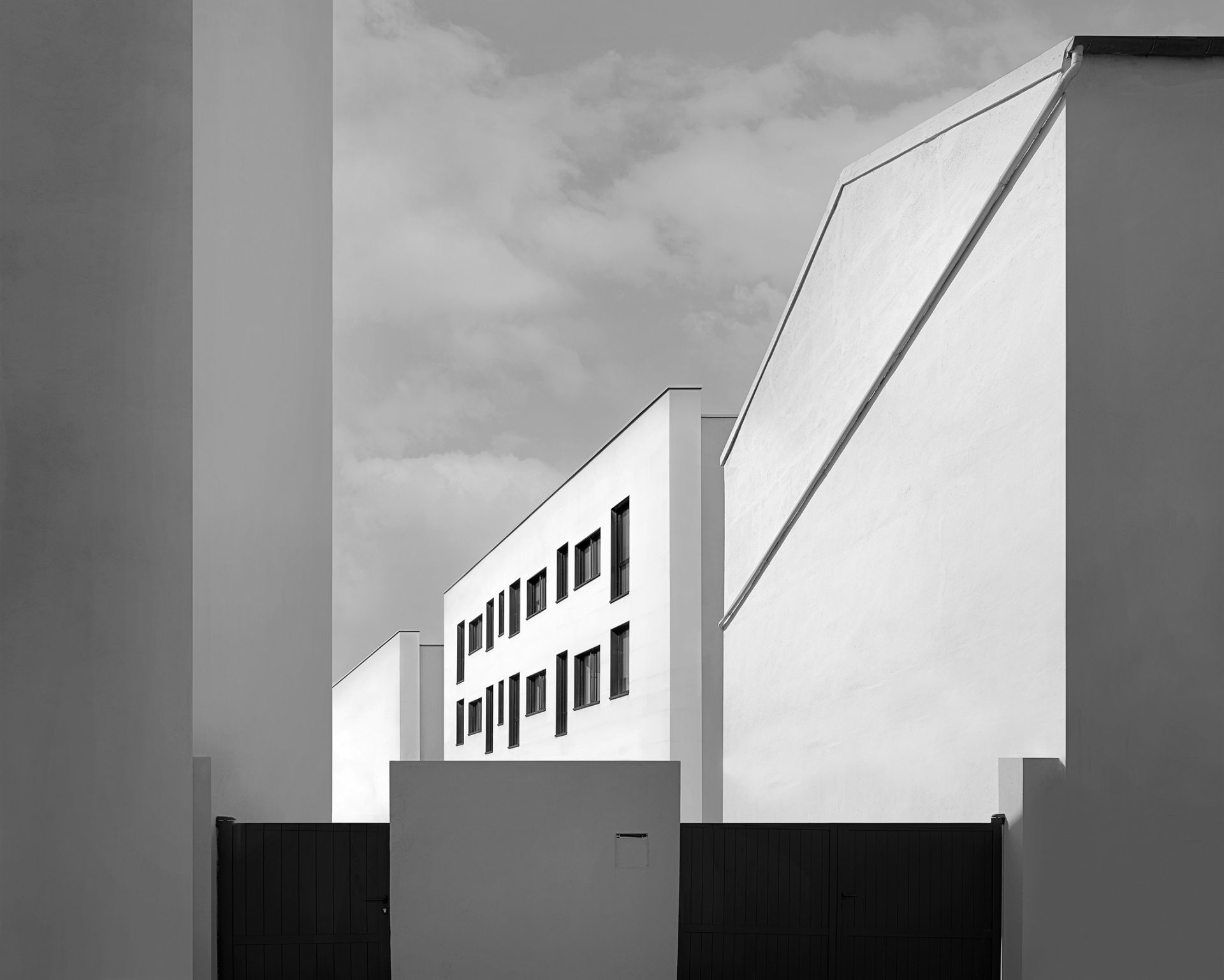
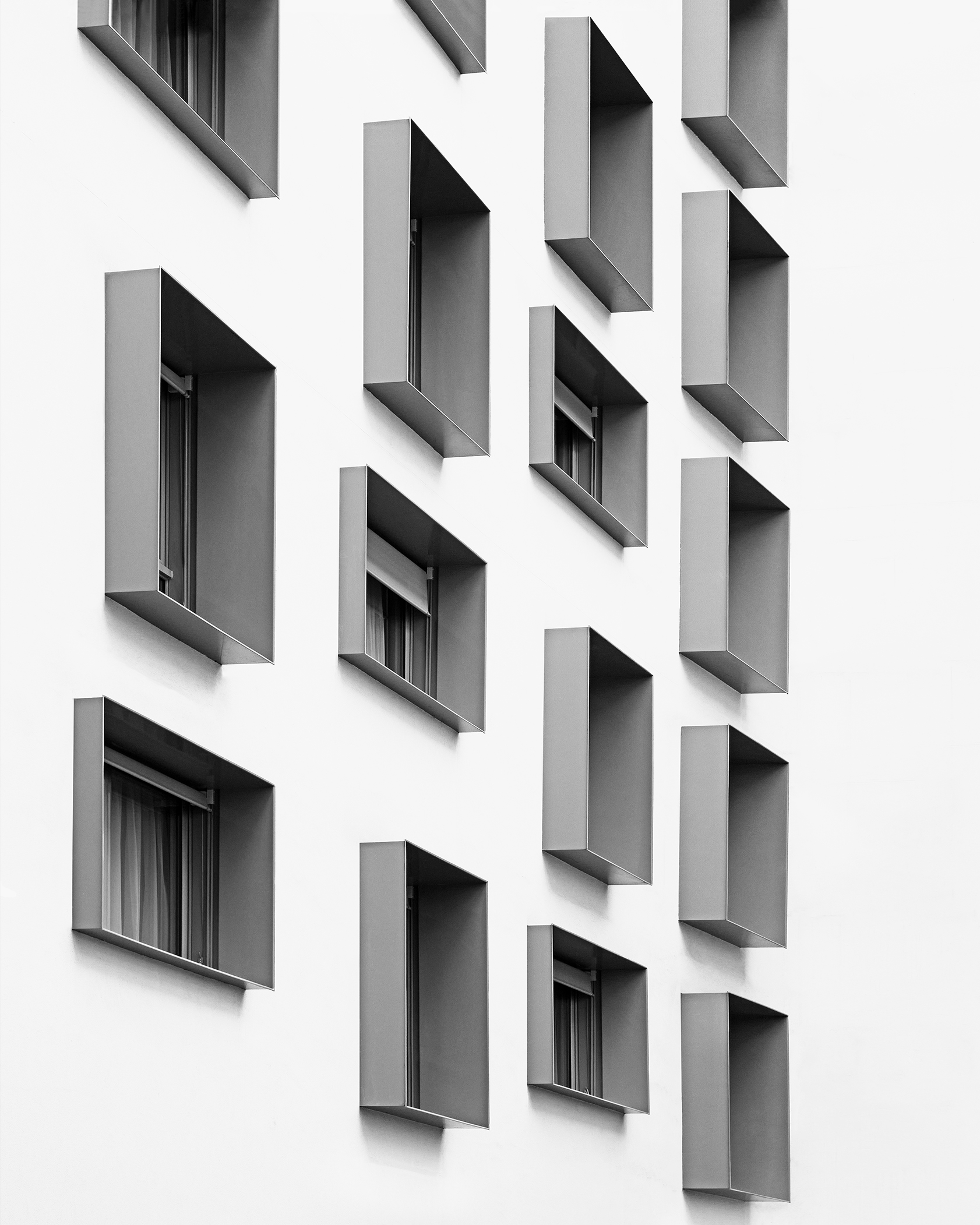
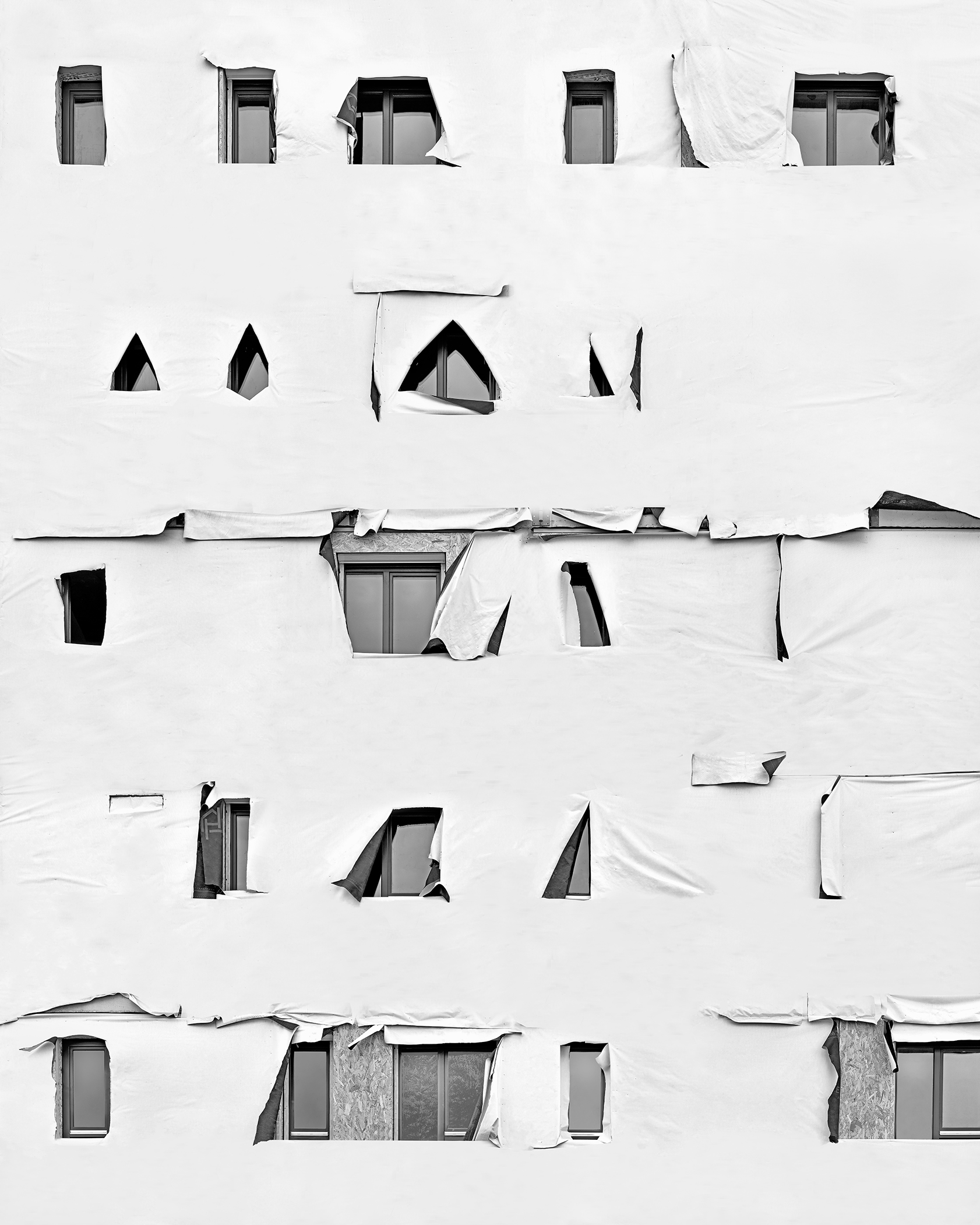
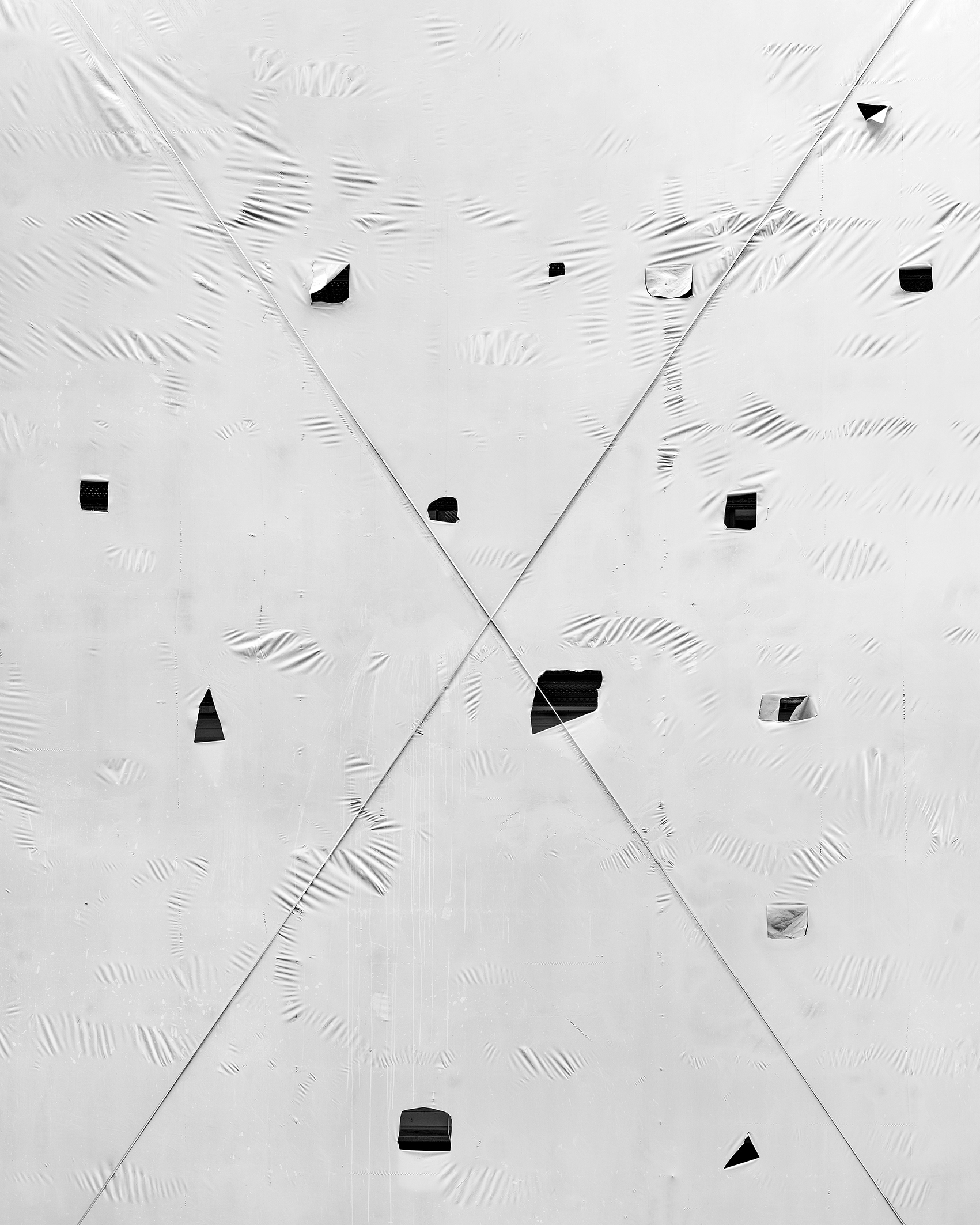
Ever since, as a young man, he began exploring the space and gestures of avant-garde theatre, investigating the shadows and turmoil of a scene of ever-changing geometries, Musi builds his visions of architecture, landscape, pages from the past, and faces always with the same urge: to show not what the eyes see but what the gaze distinguishes, the form, stable but not immobile, which becomes an image, something written with light that inevitably regards us, looks back at us and draws us in. In the rigour of a black-and-white which concedes nothing to the facile melancholy of memory, which seeks analytical abstraction even in the uncertainty of fog or in the change of expression or emotion (La Séance, 2017), Musi’s photography stands in a singular balance between firmness of judgement and the gamble of invention. It is the fruit, deliberately cultivated, of calculation and the chance moment in which, unemphatically but firmly, the modern project of art is renewed, rooted in a modus, a word which contains the limit and also the rhythm. The rhythm of the present time, whose tensions, solids and voids, and unexpected harmonies, Polyphōnia now presents to us.
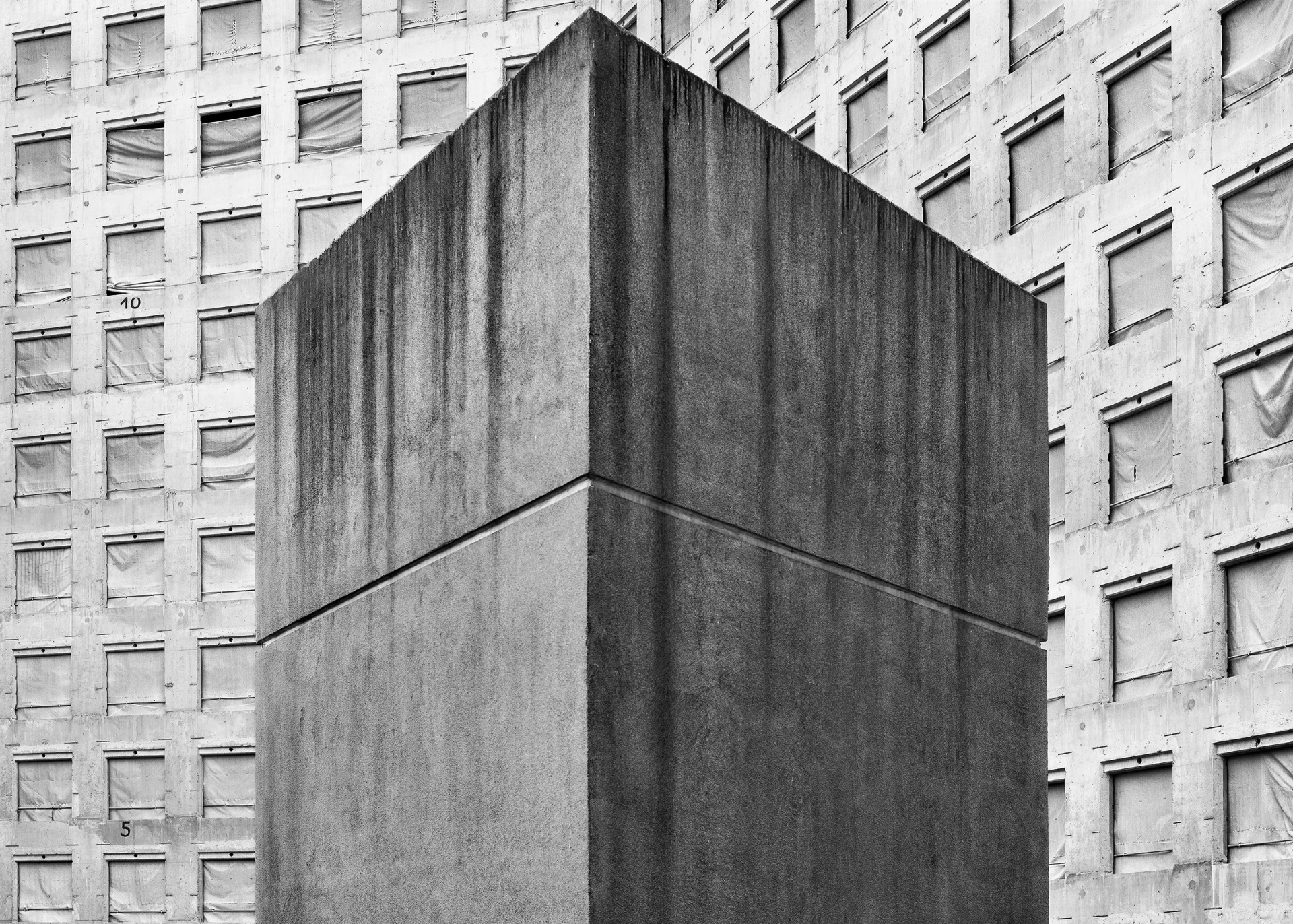
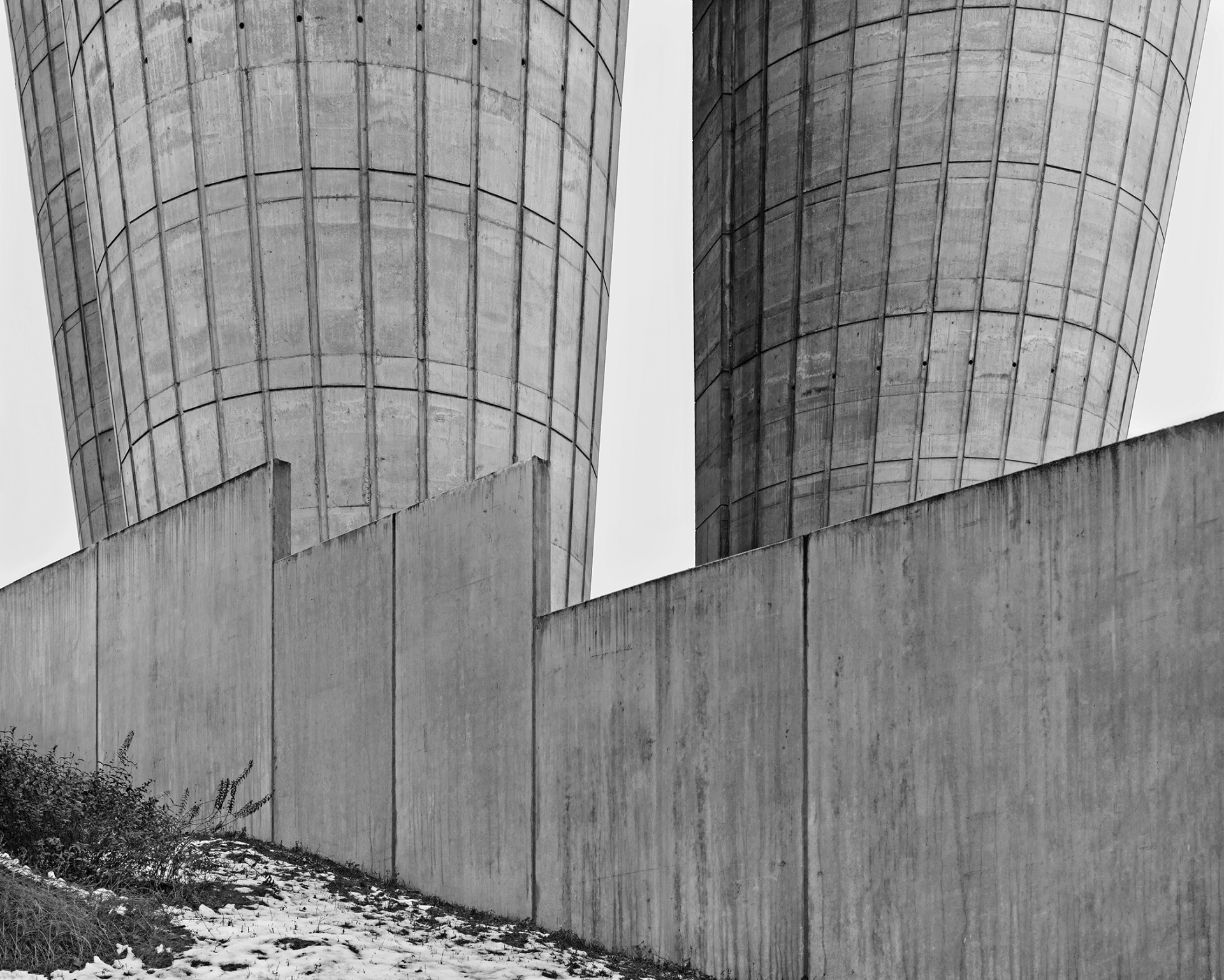
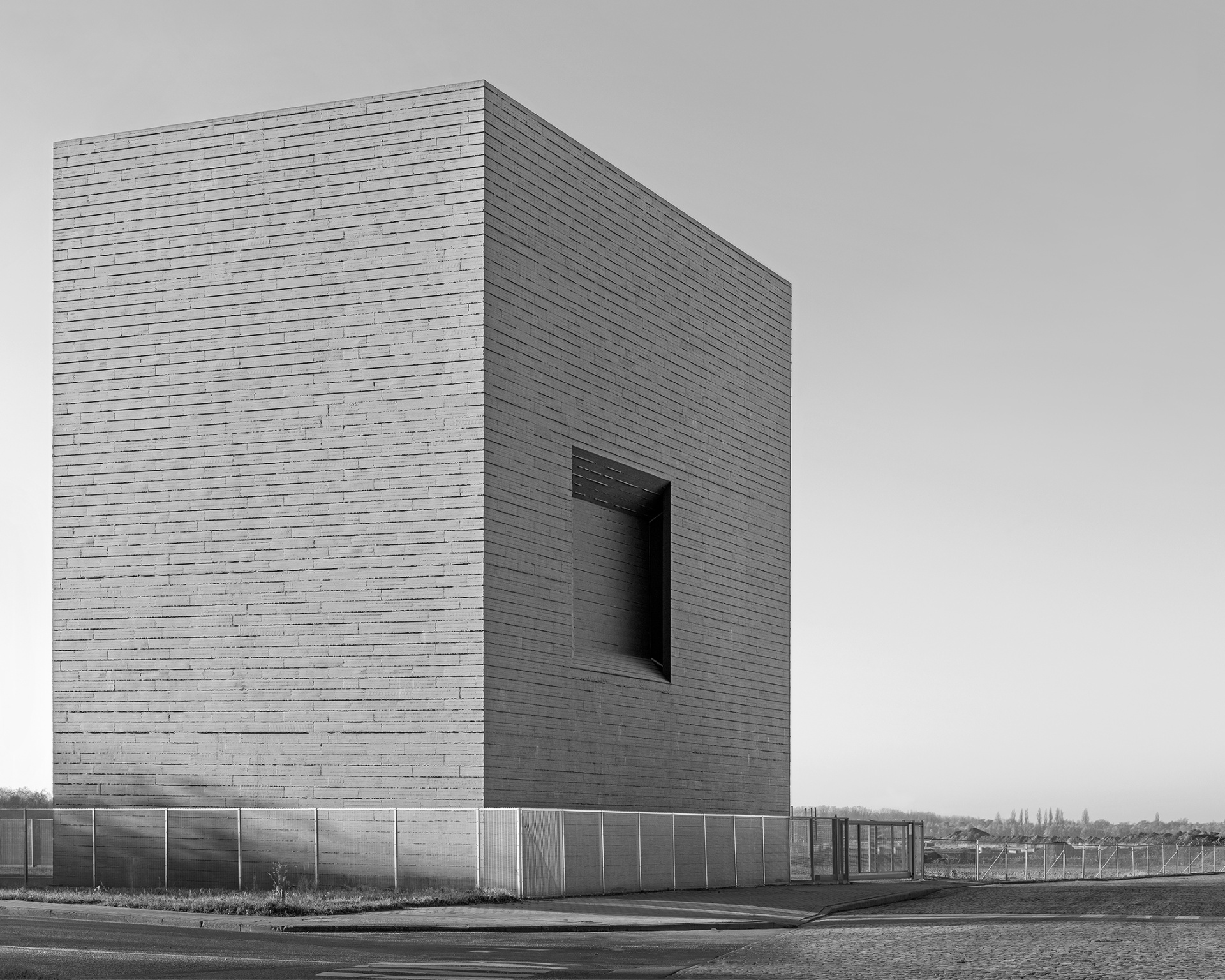
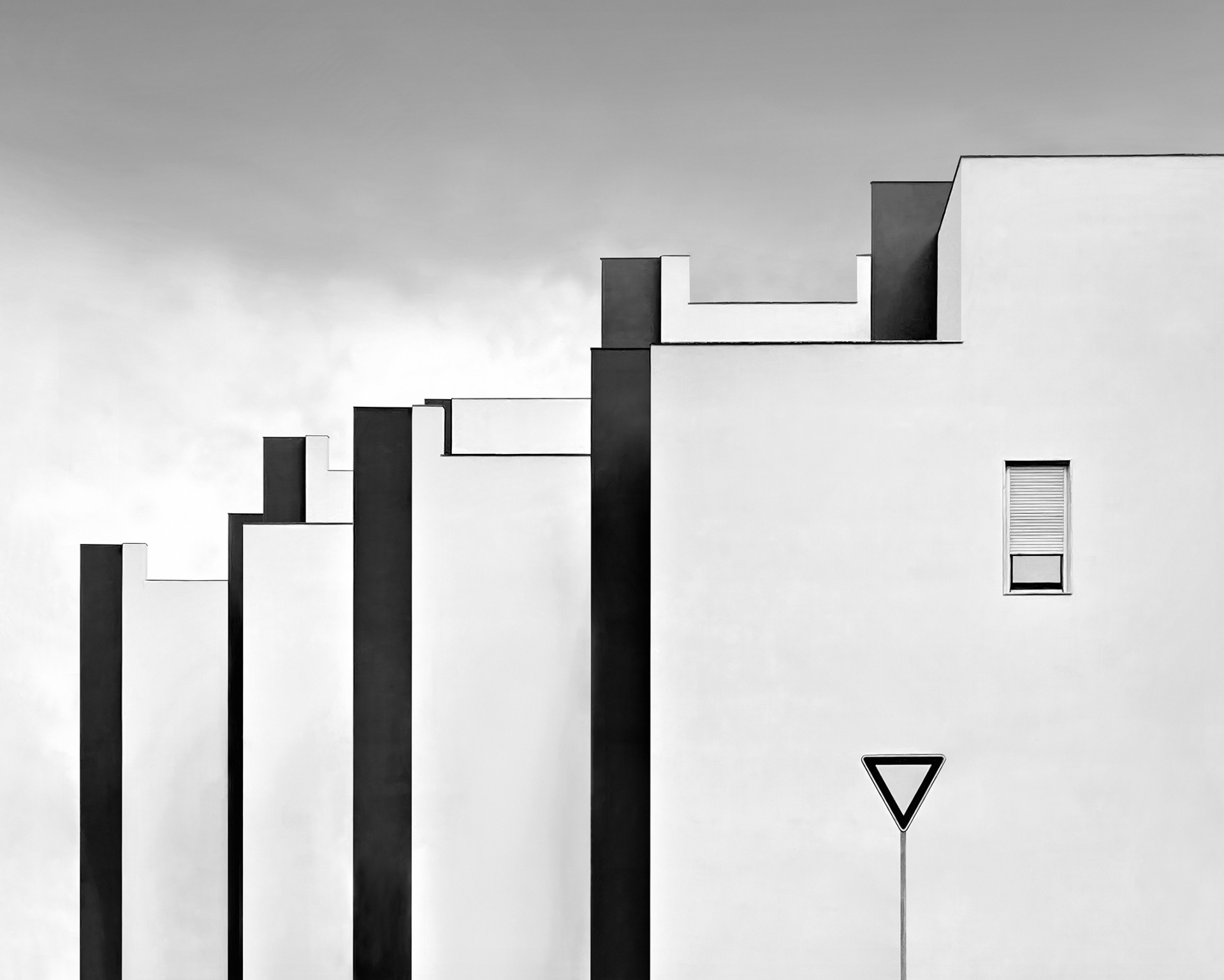
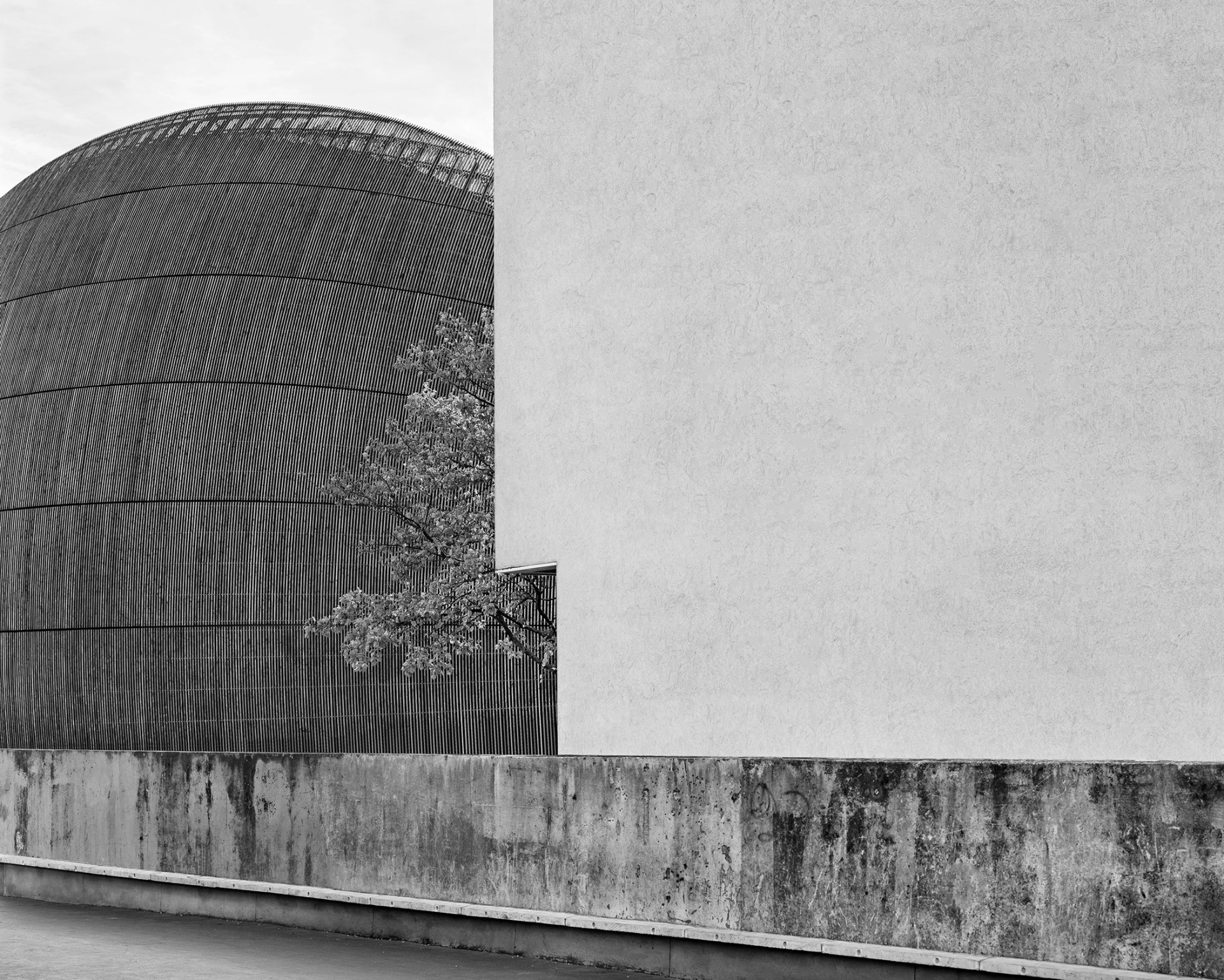
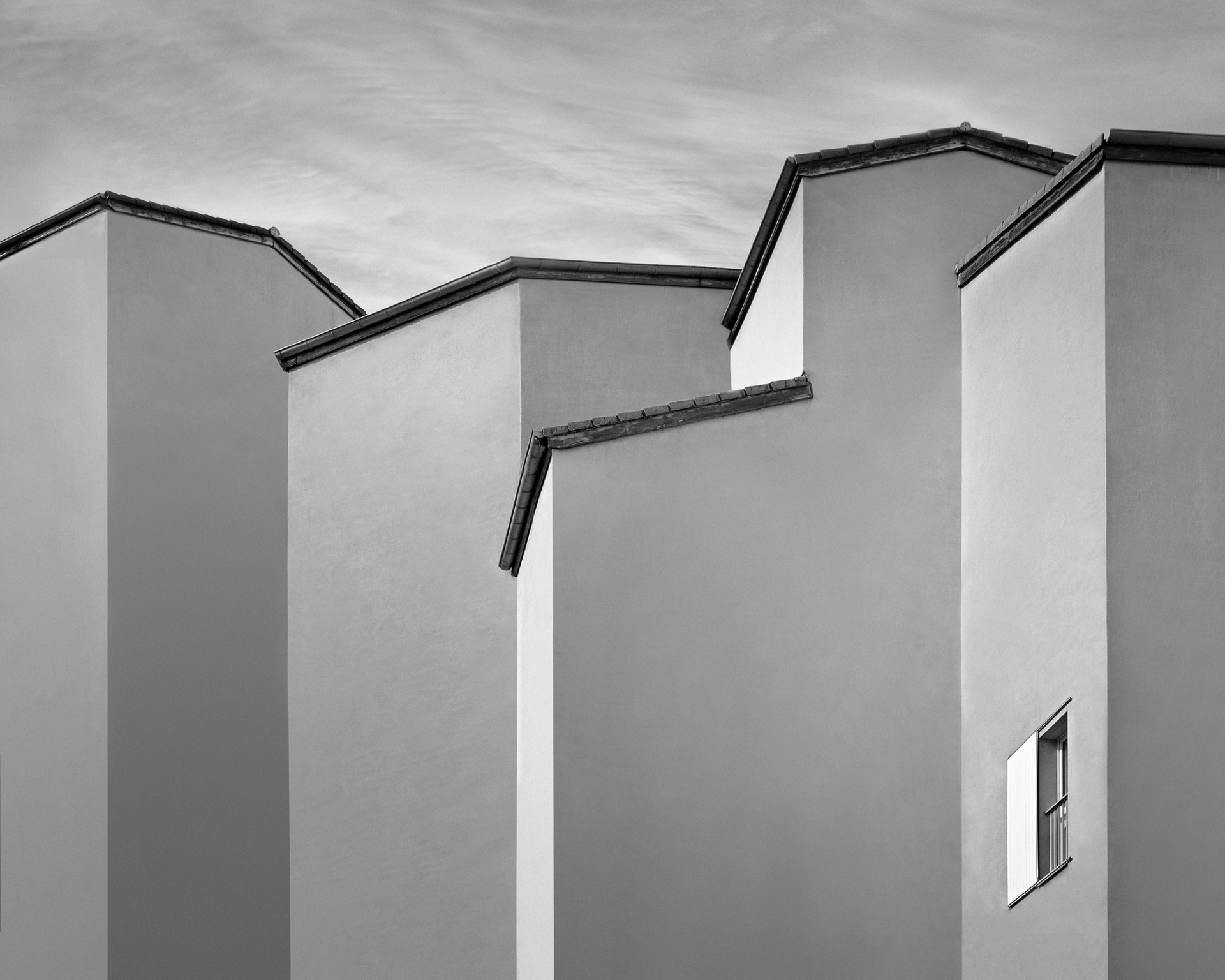
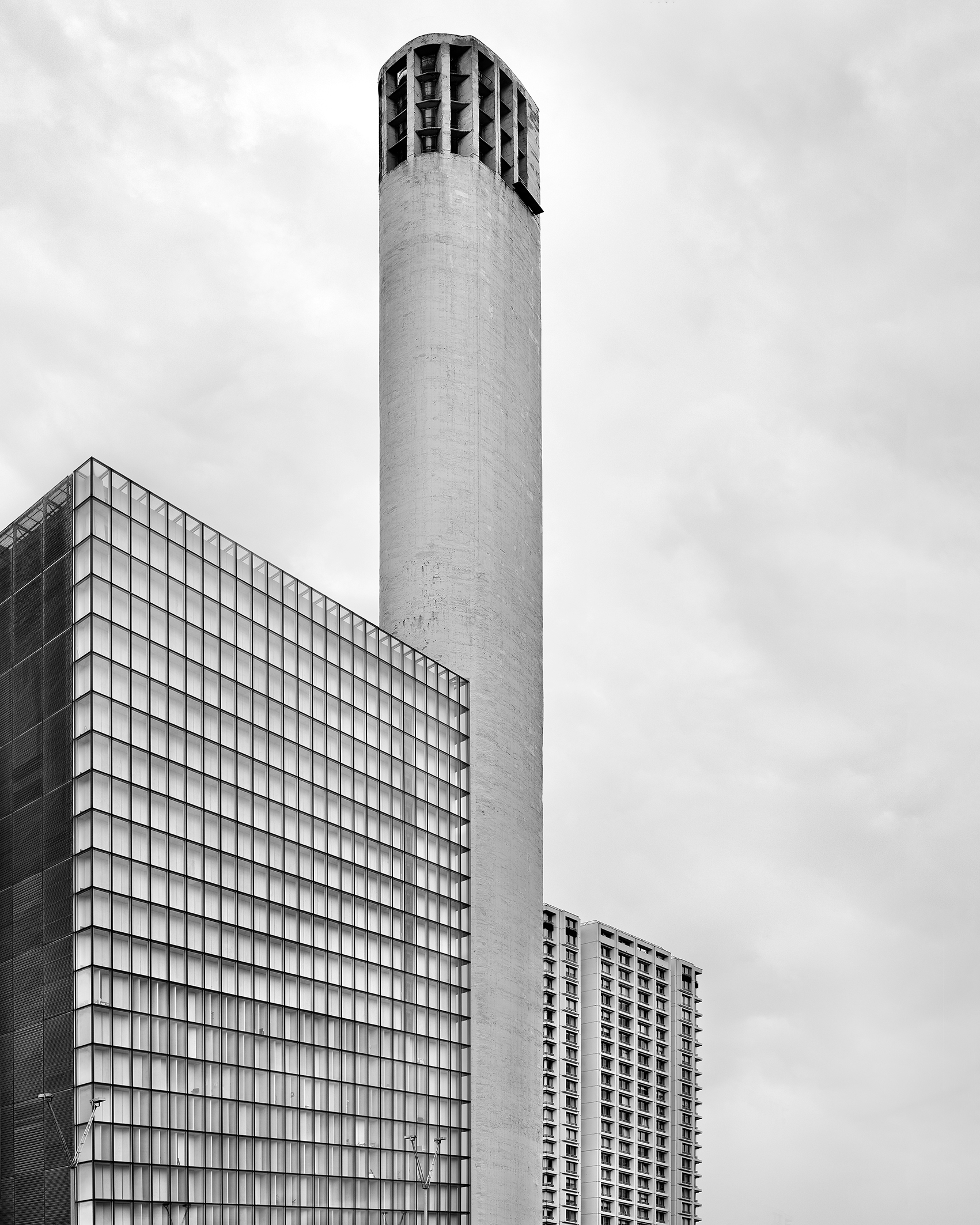
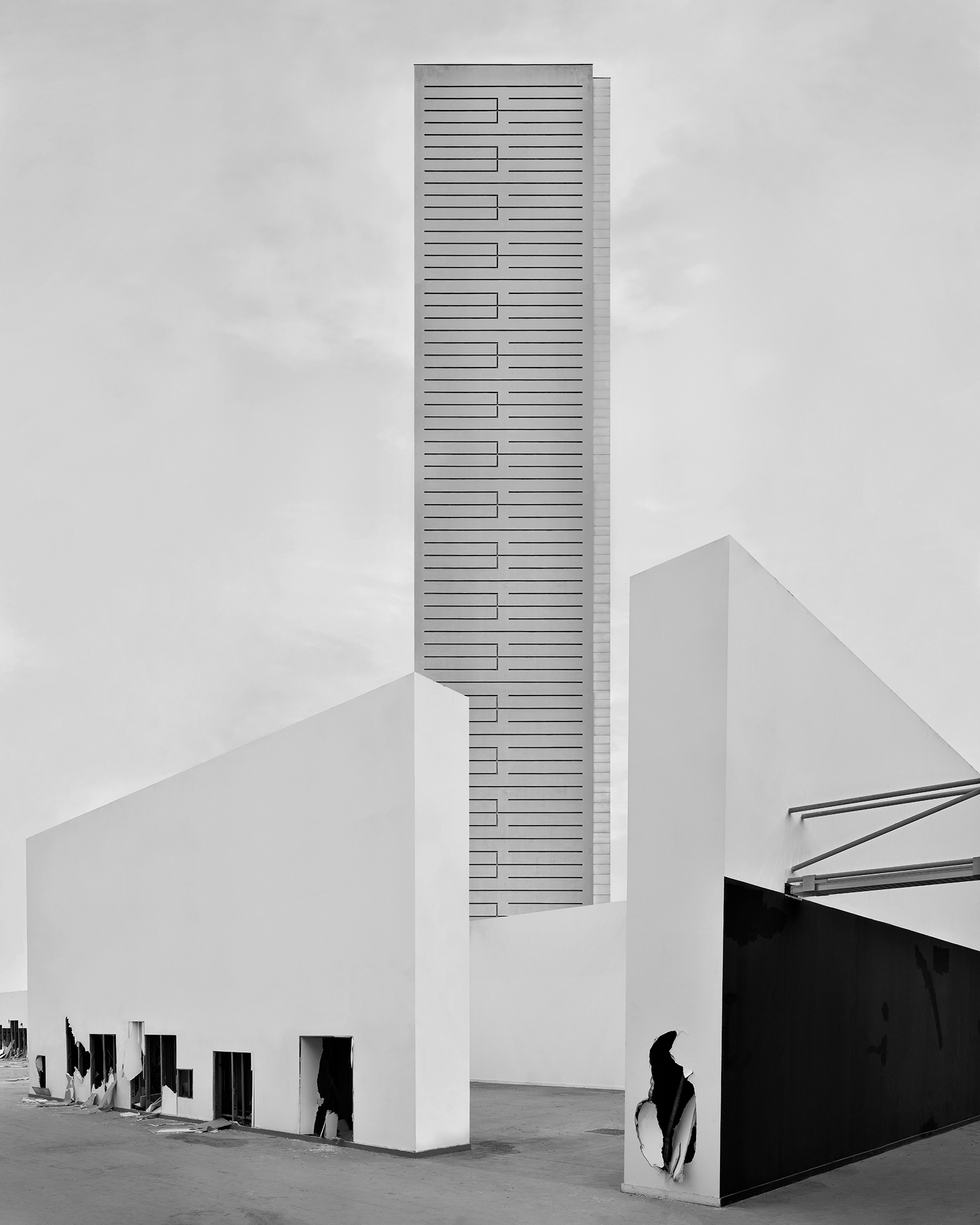
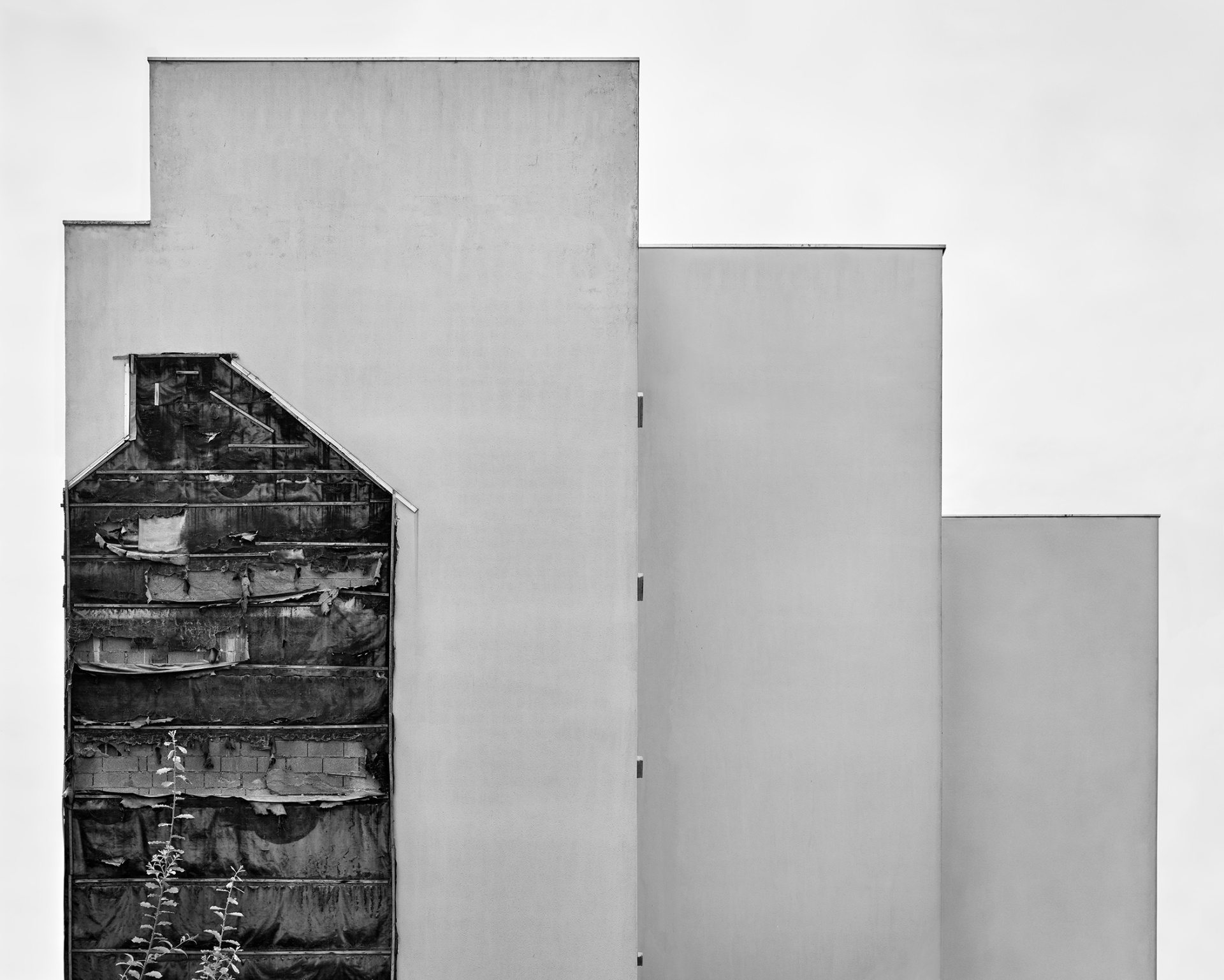
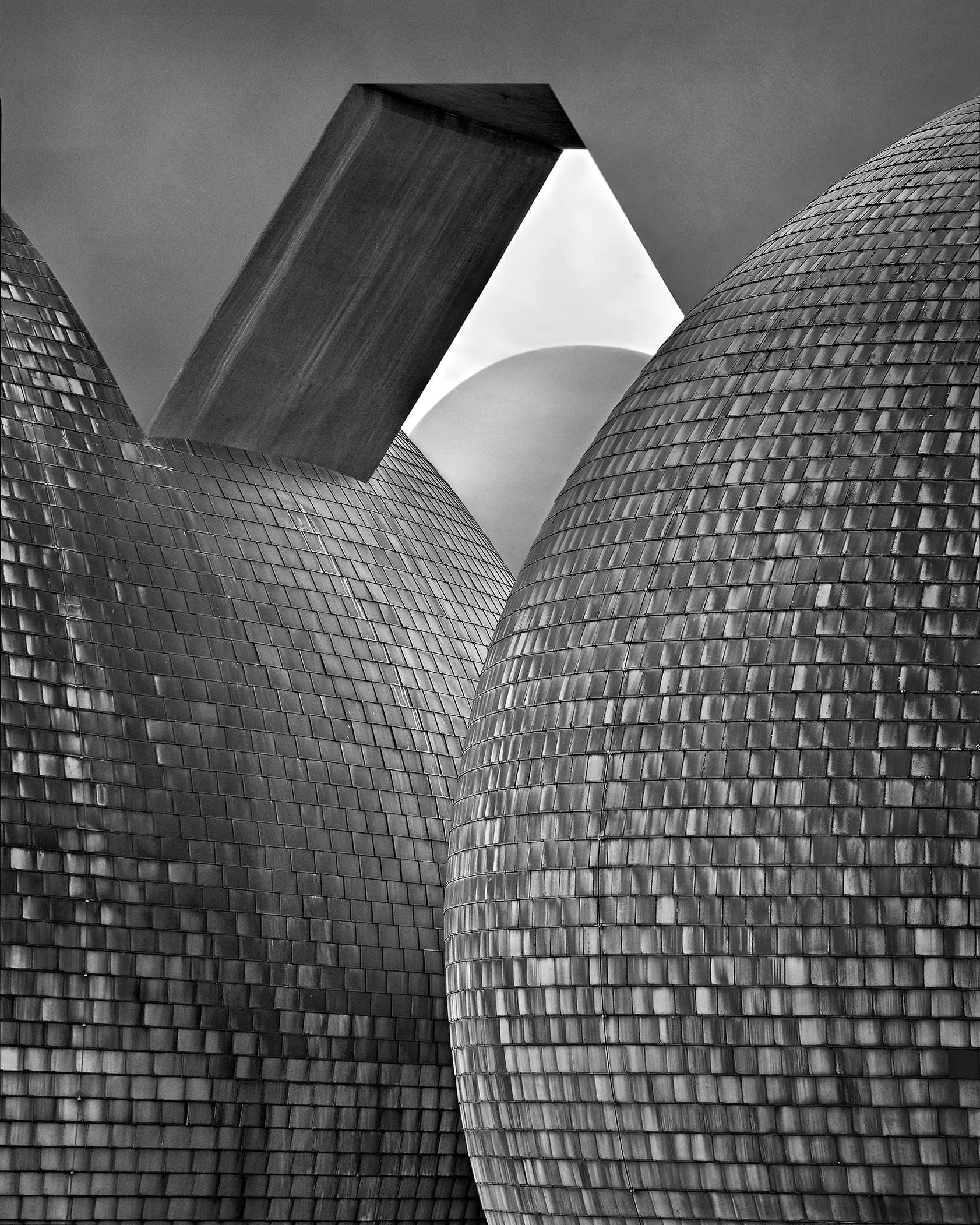
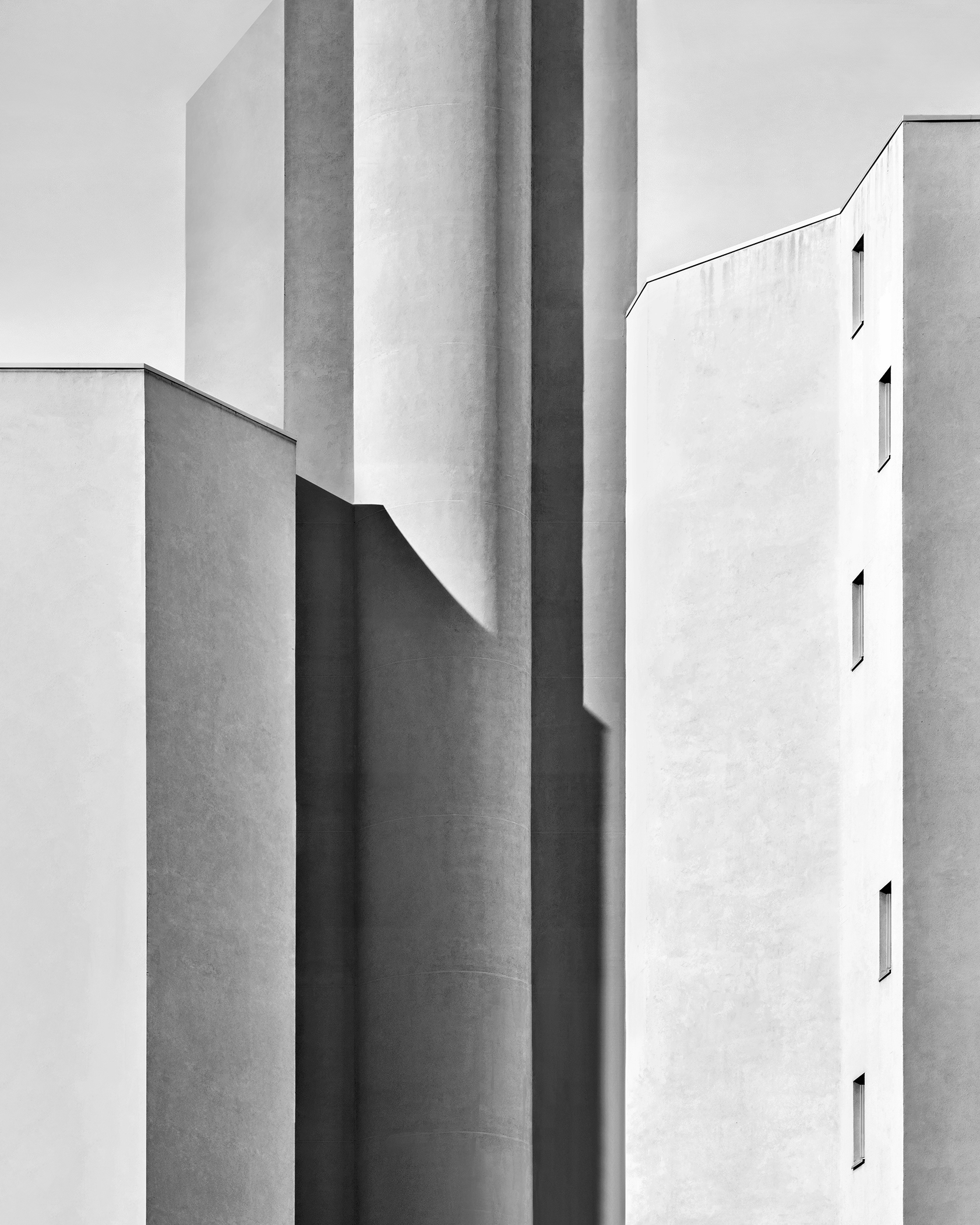
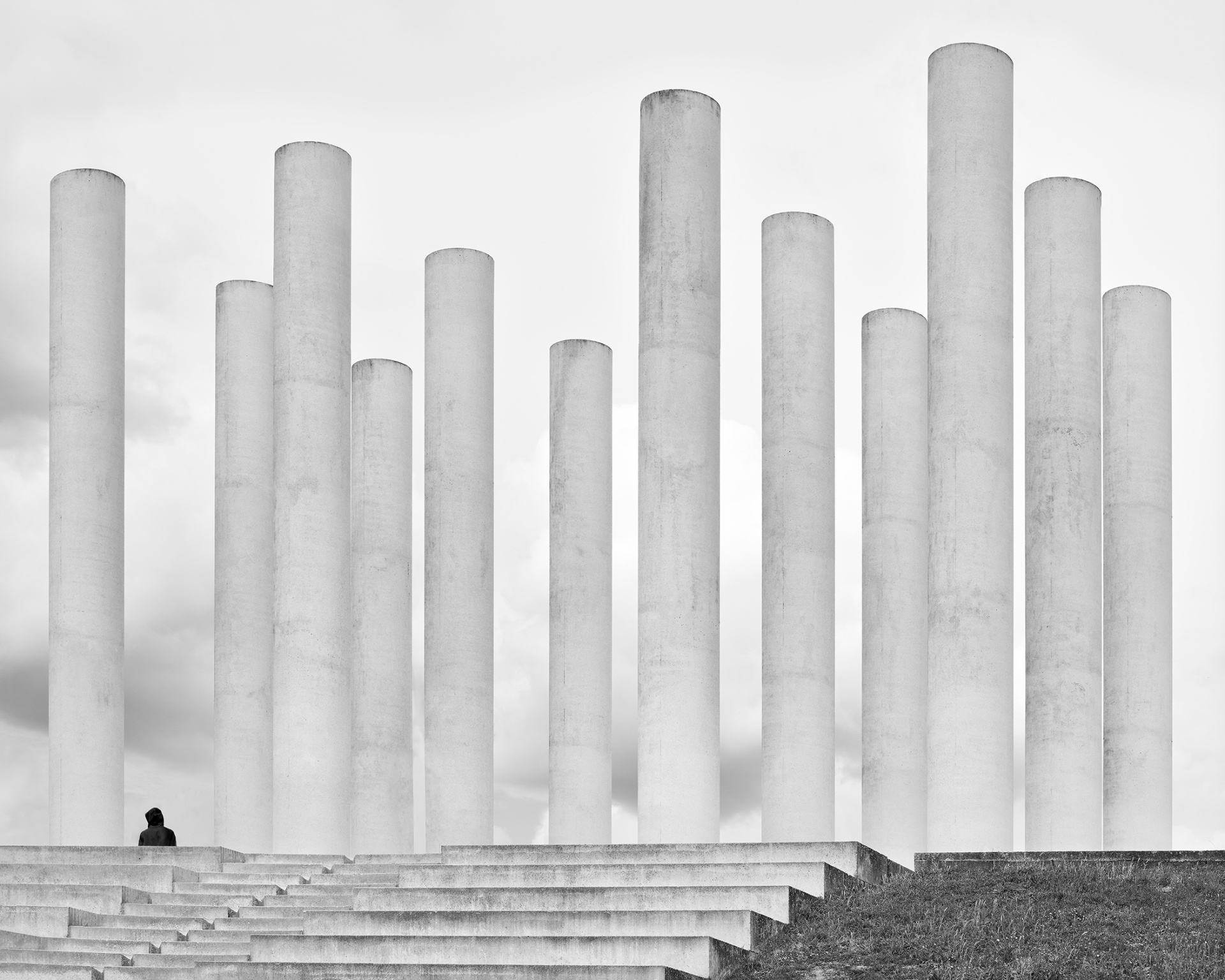
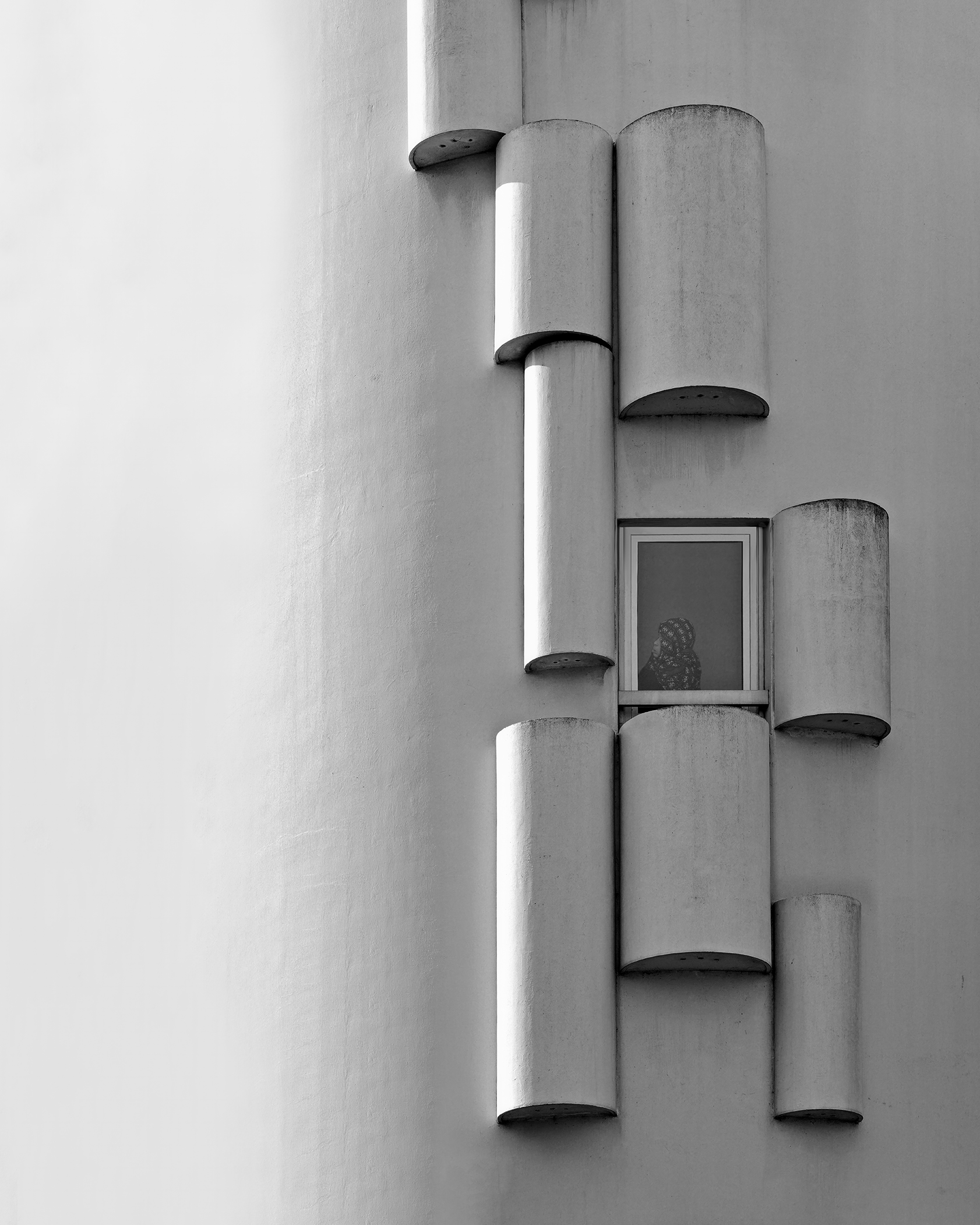
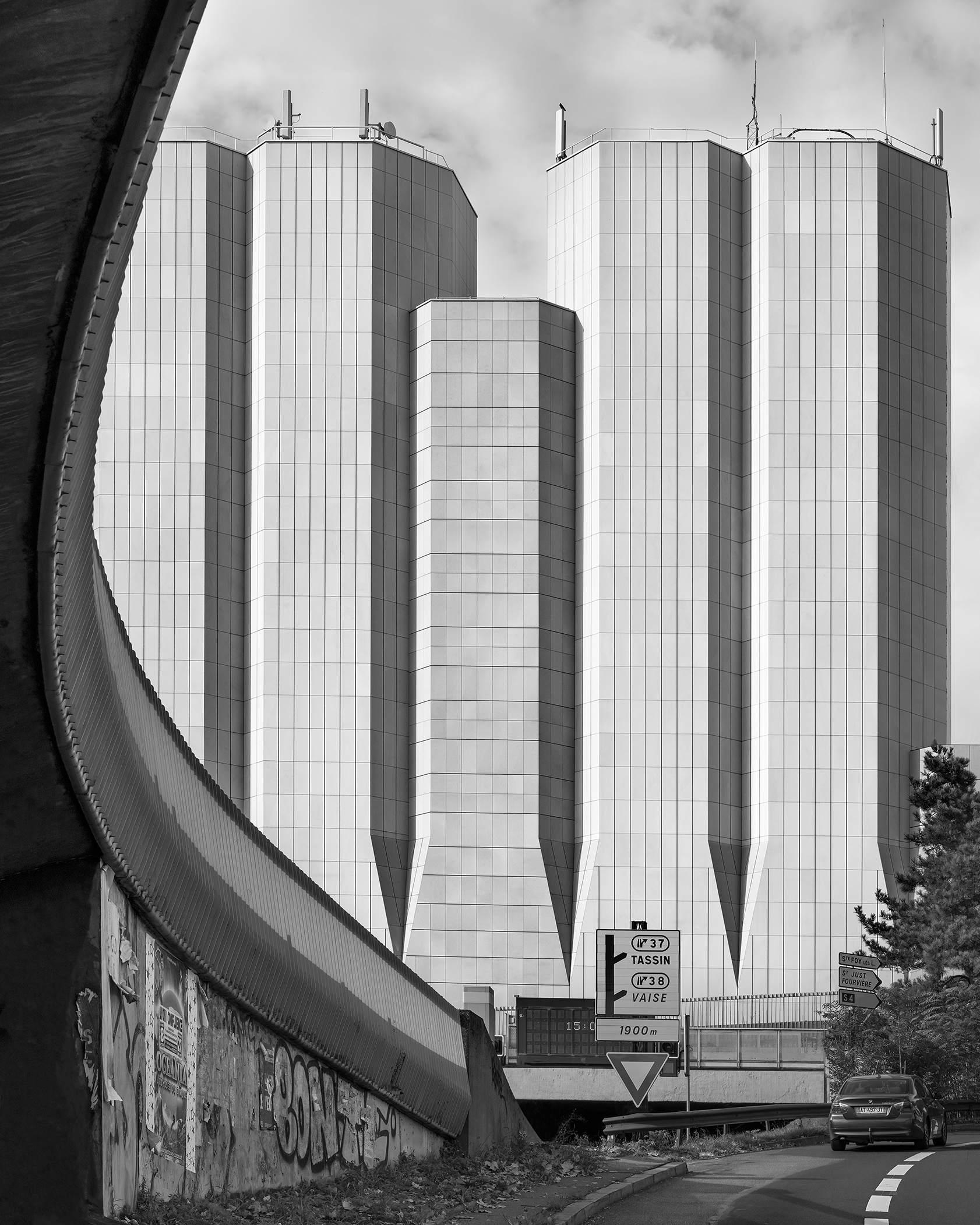
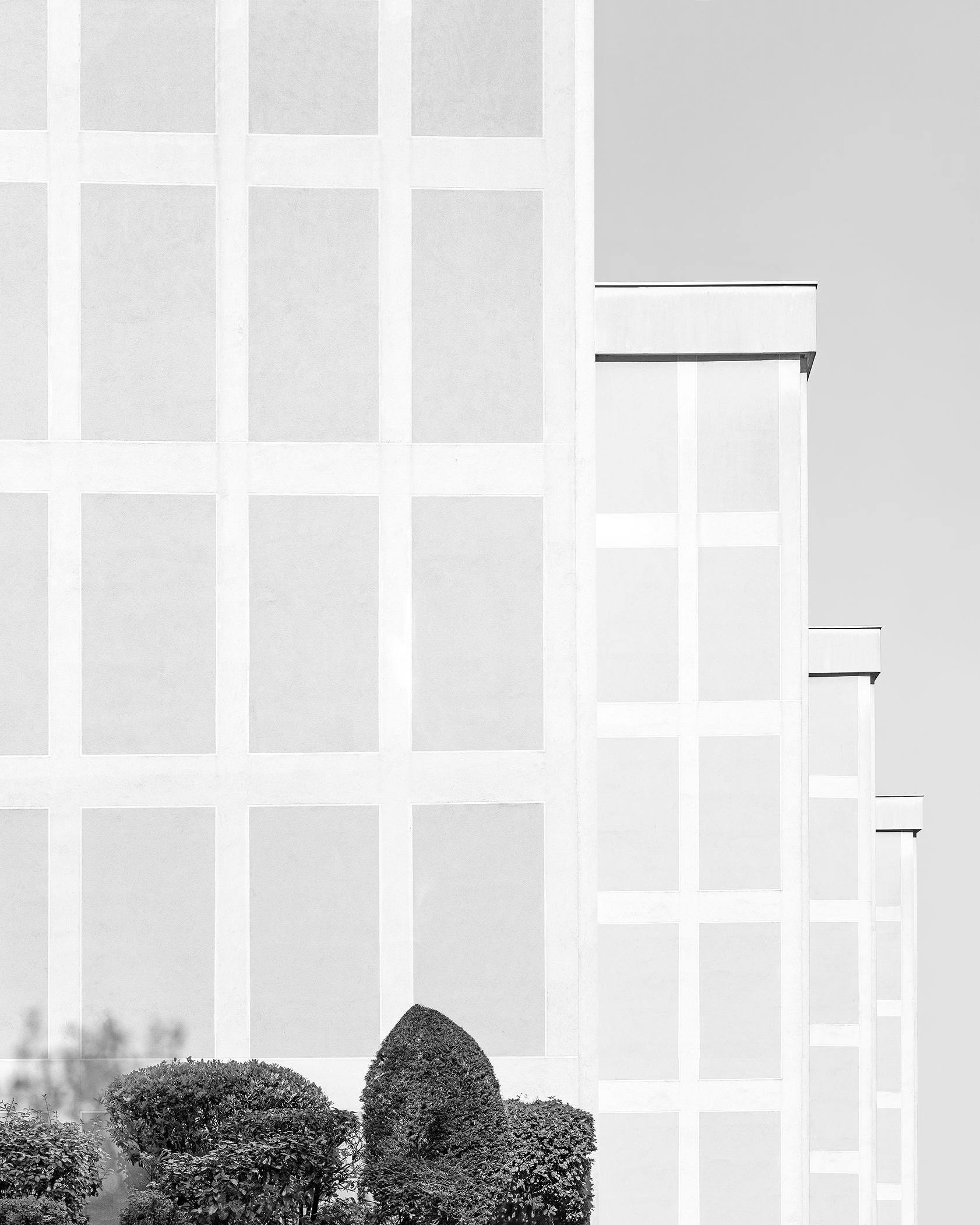
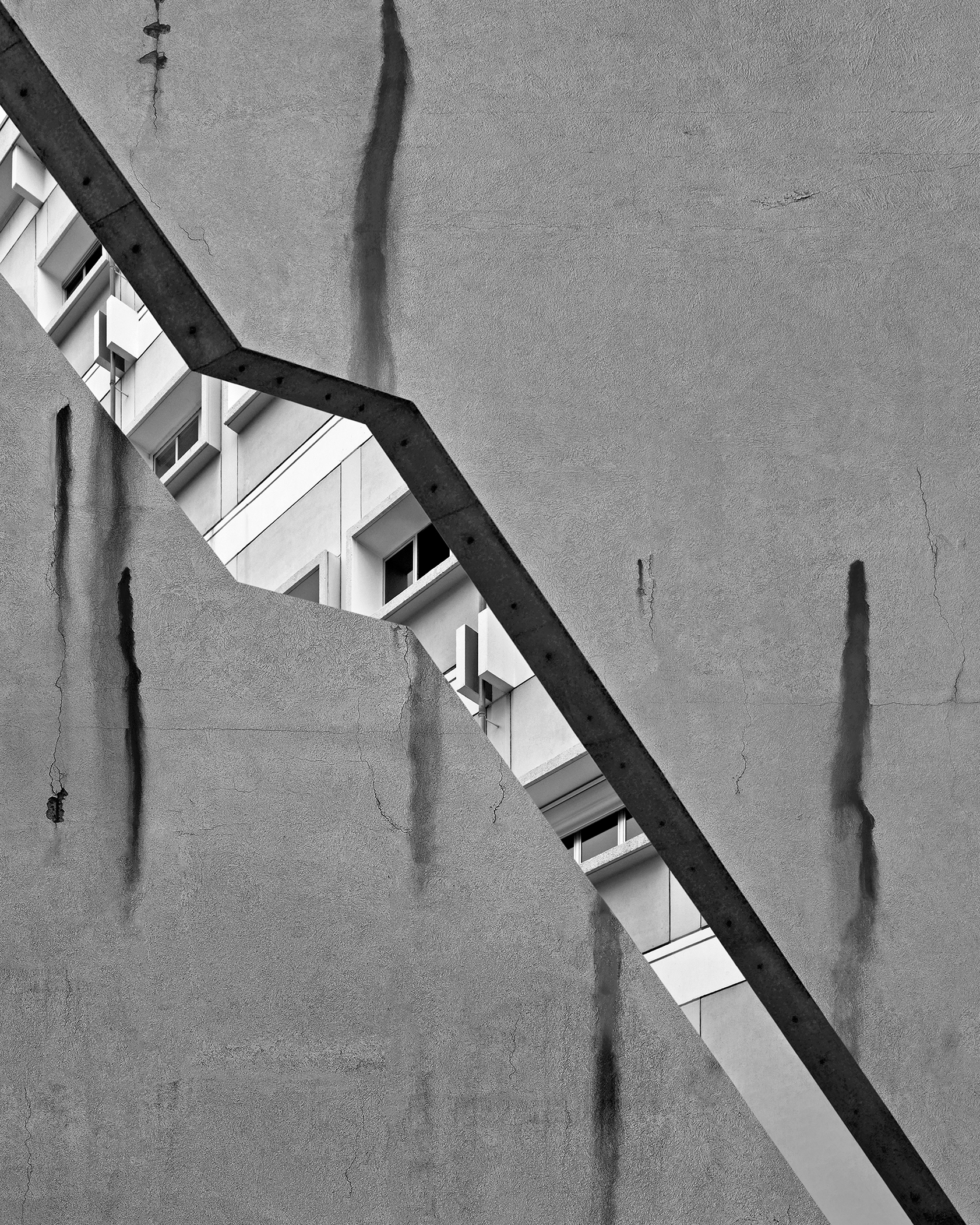
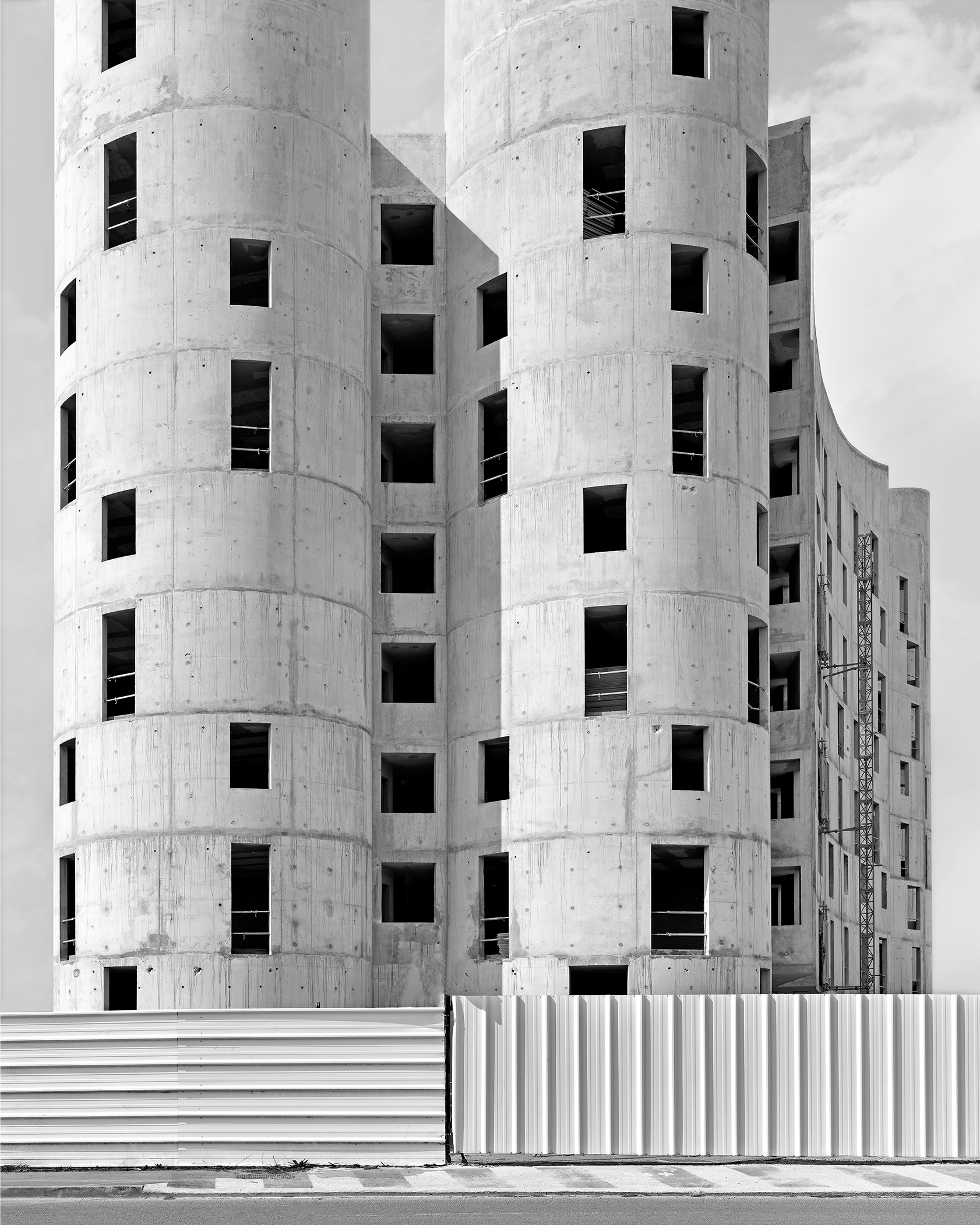
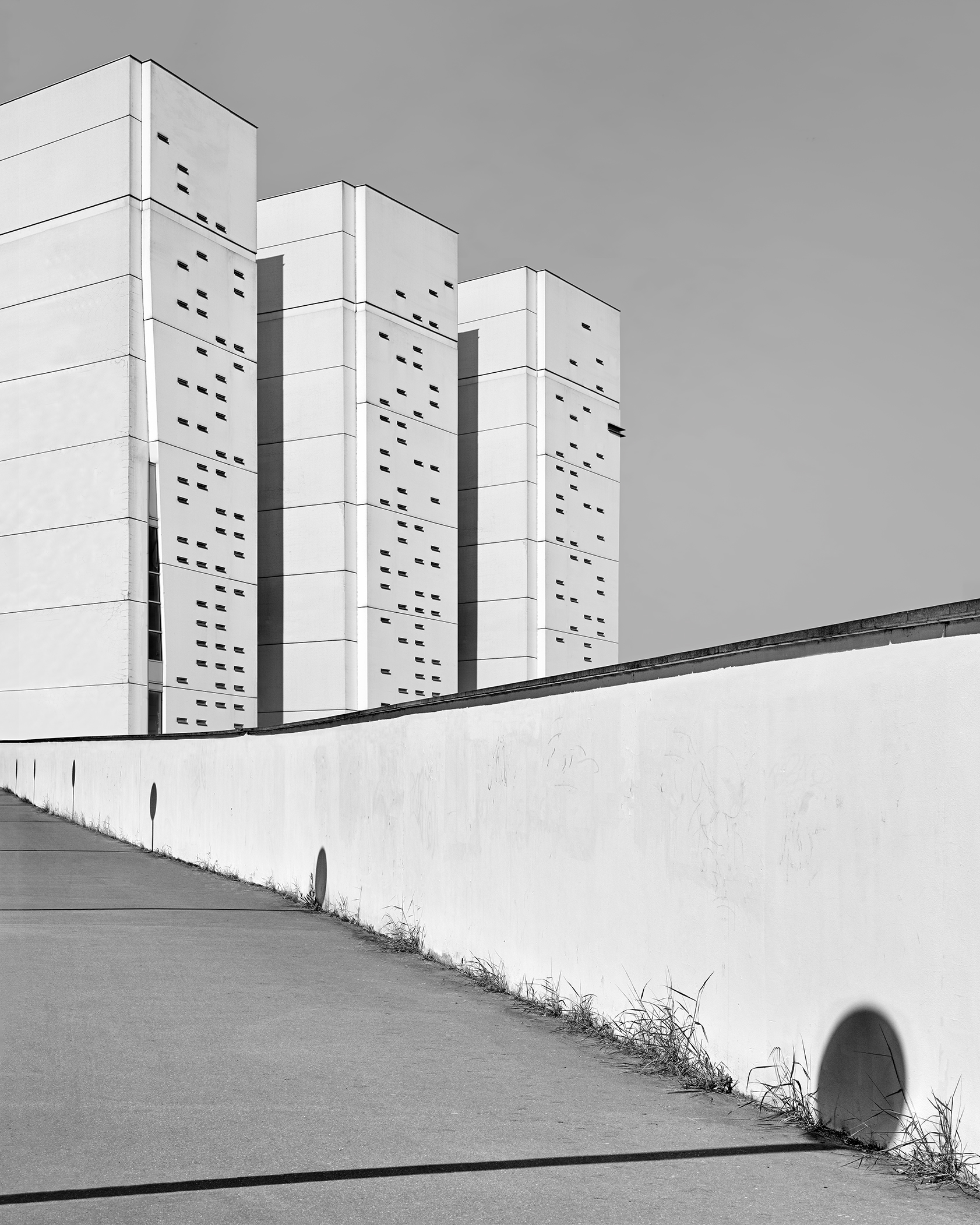
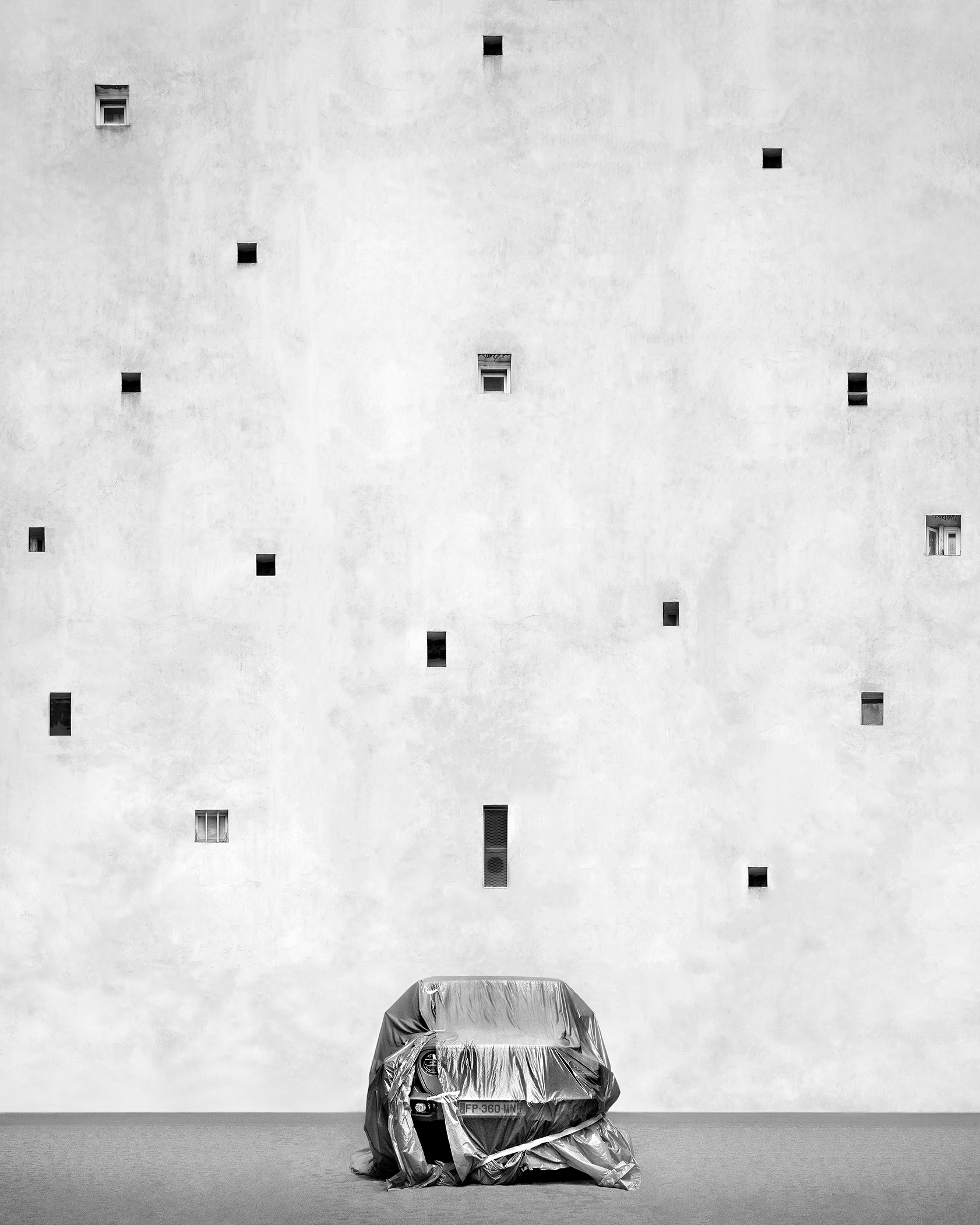
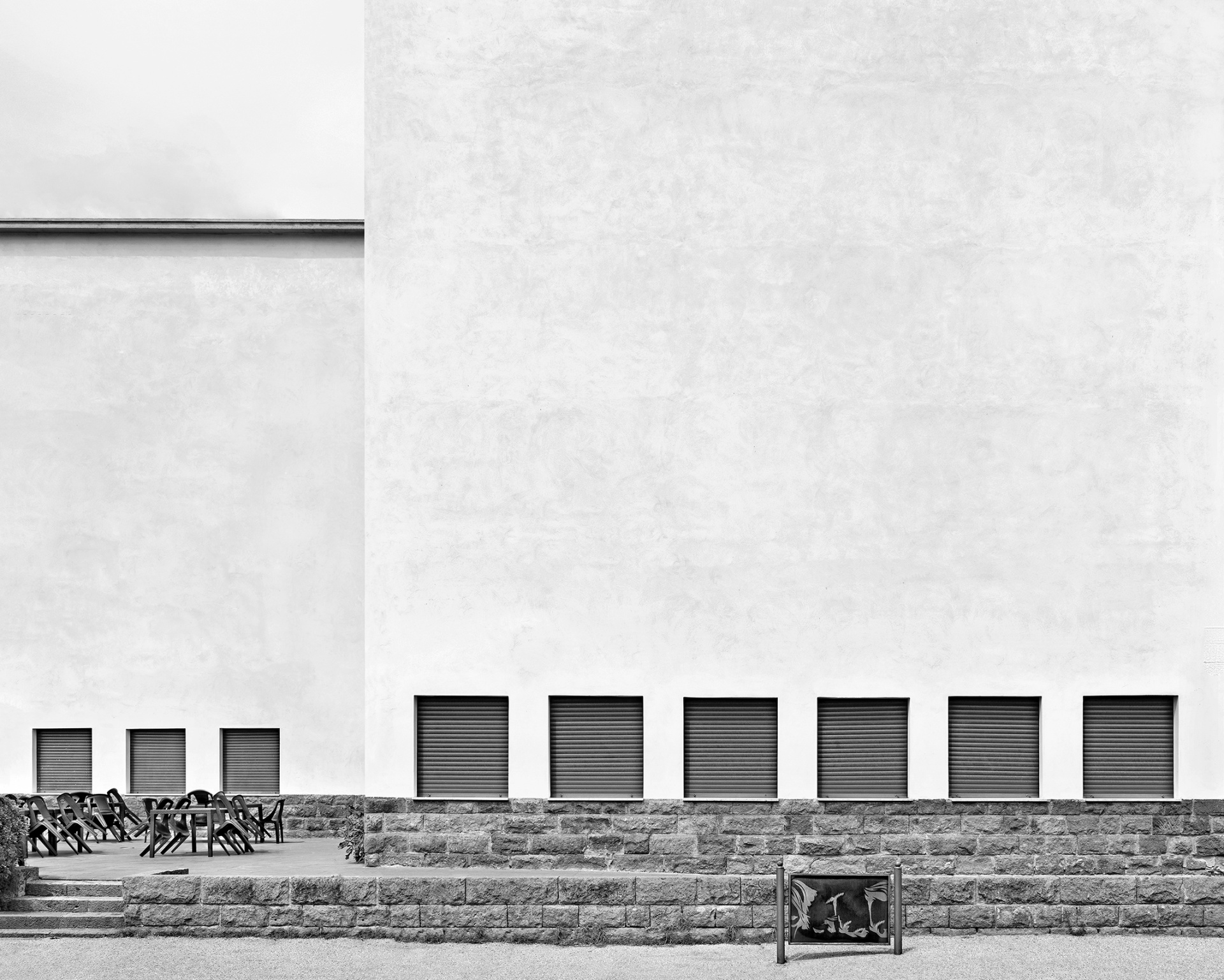
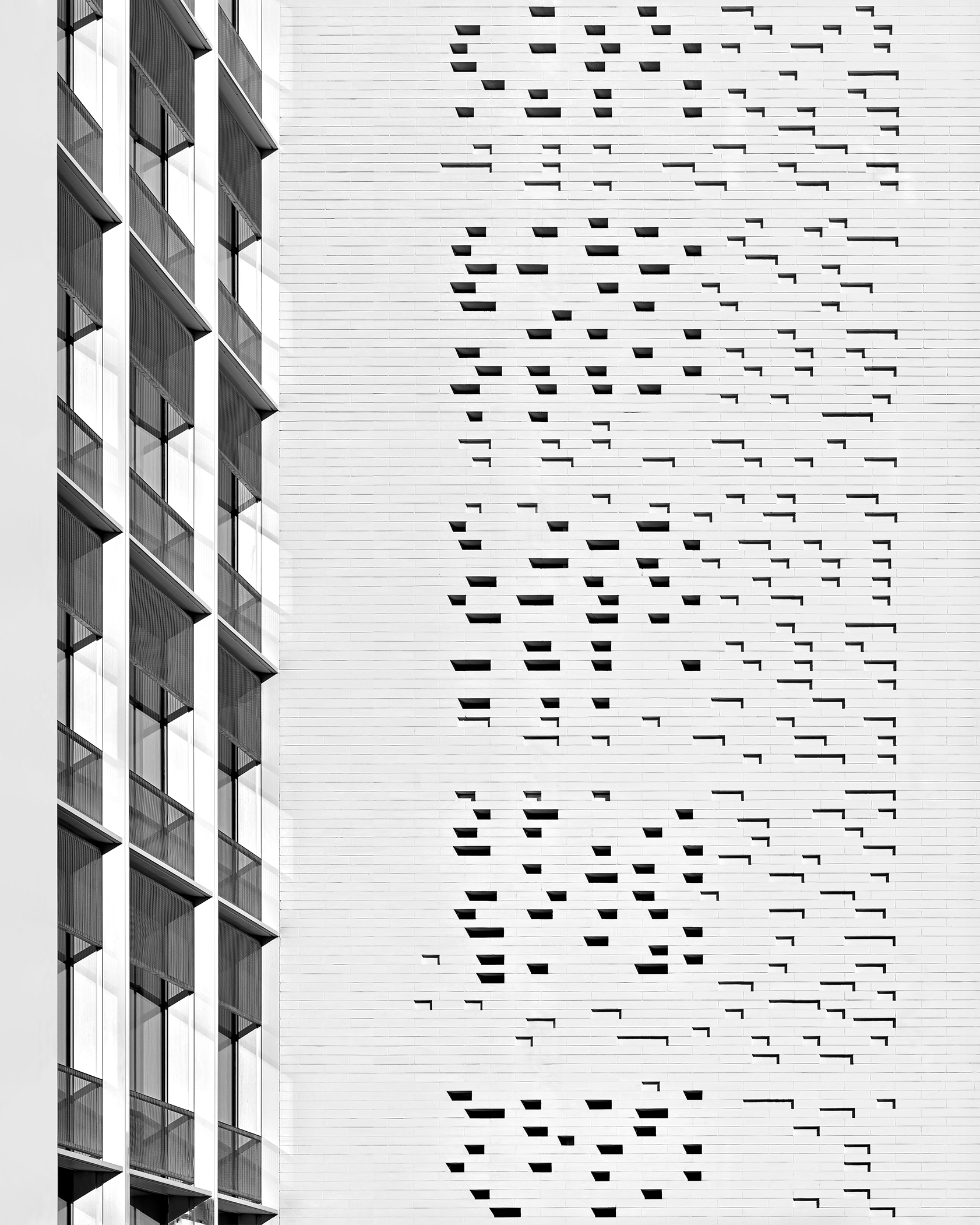
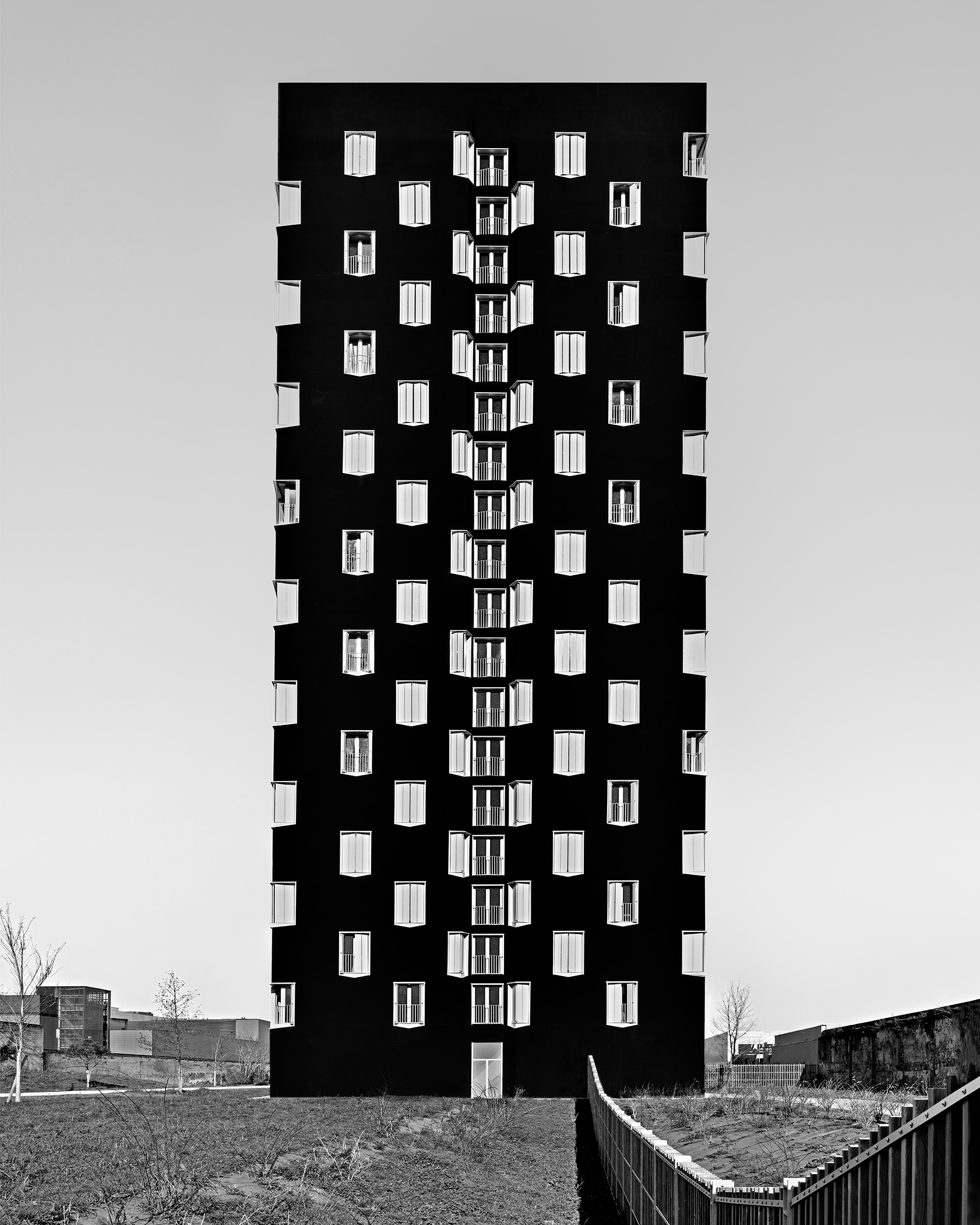
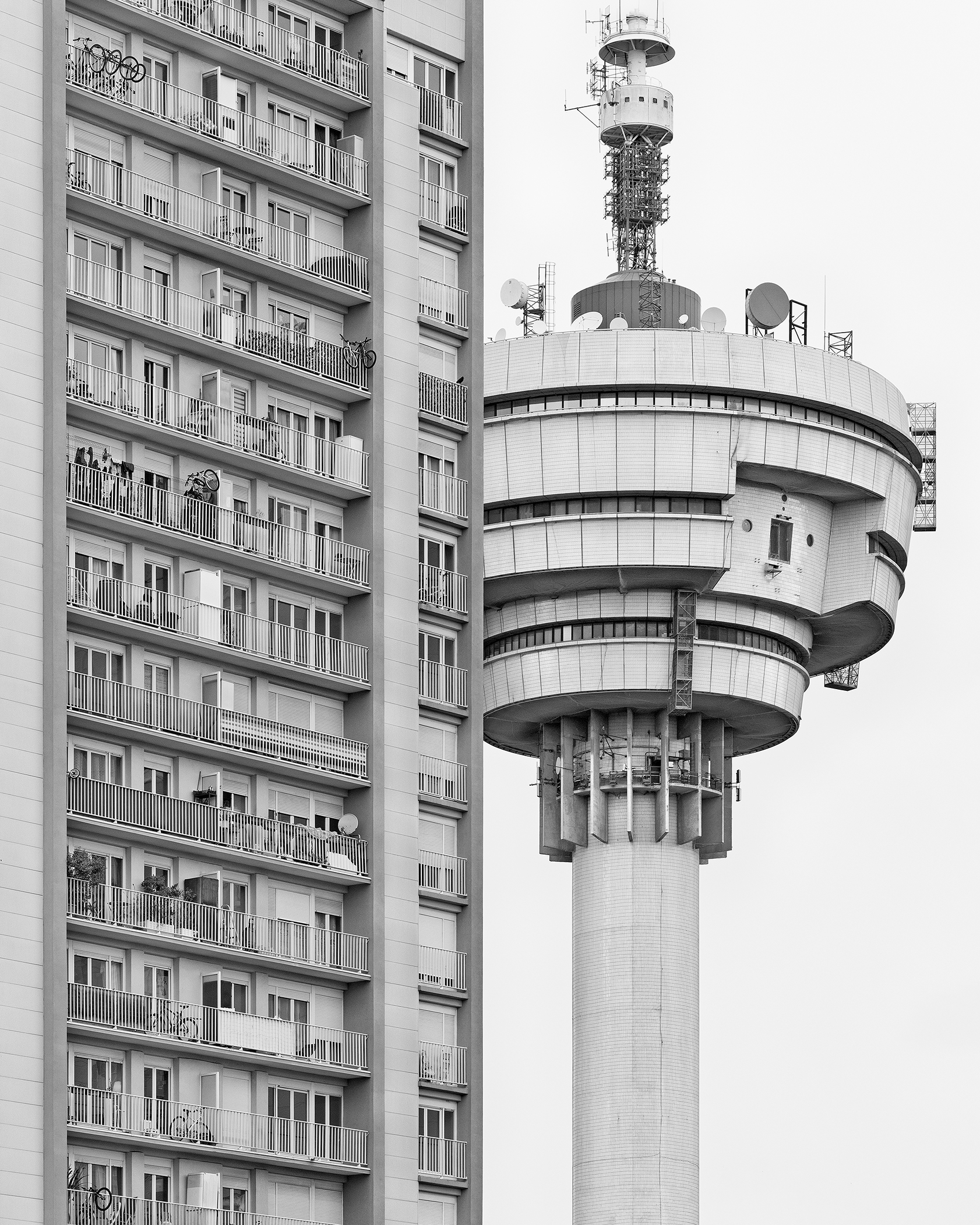
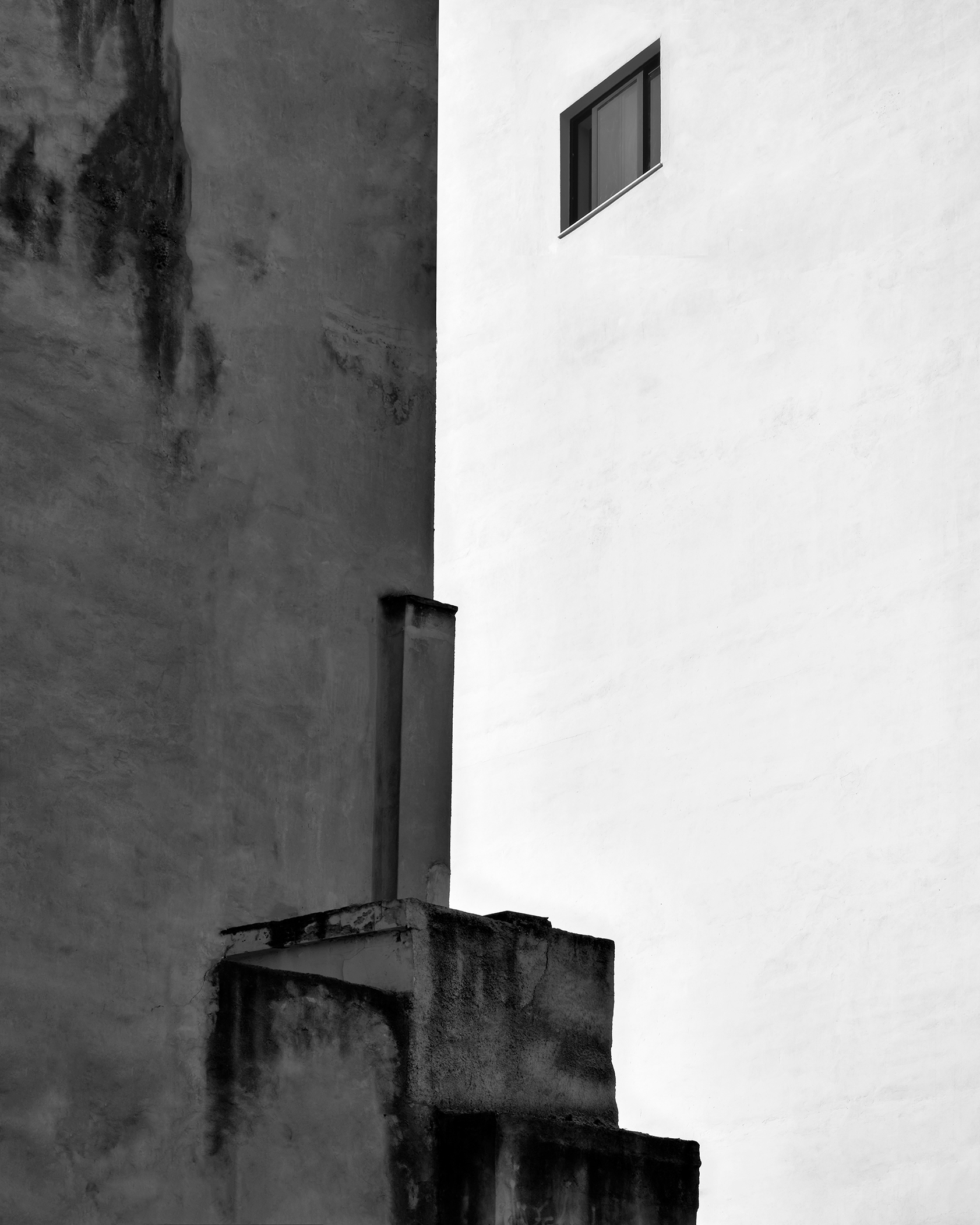
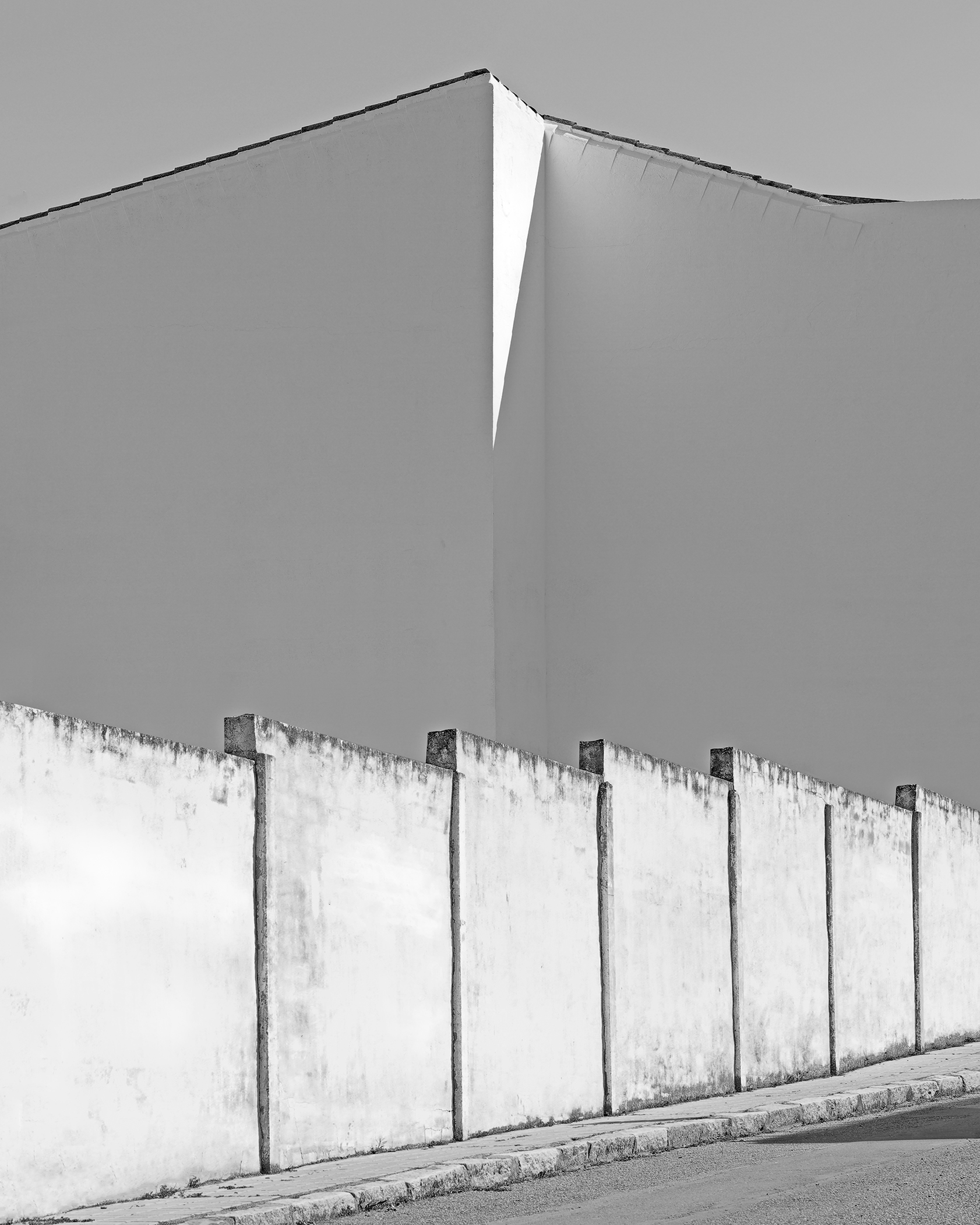
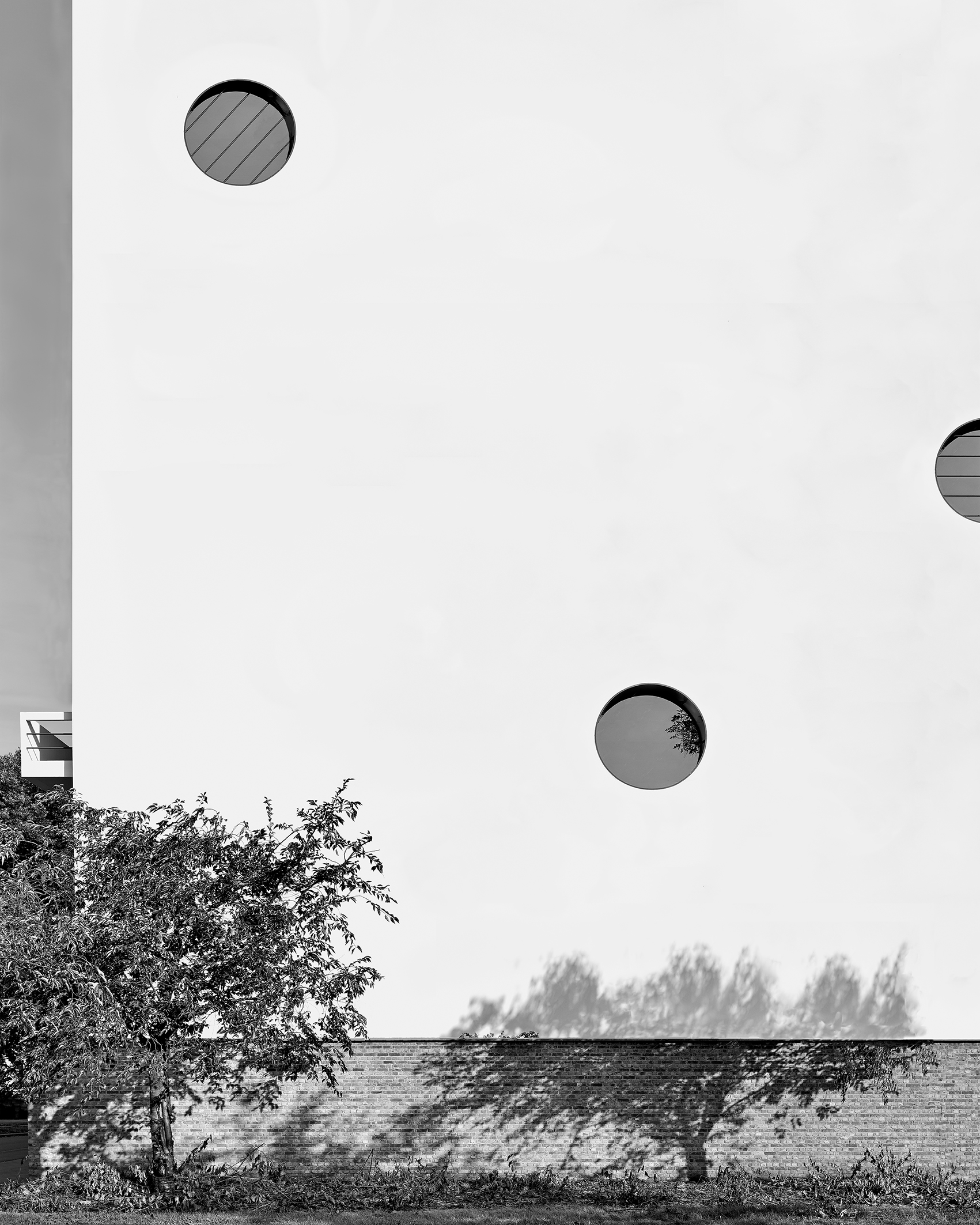
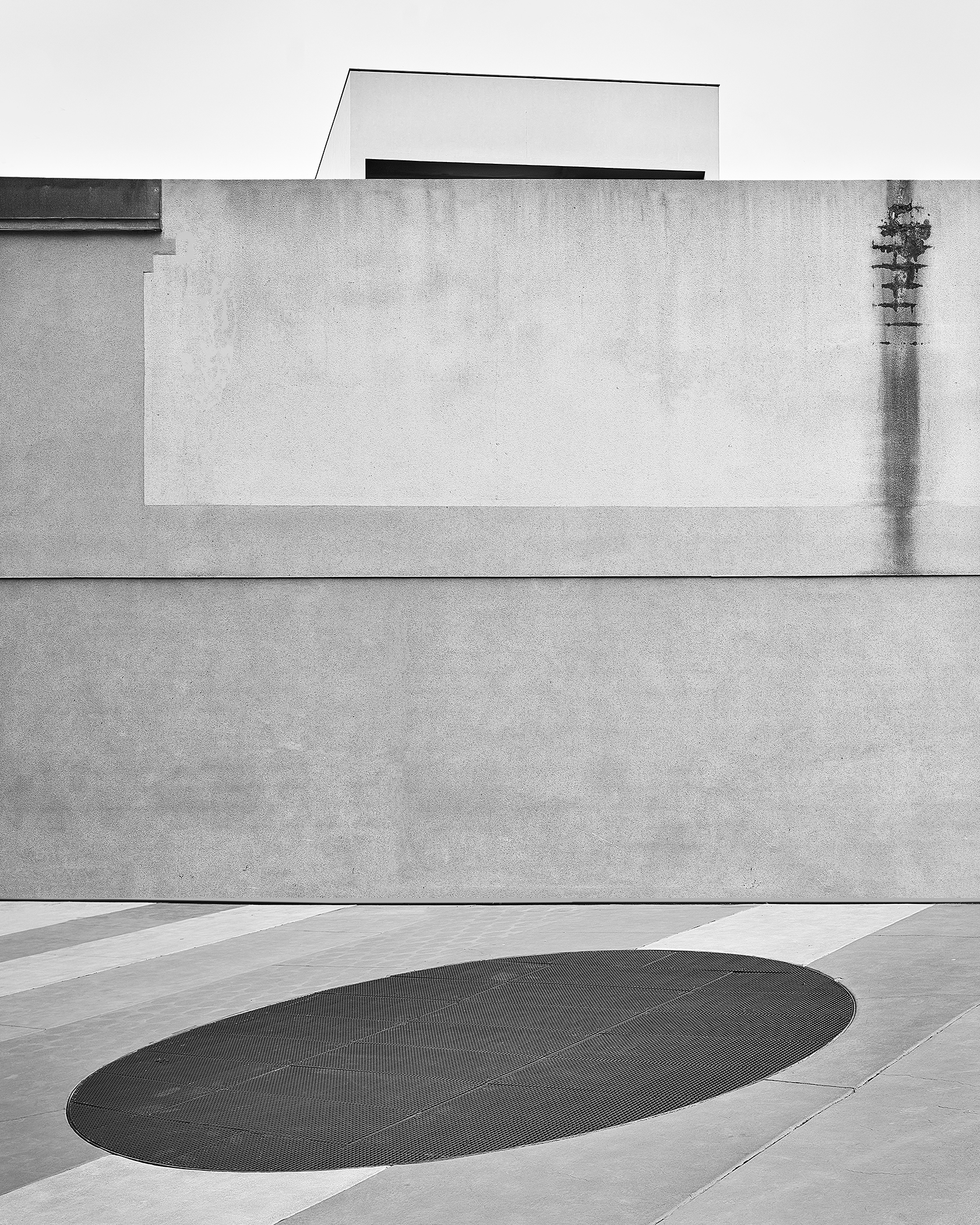
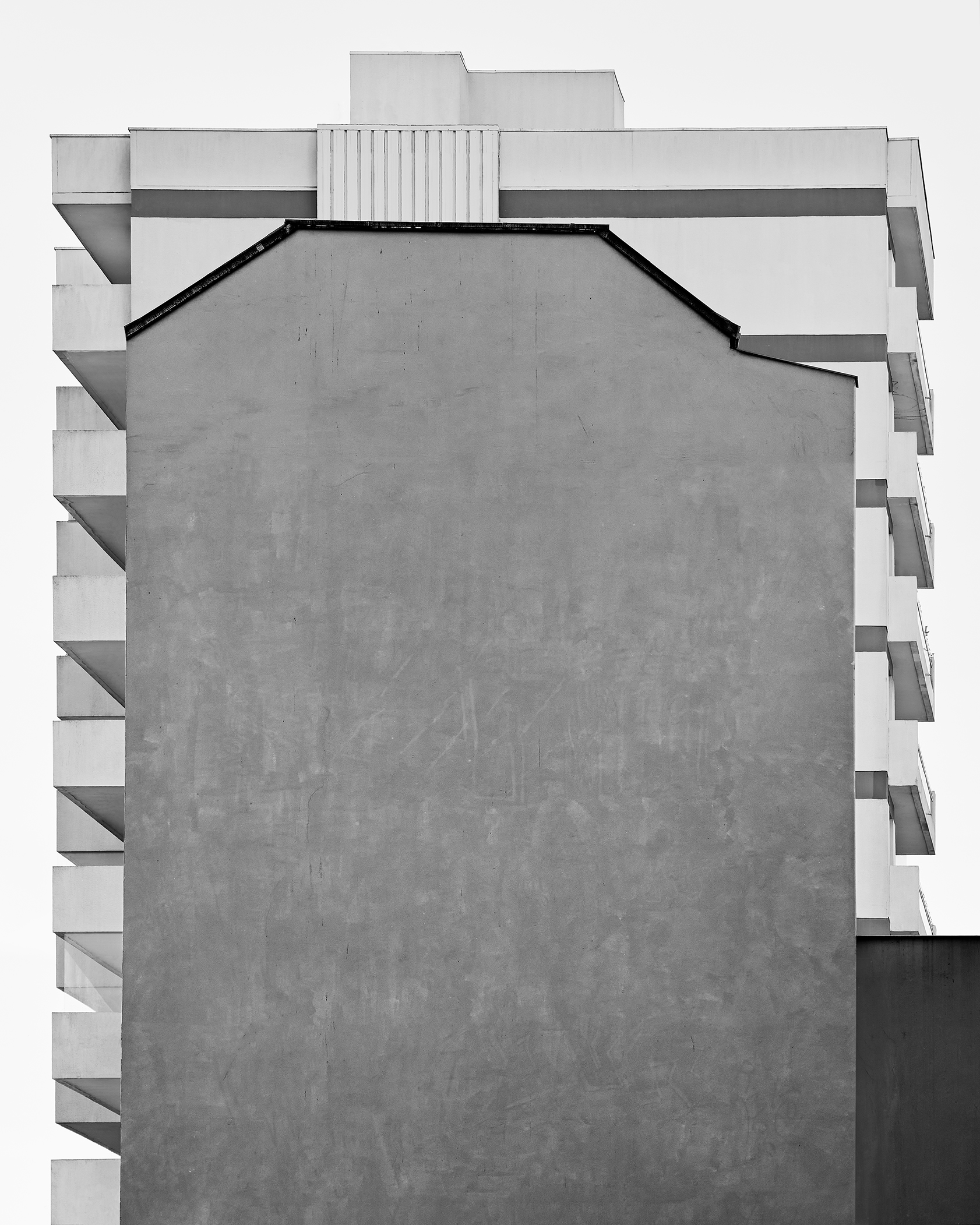
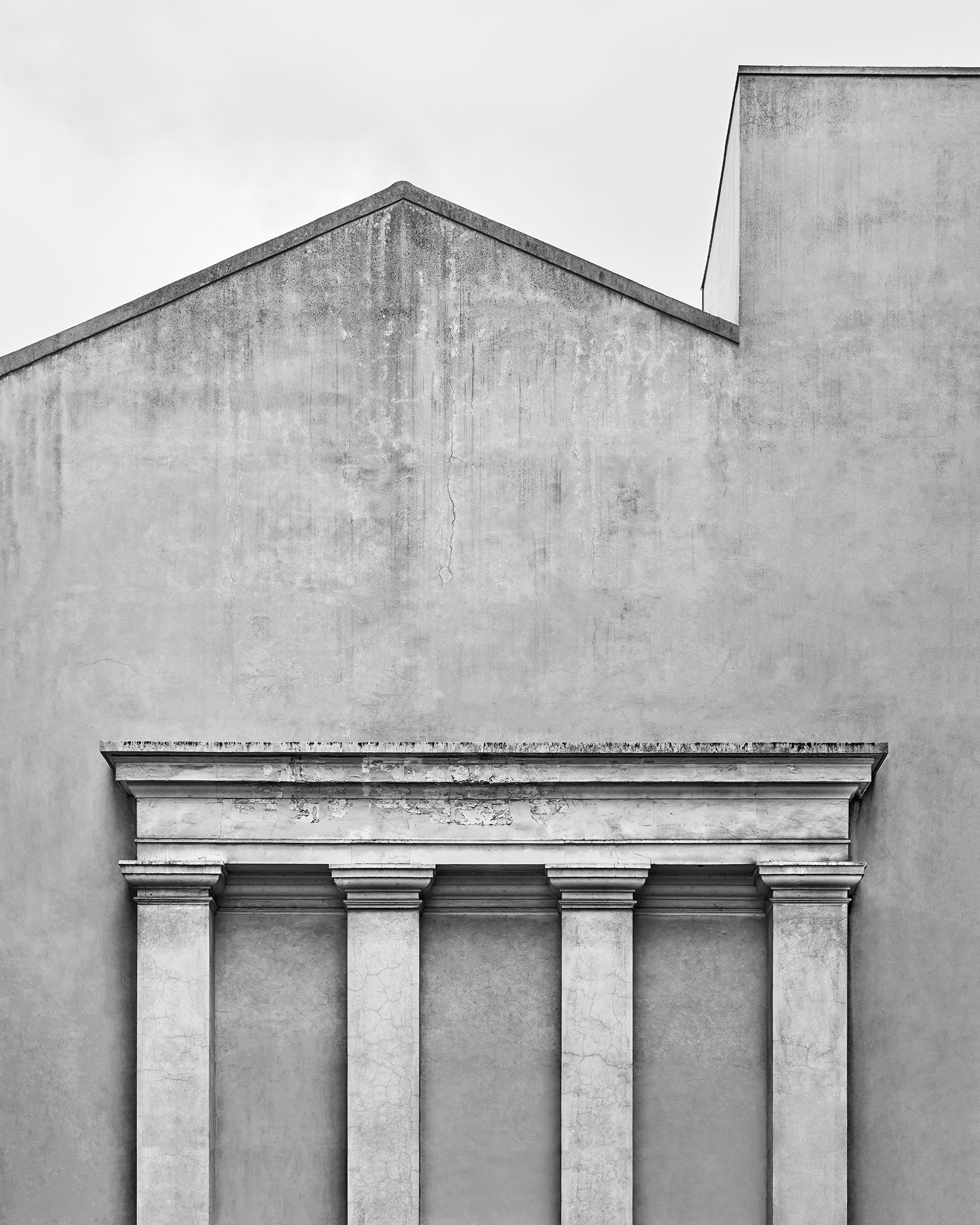
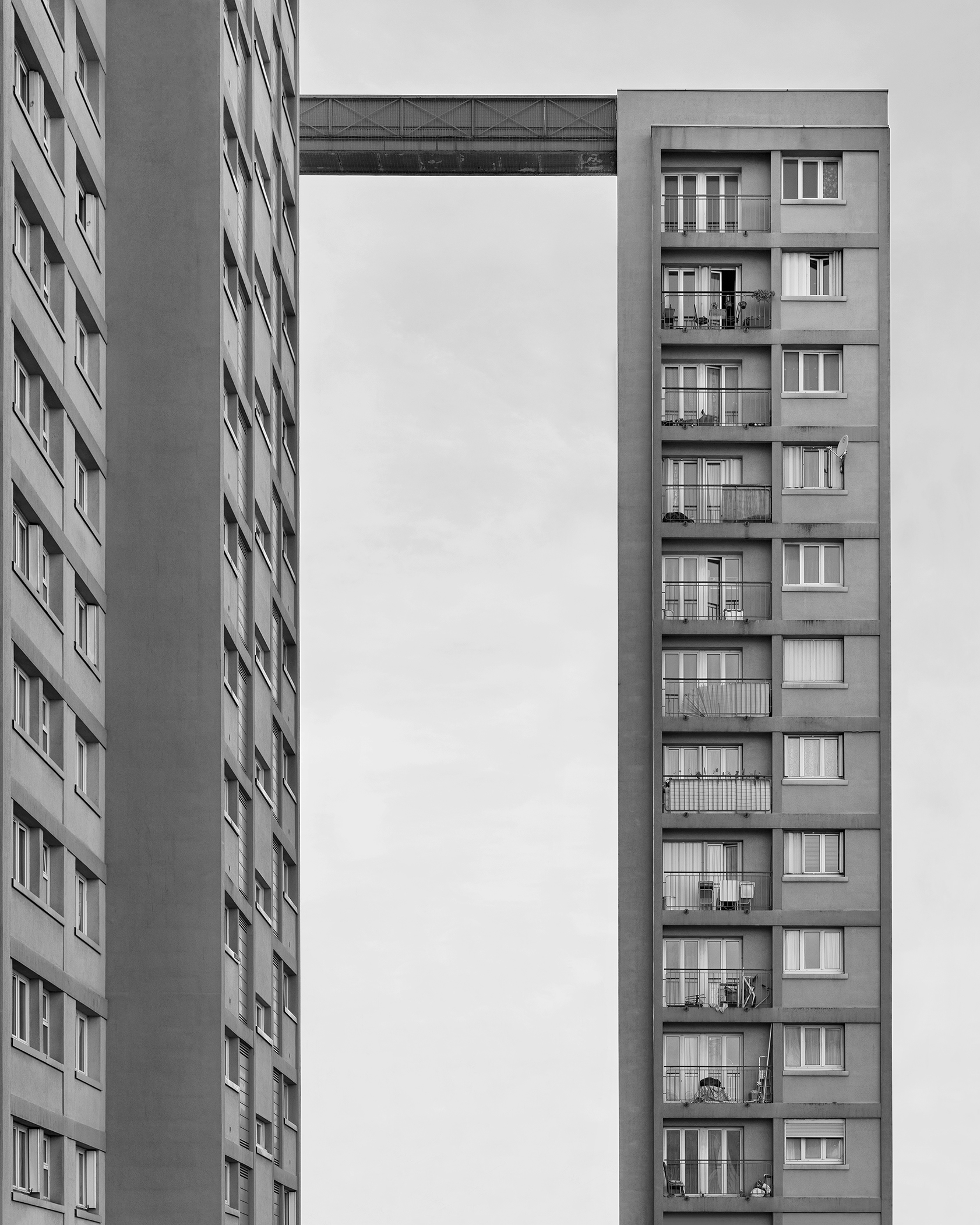
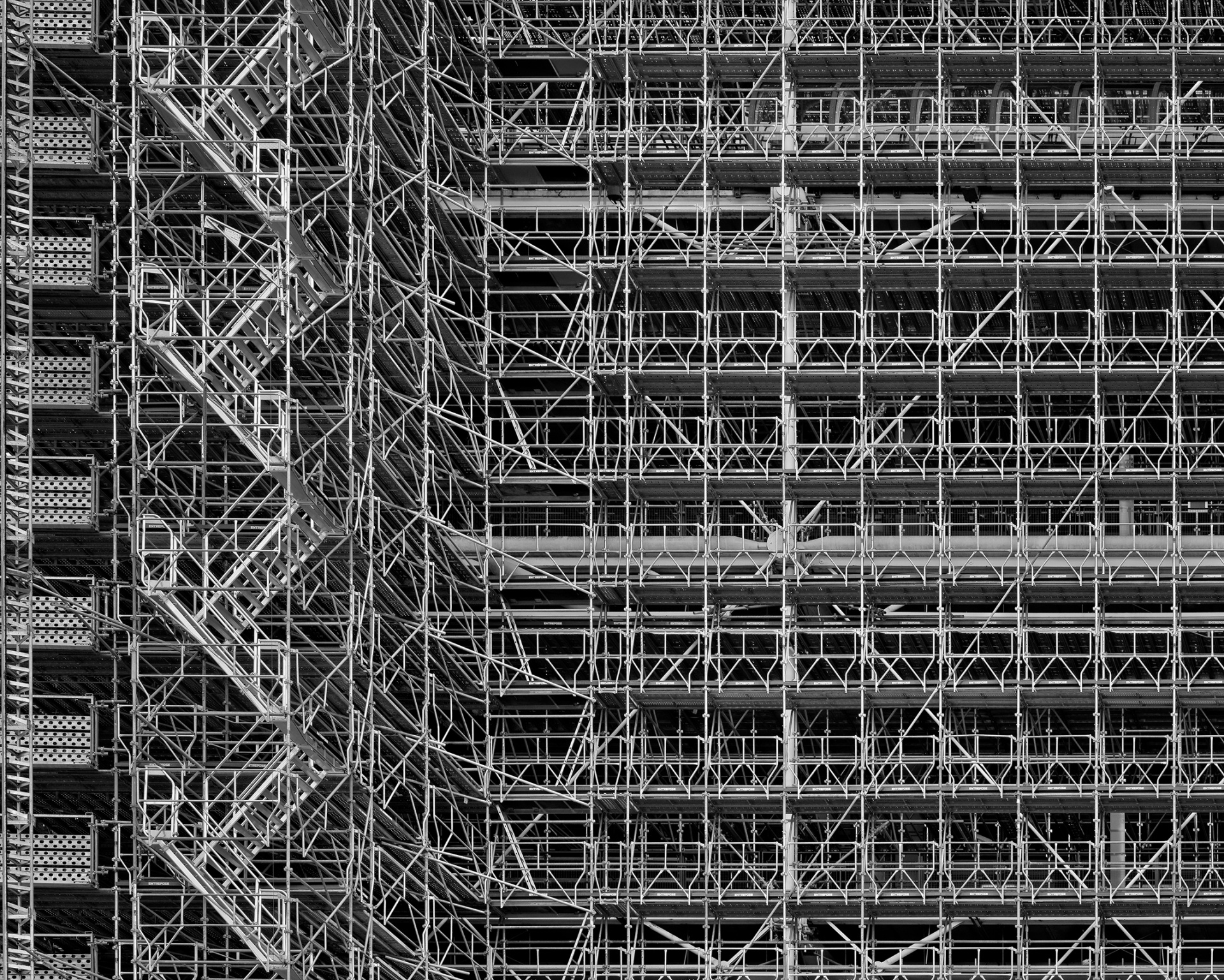
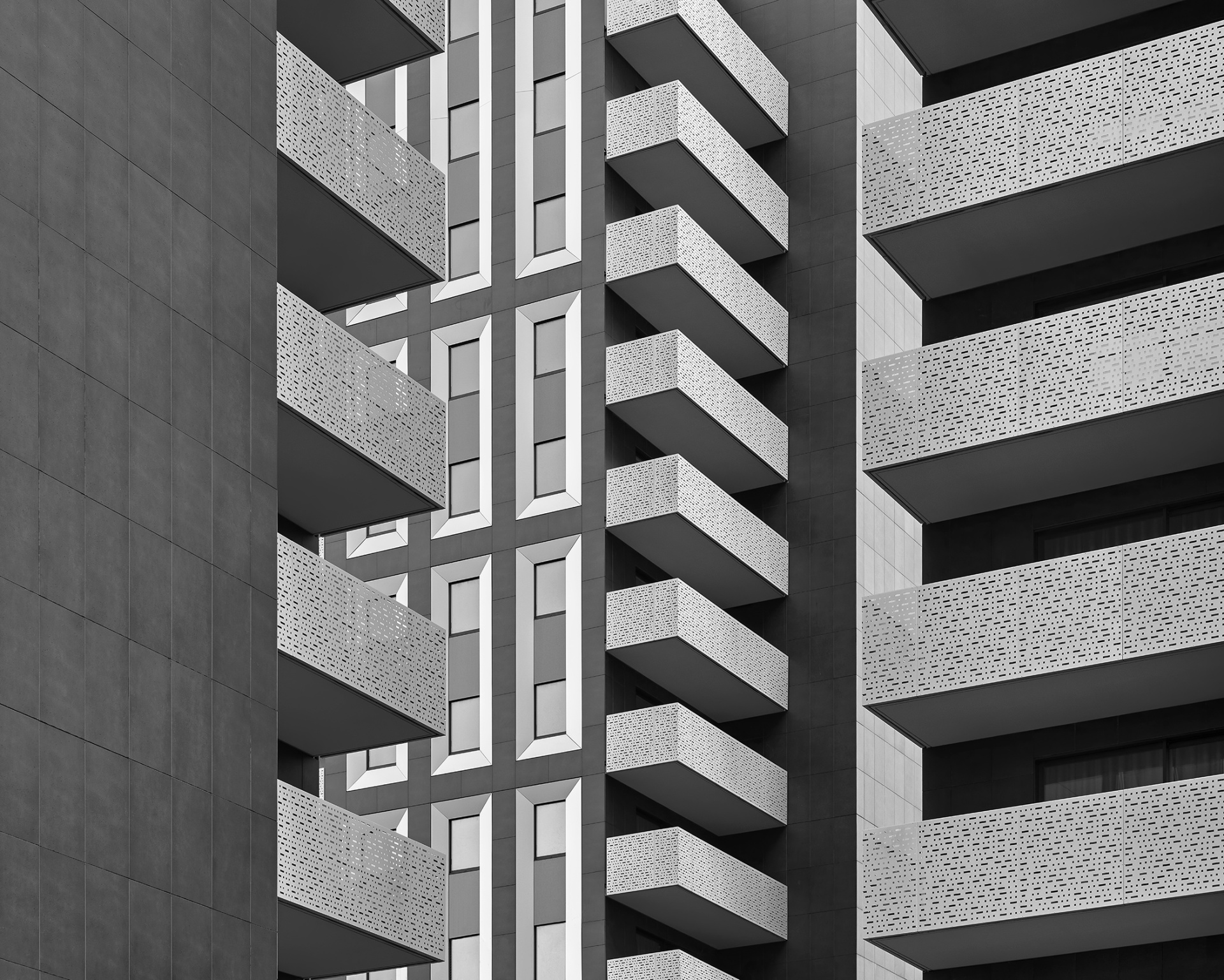
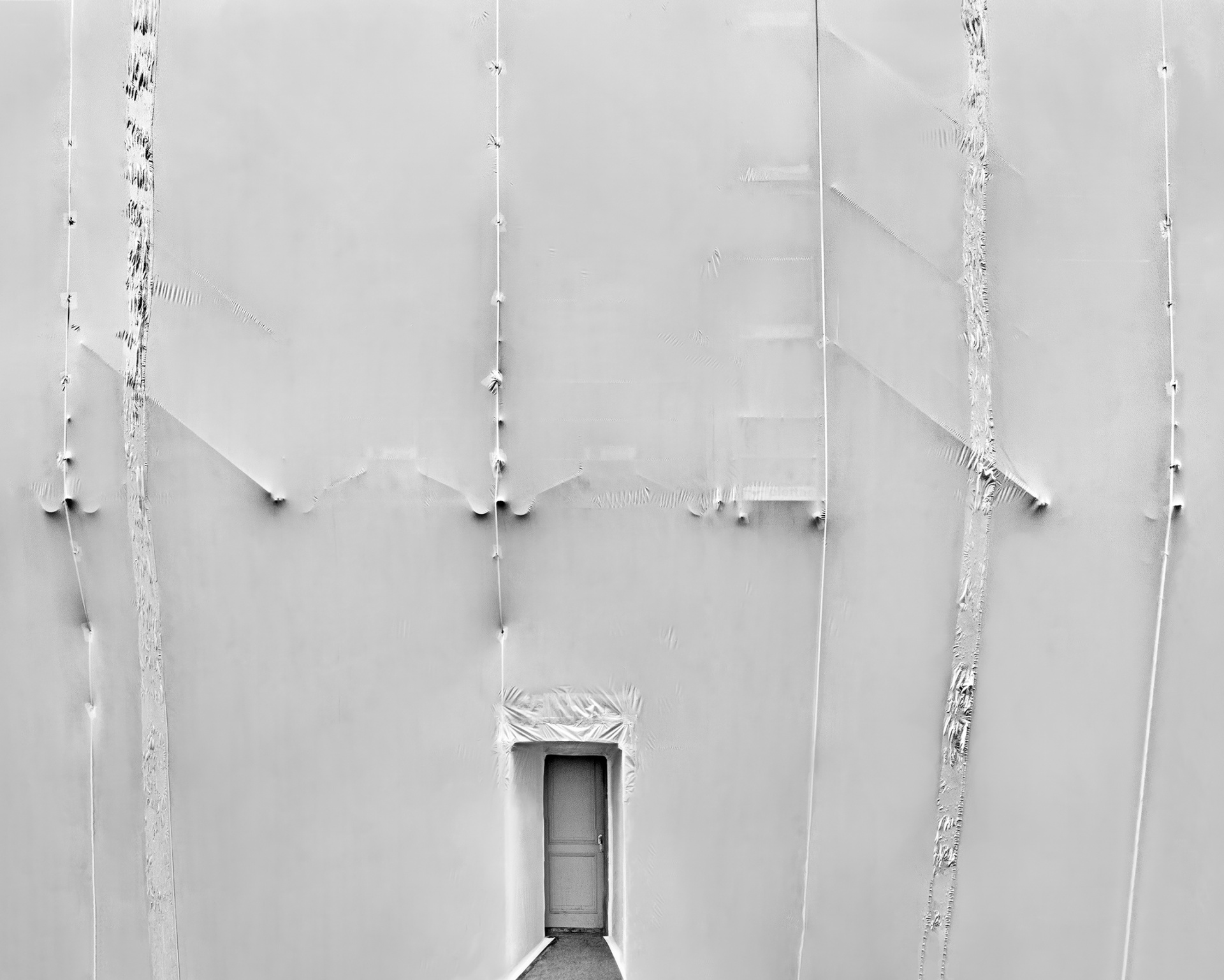
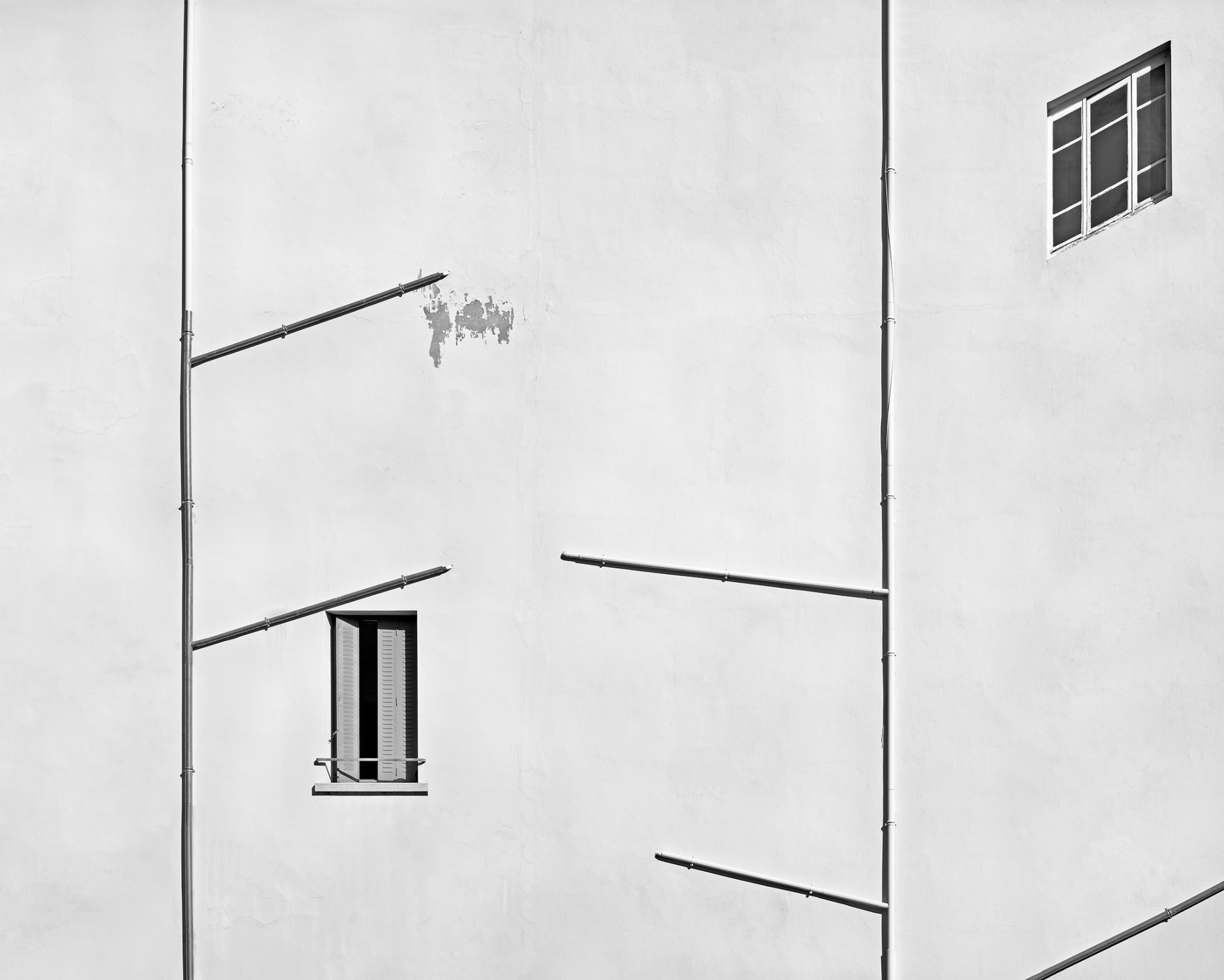
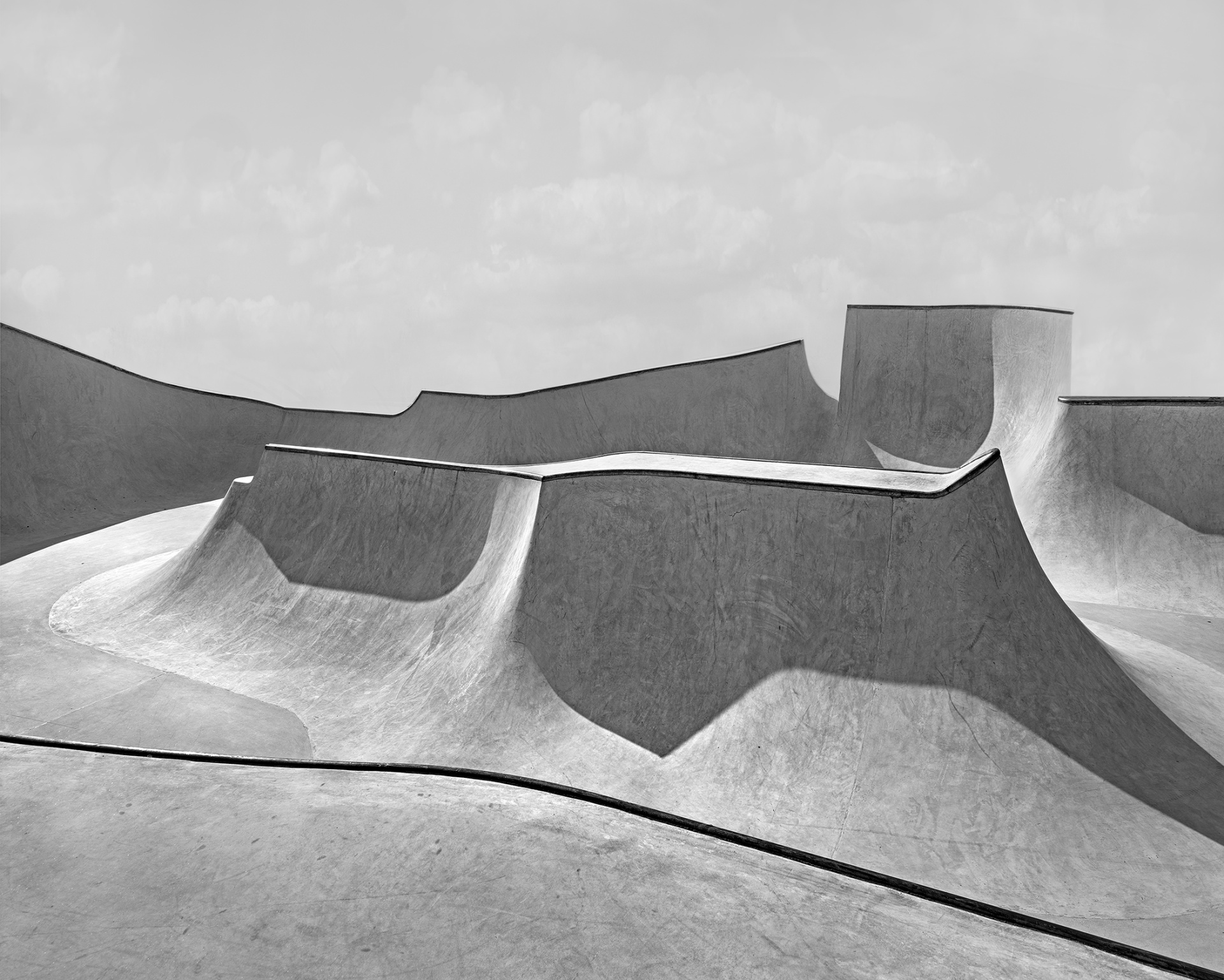
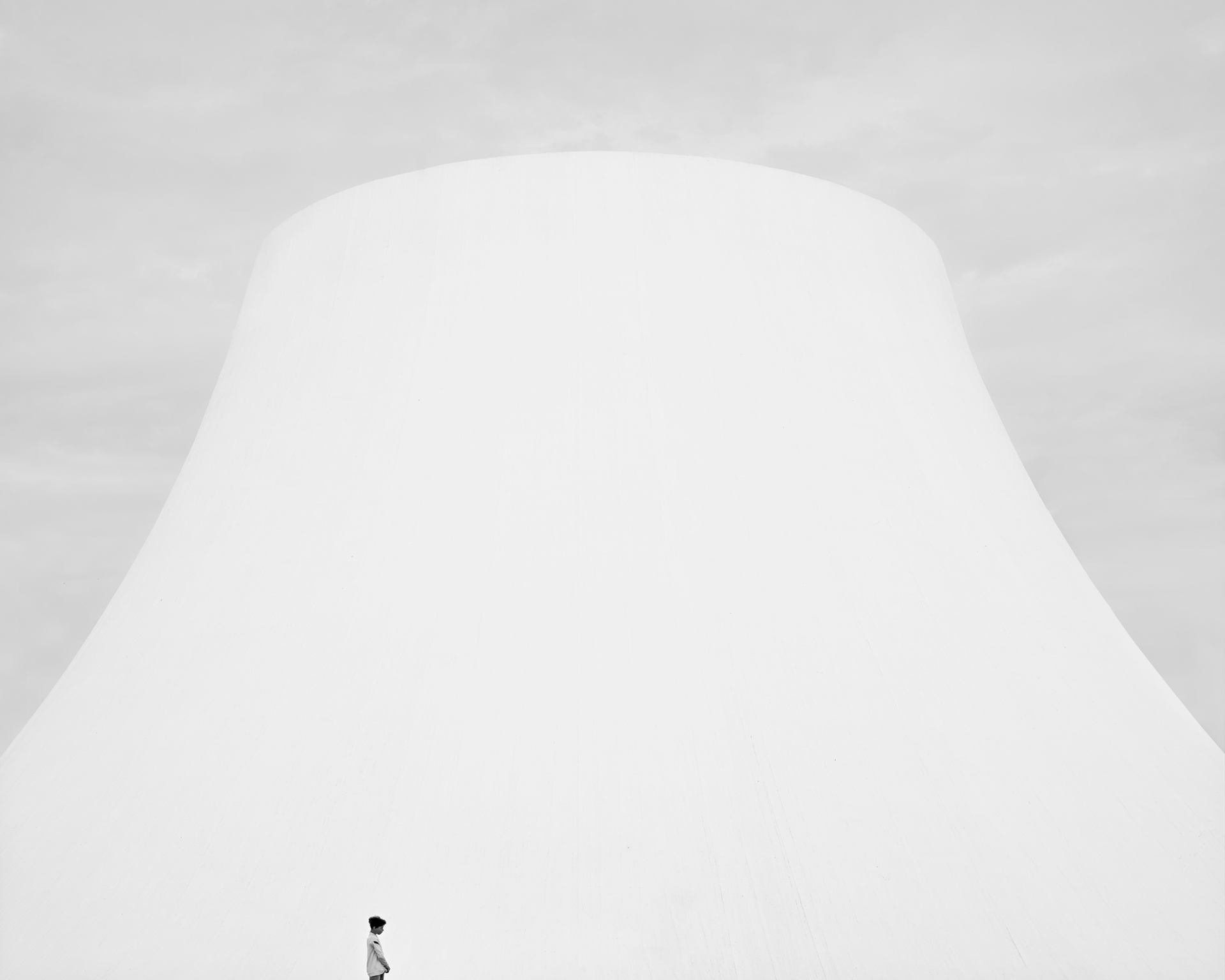
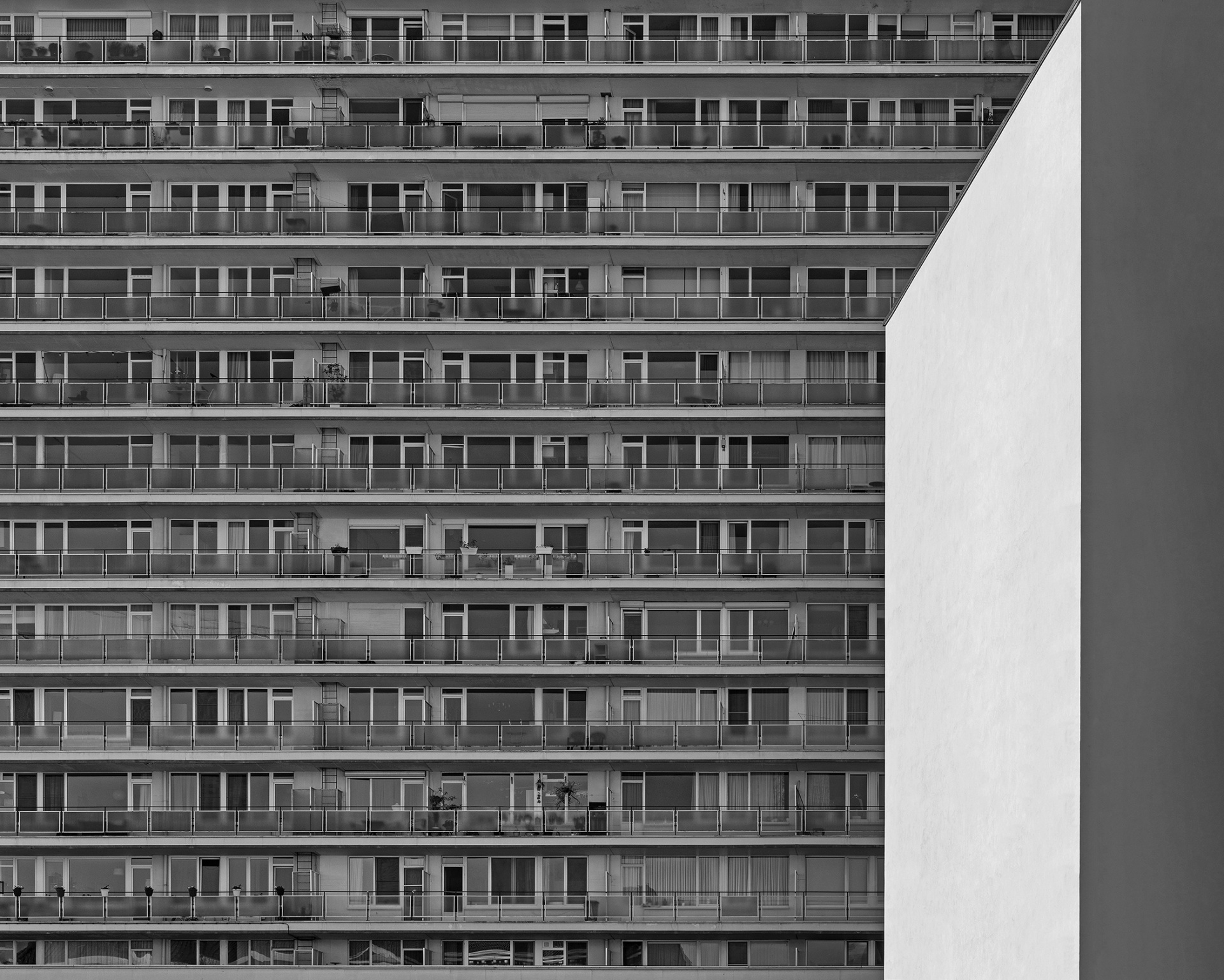
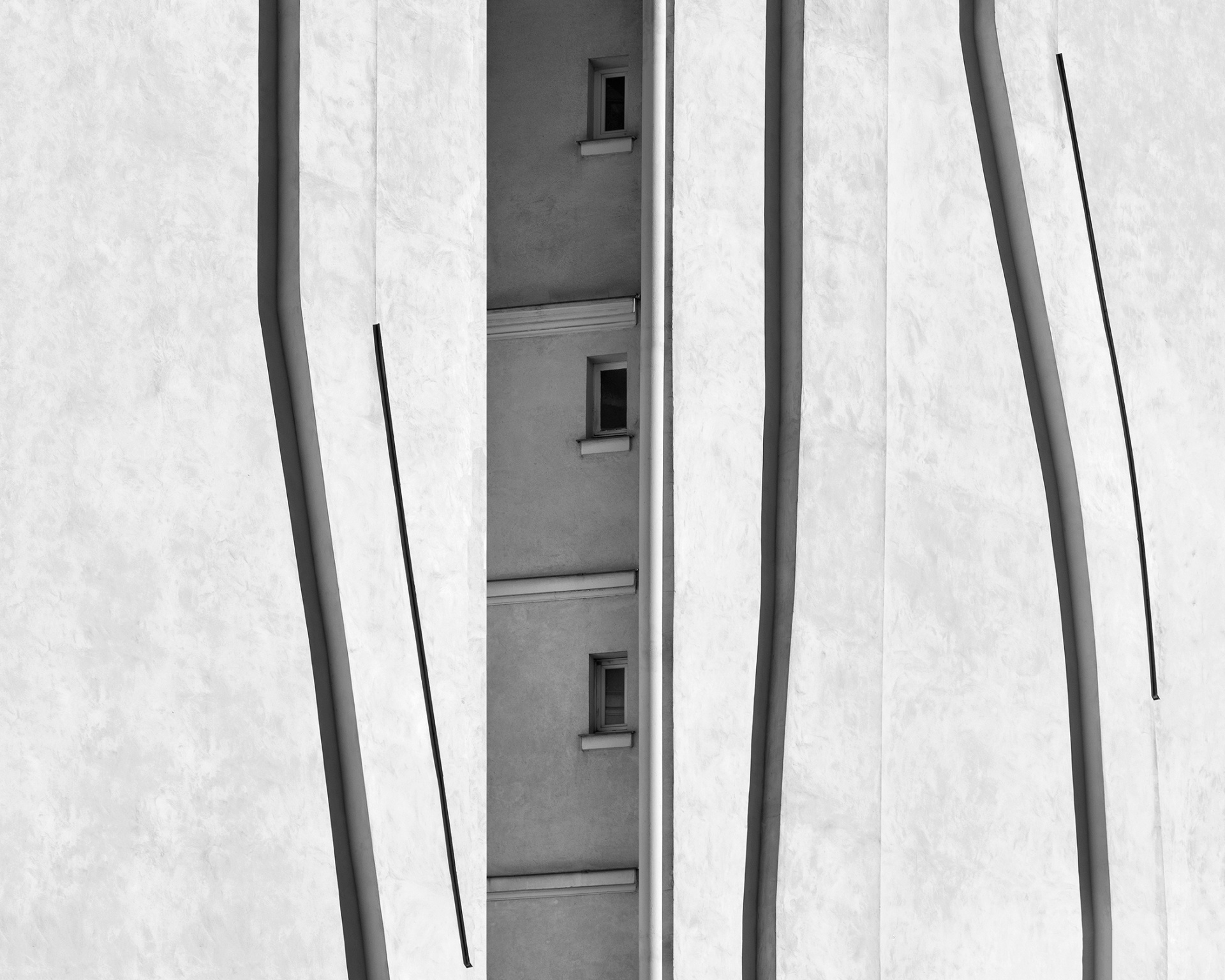
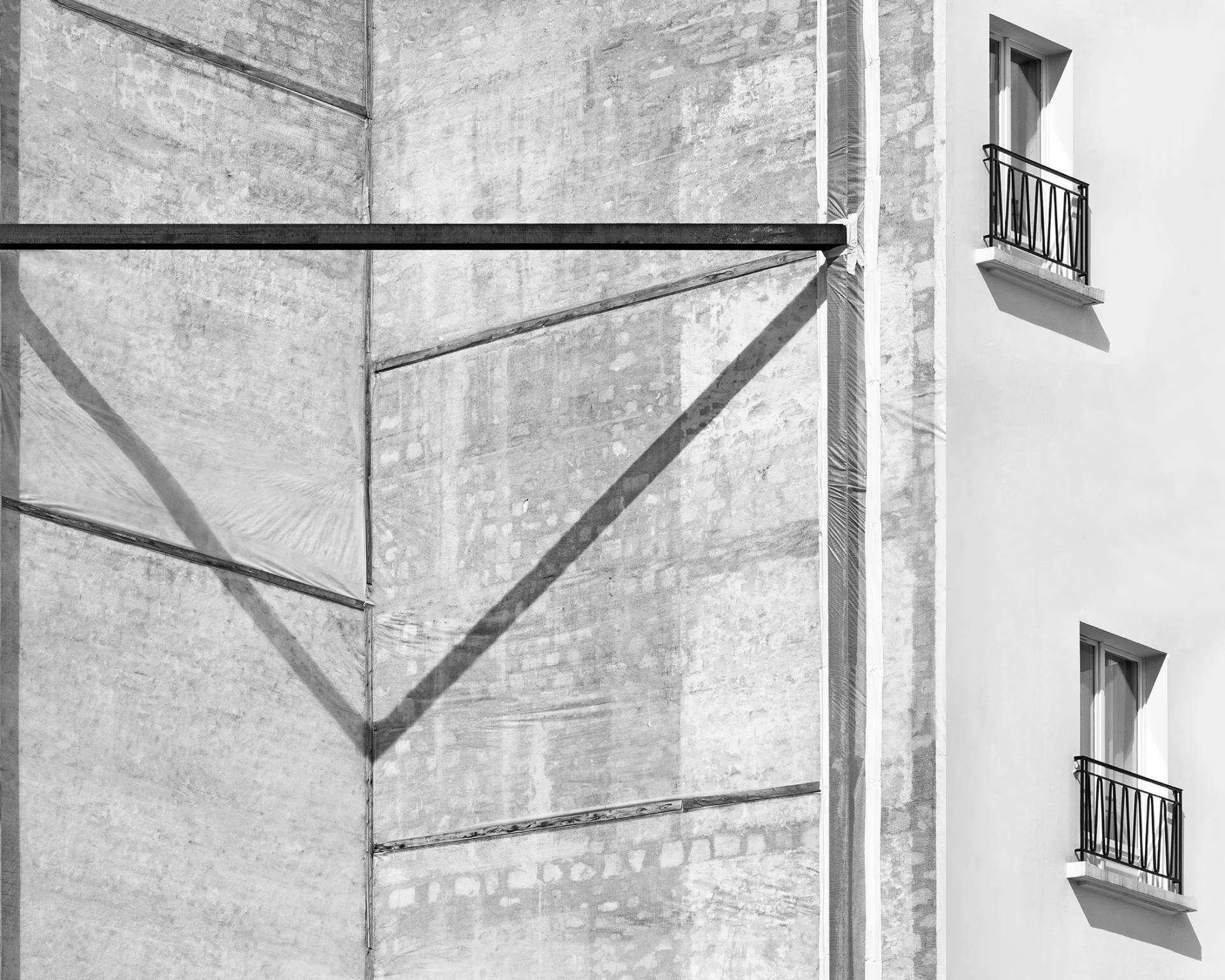
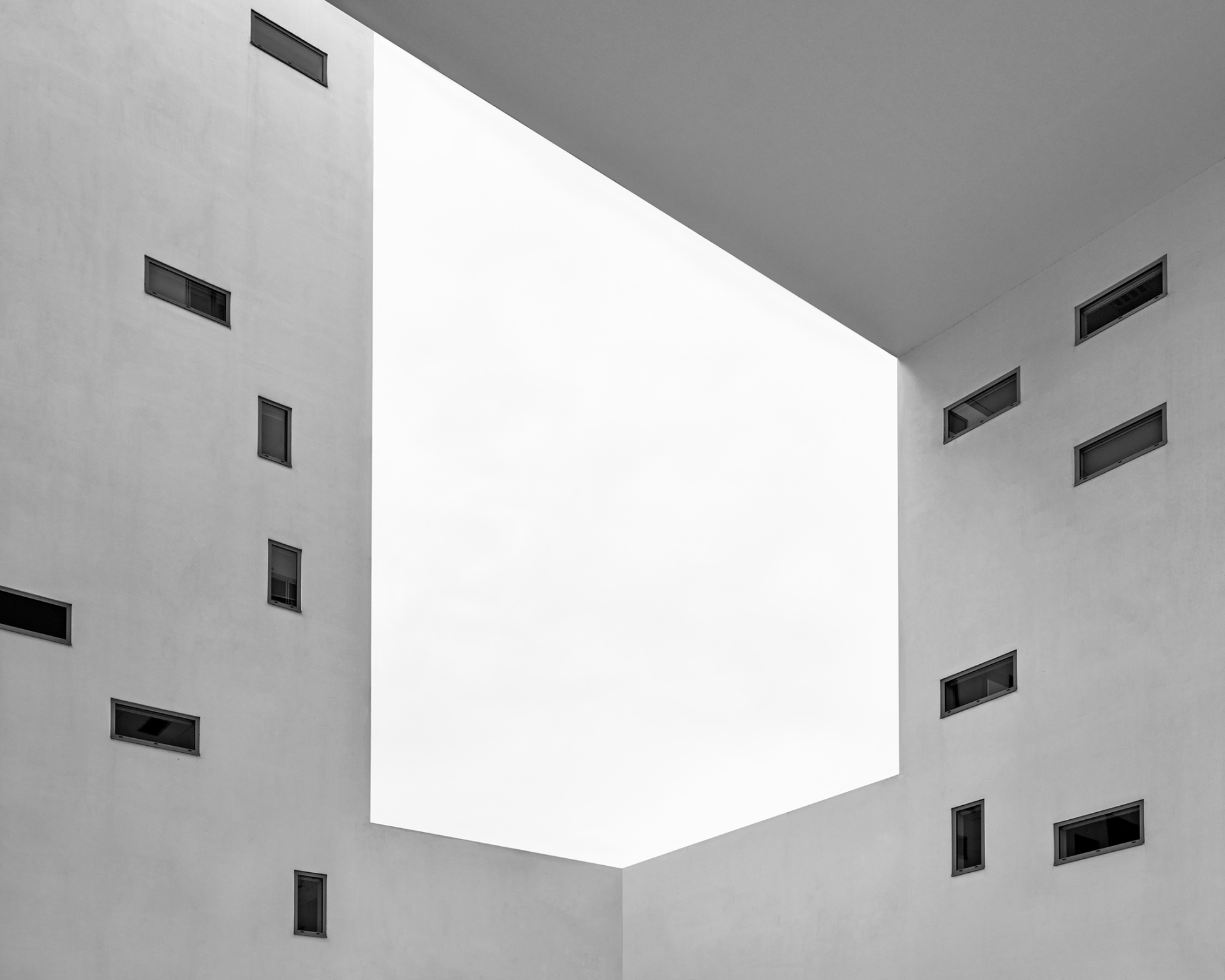
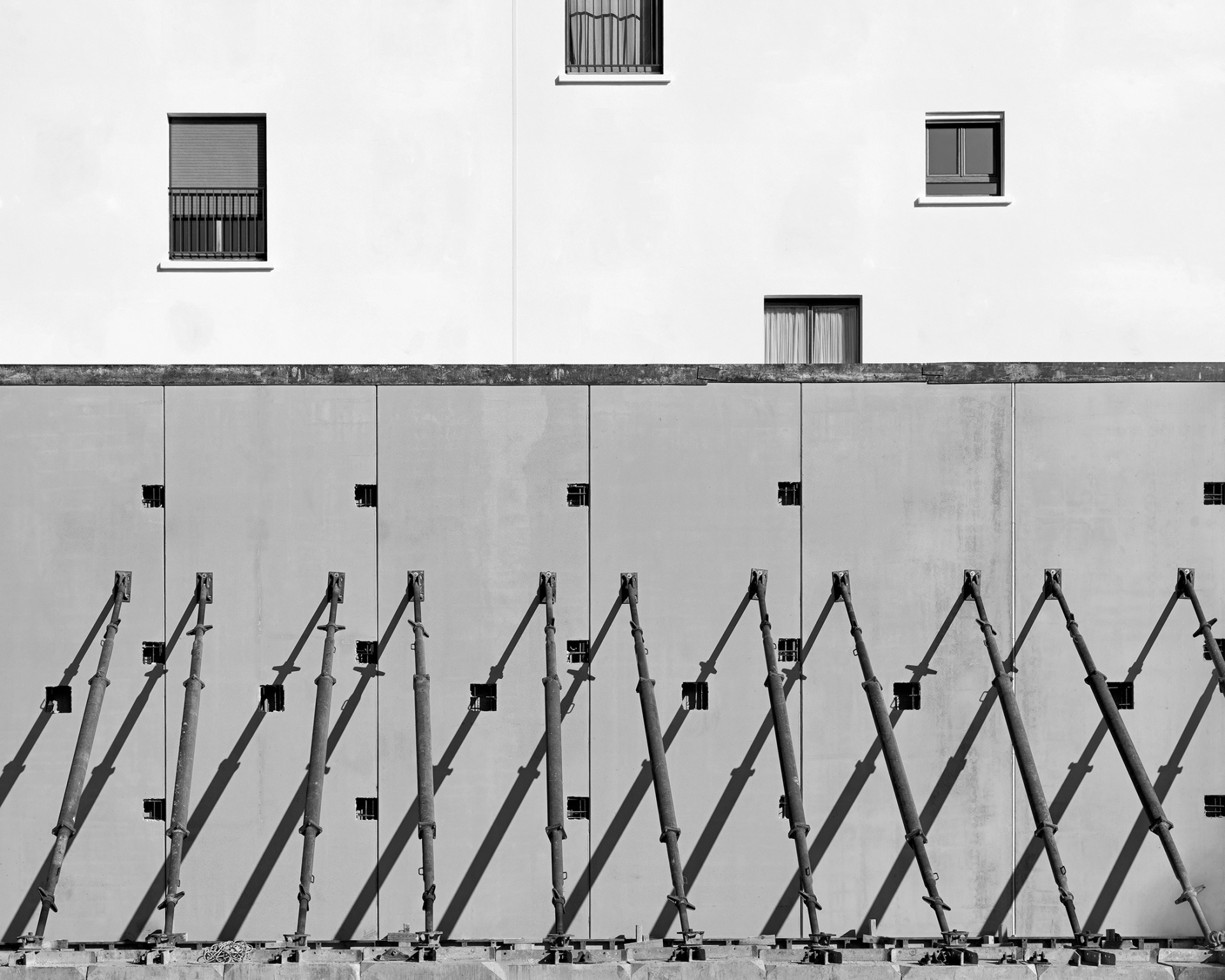
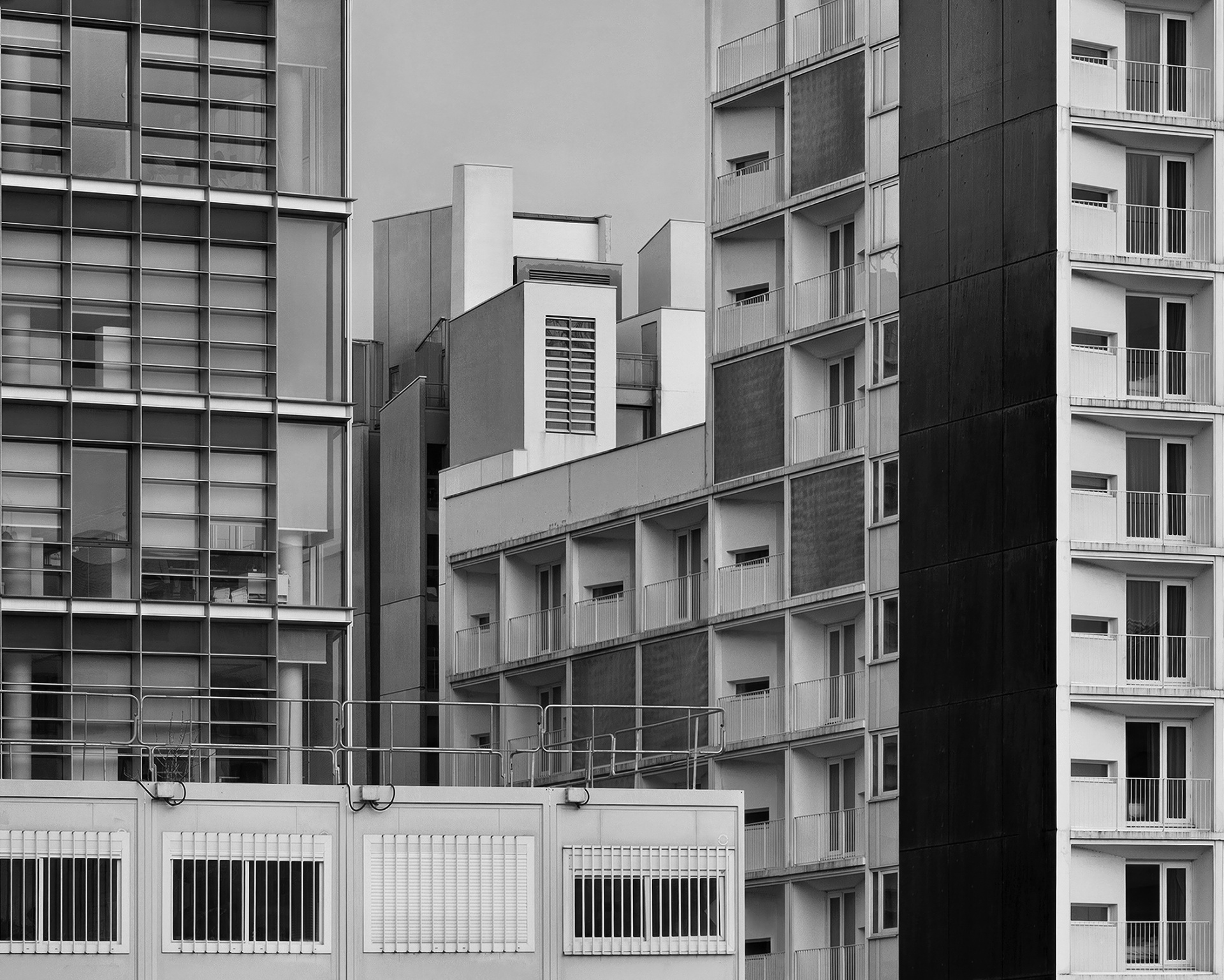
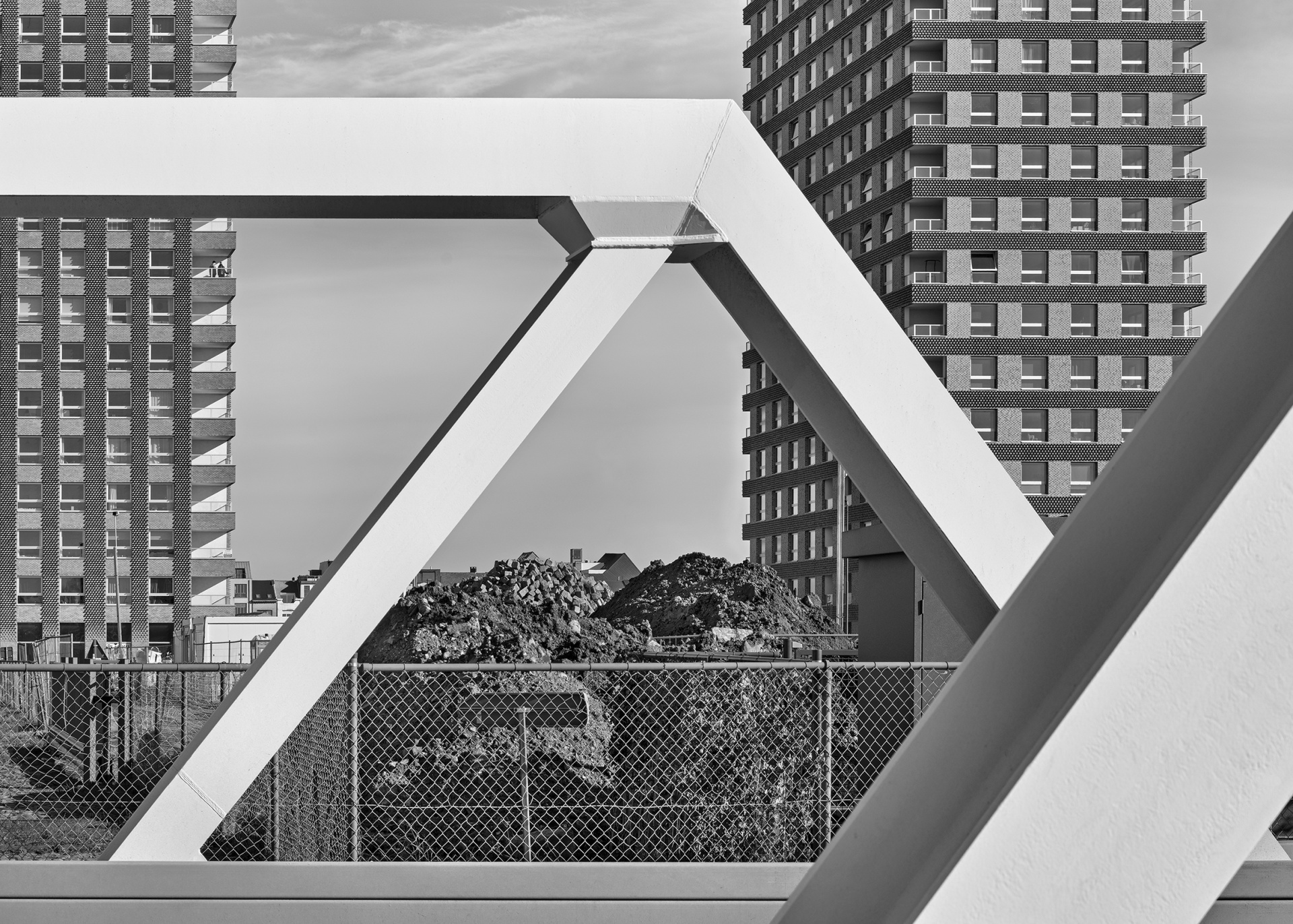
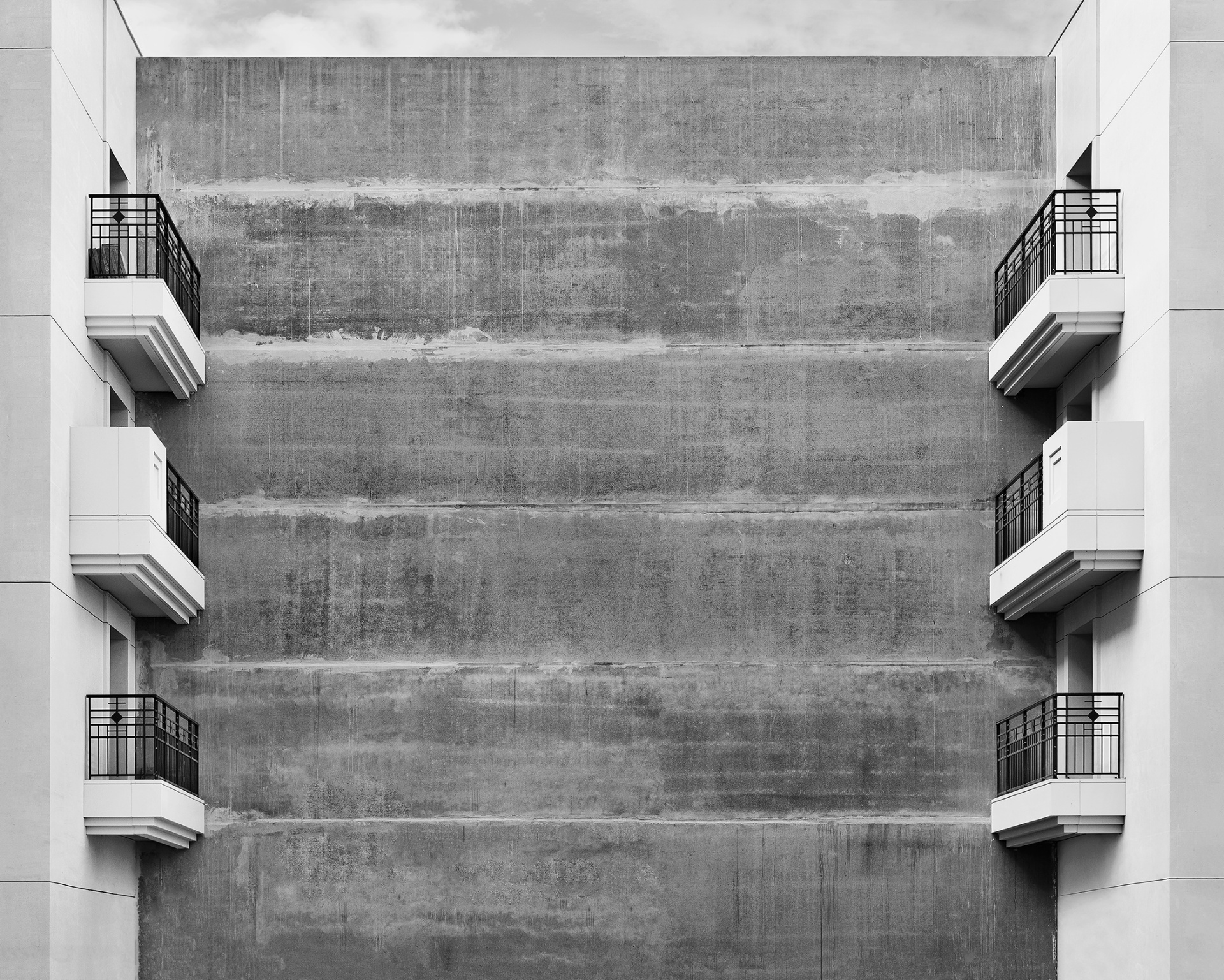
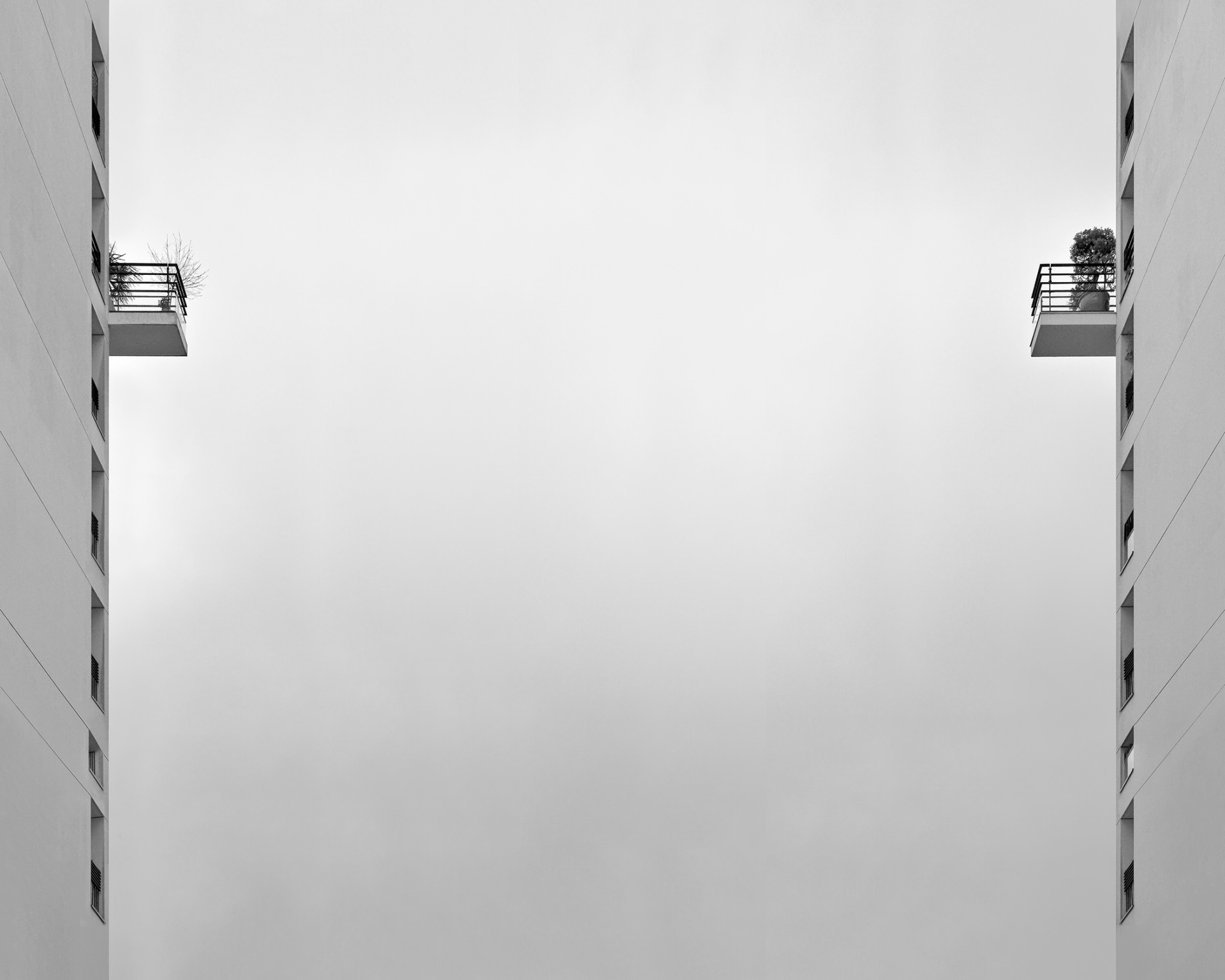
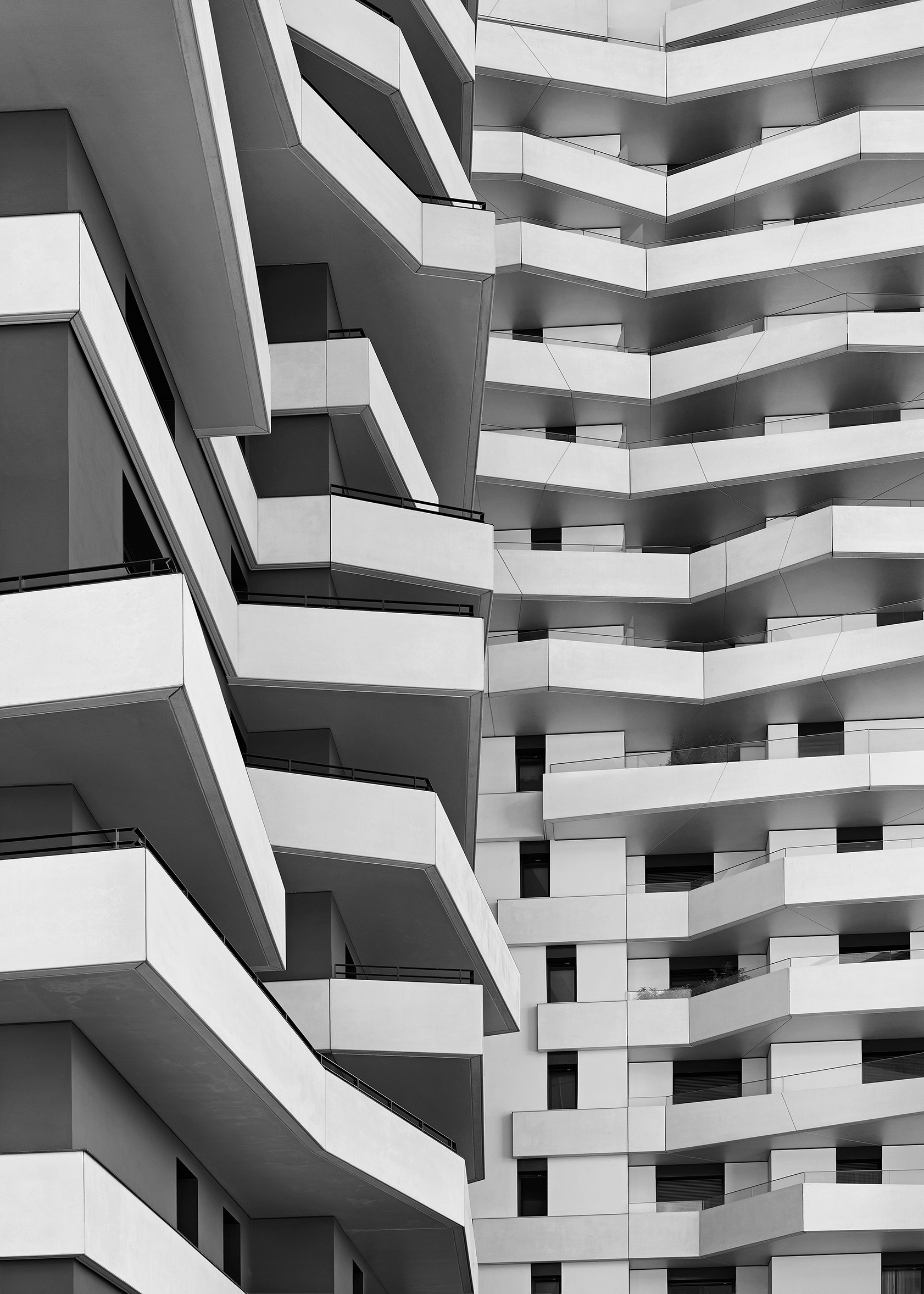
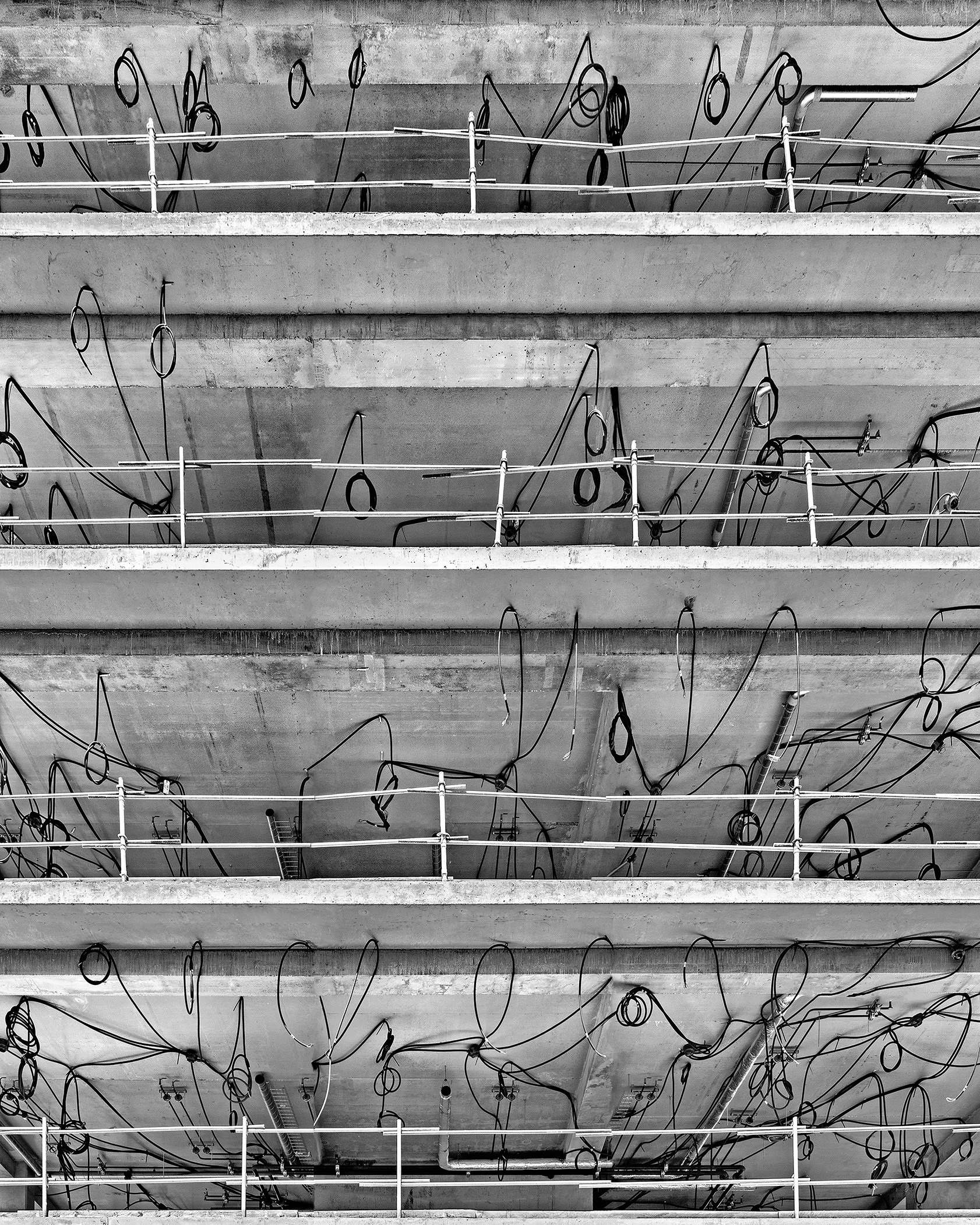
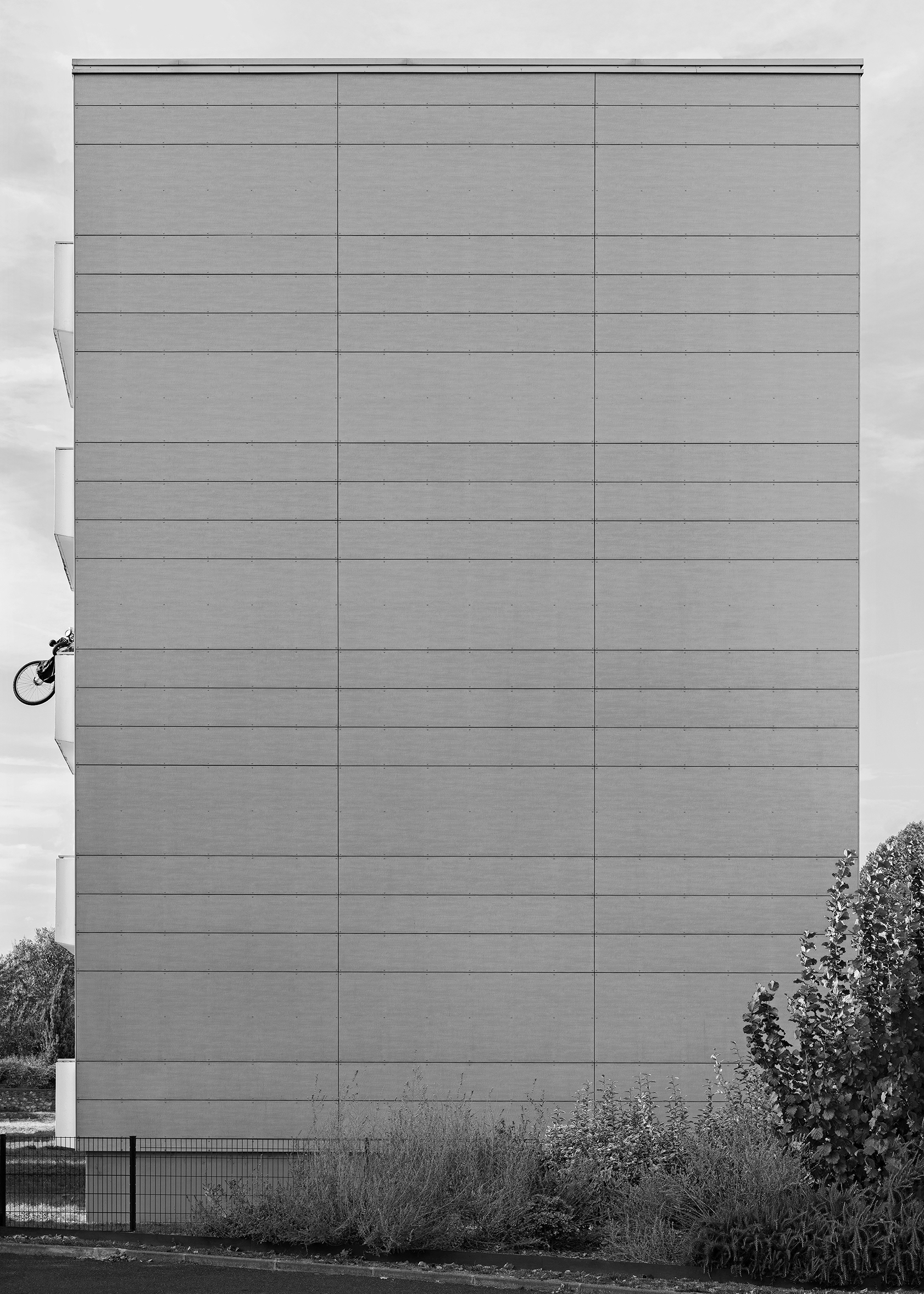
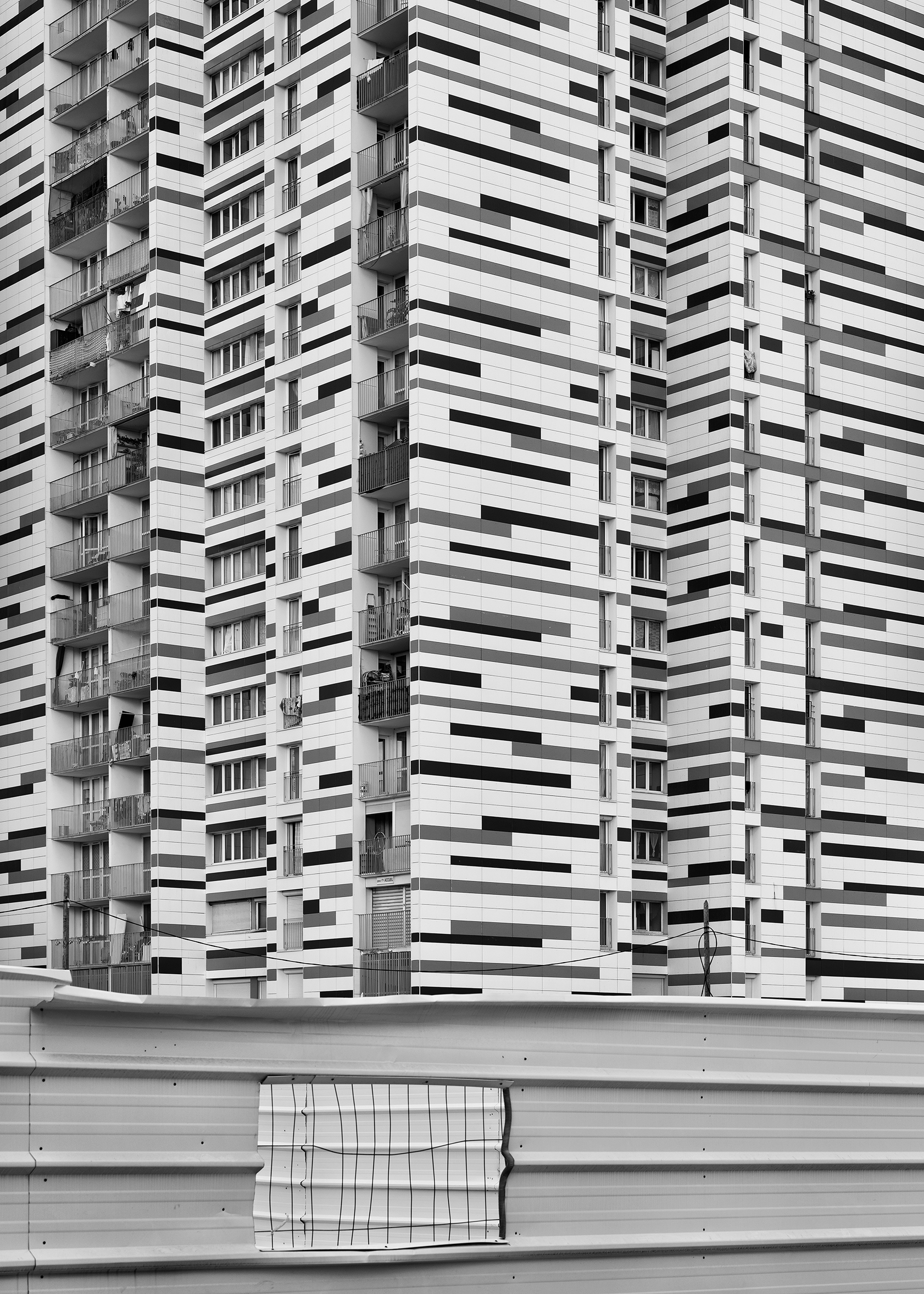
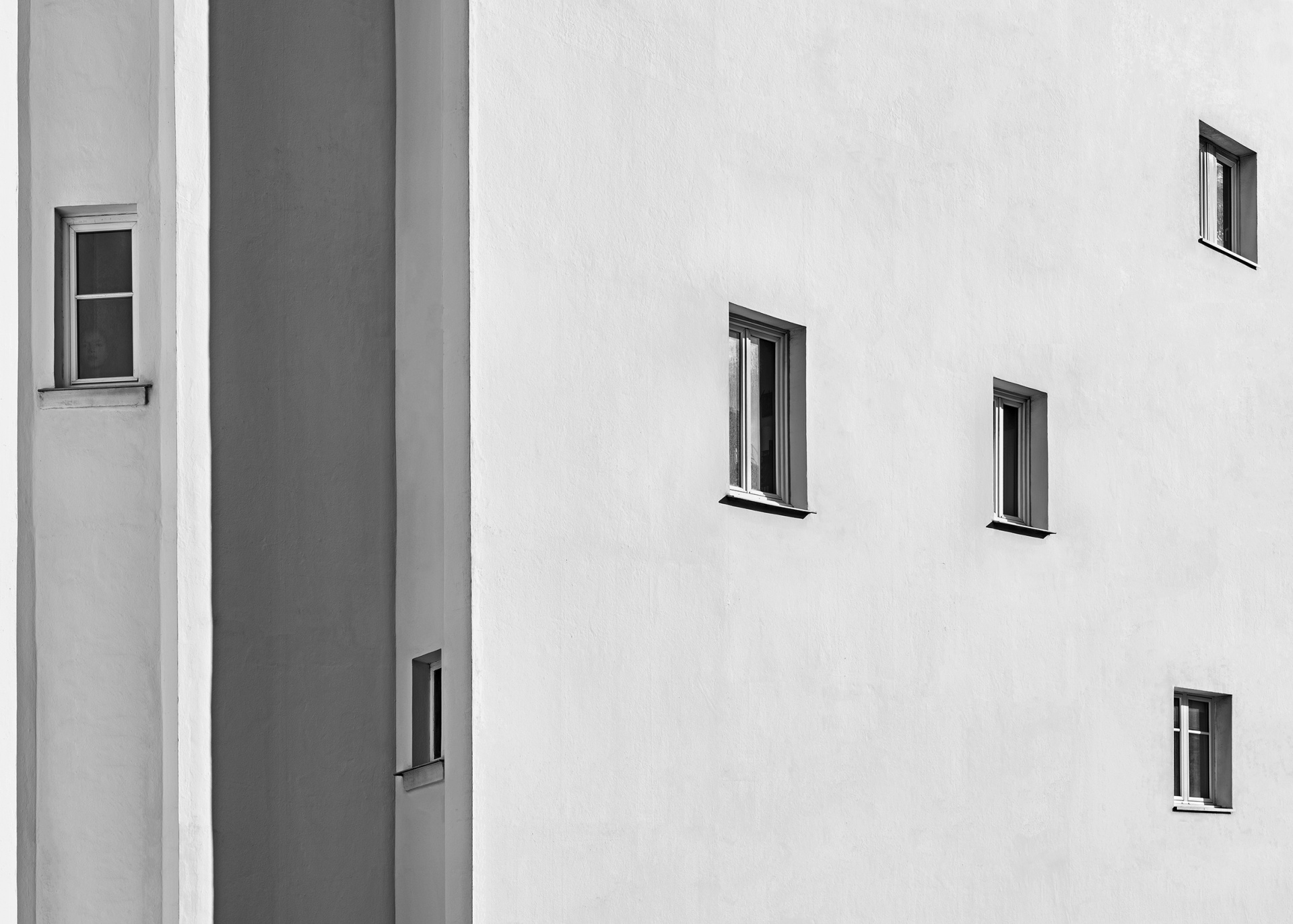
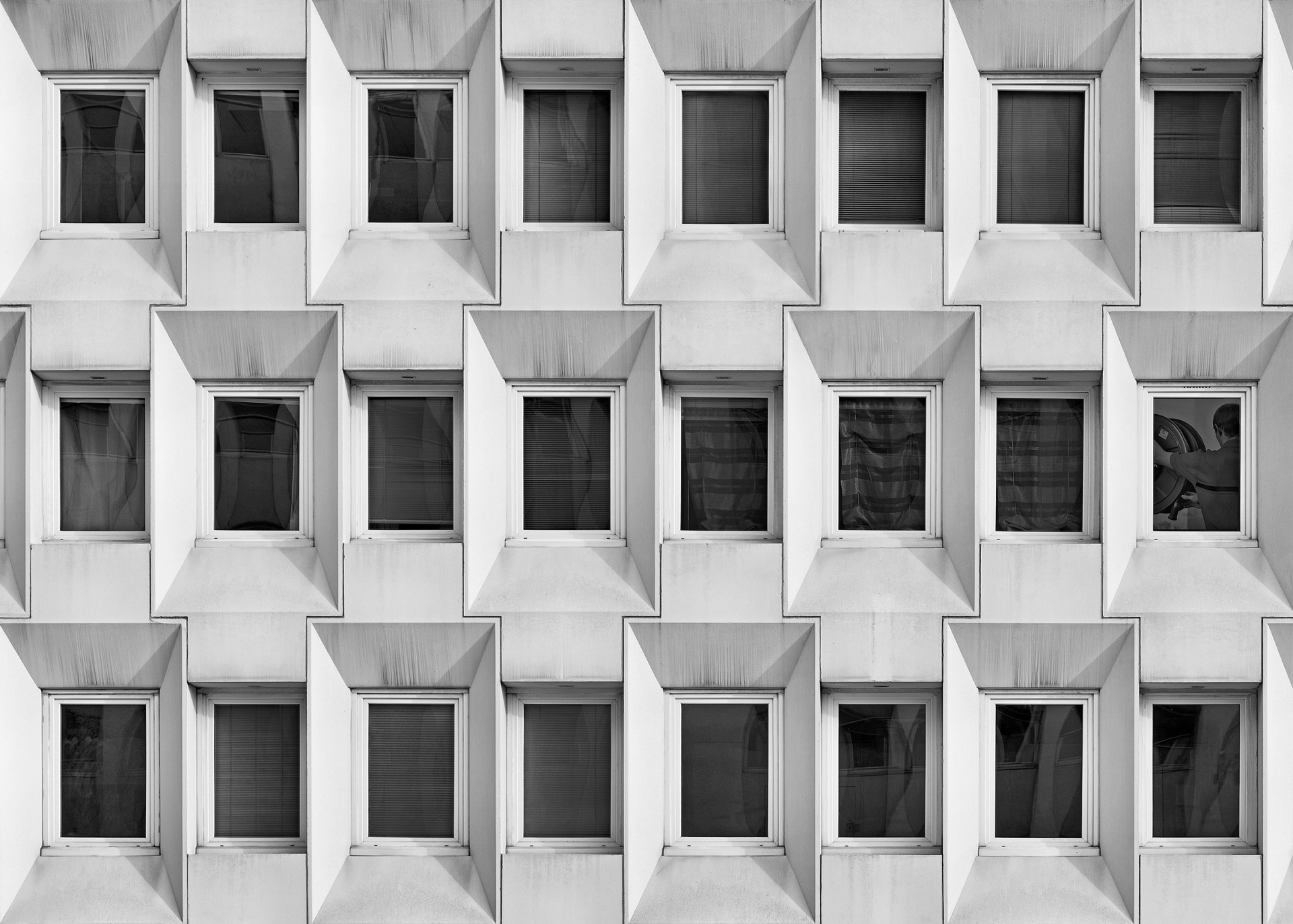
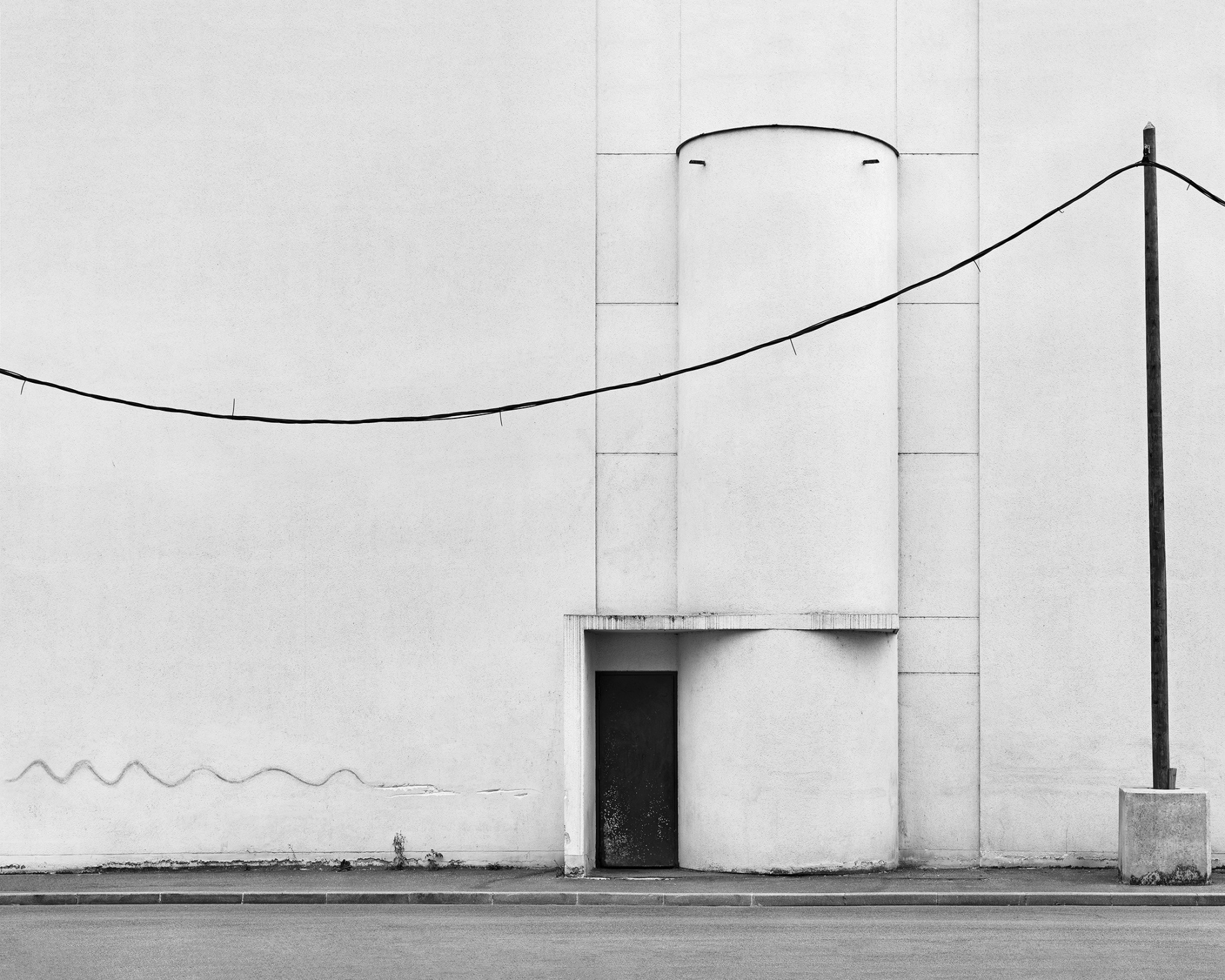
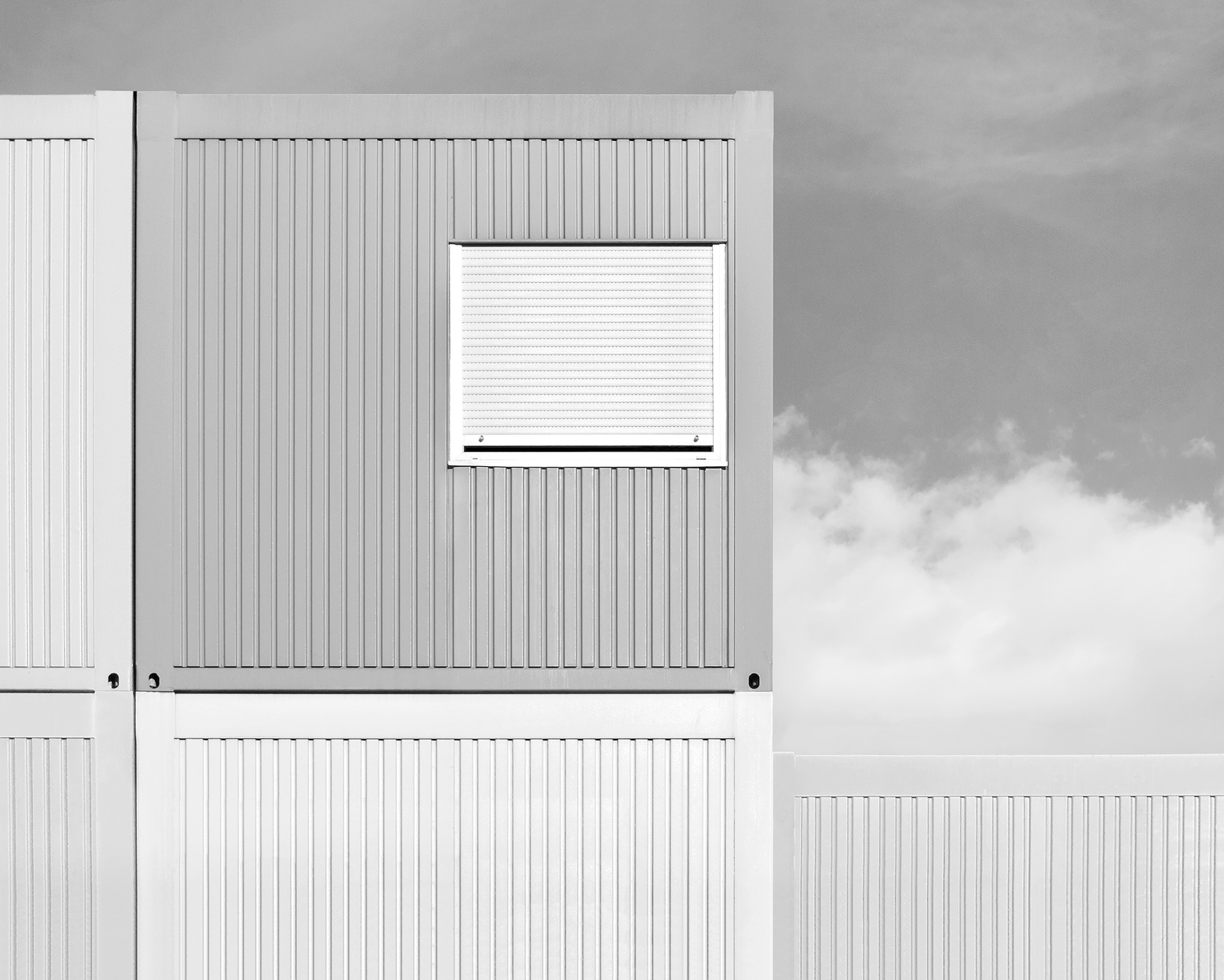
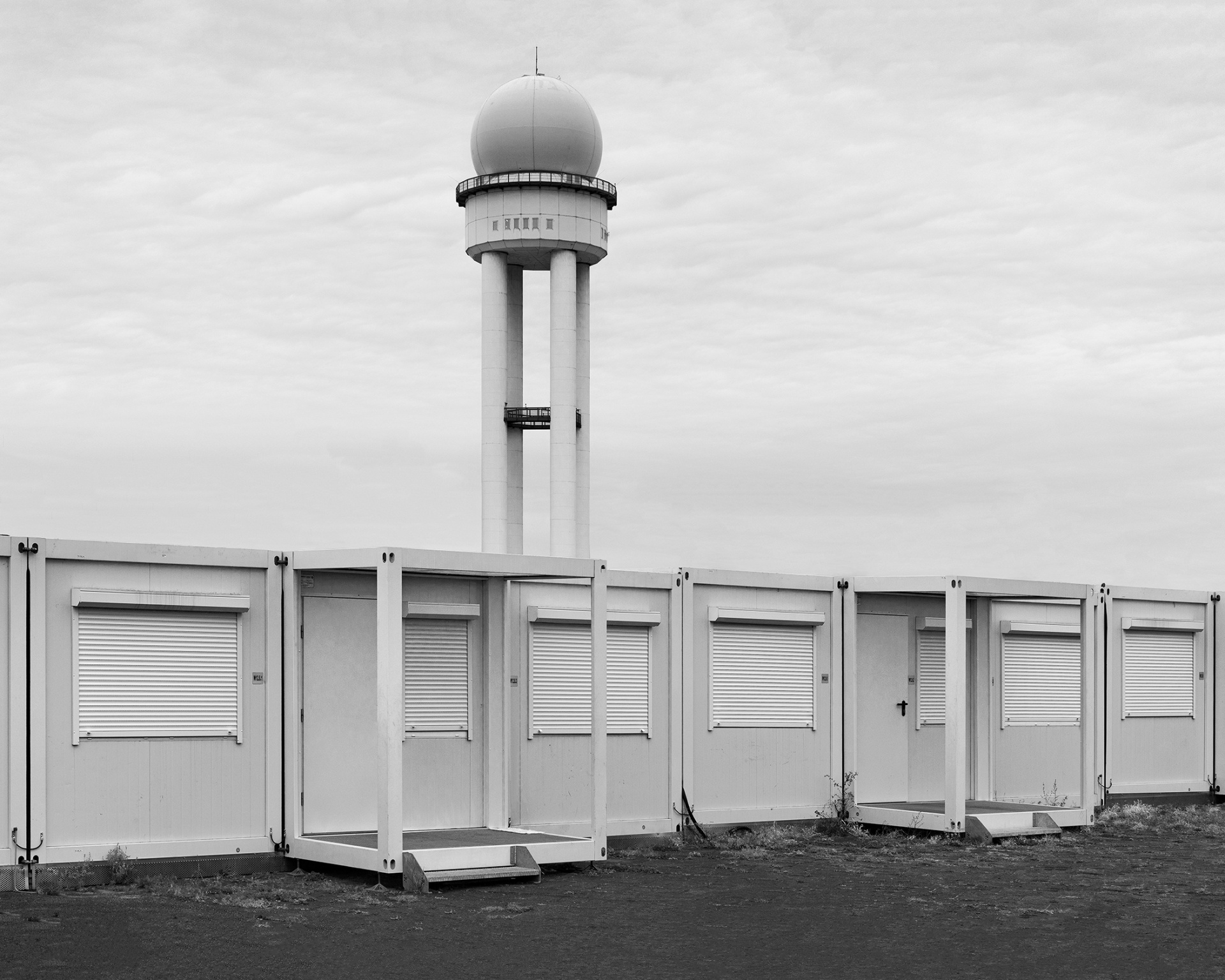
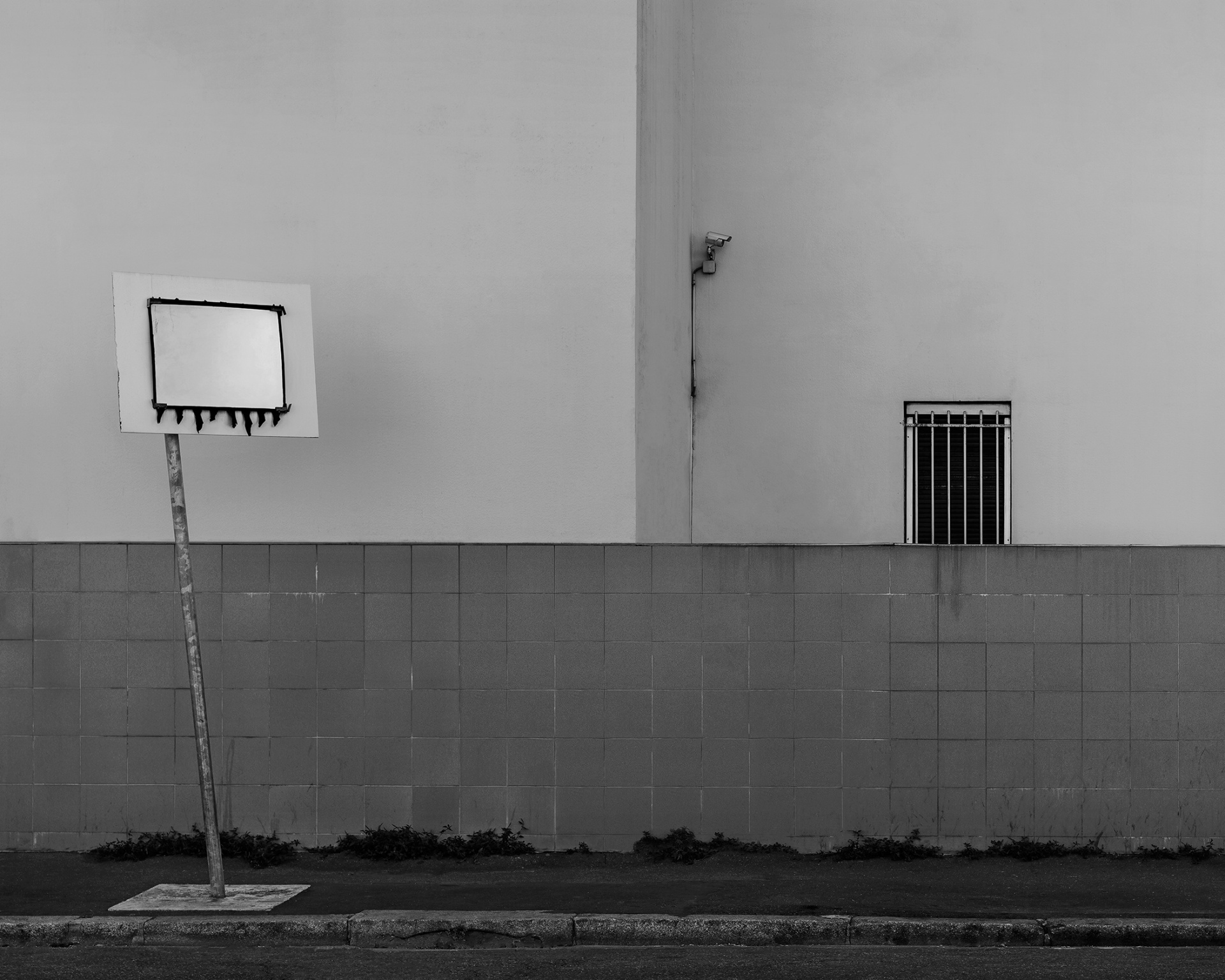
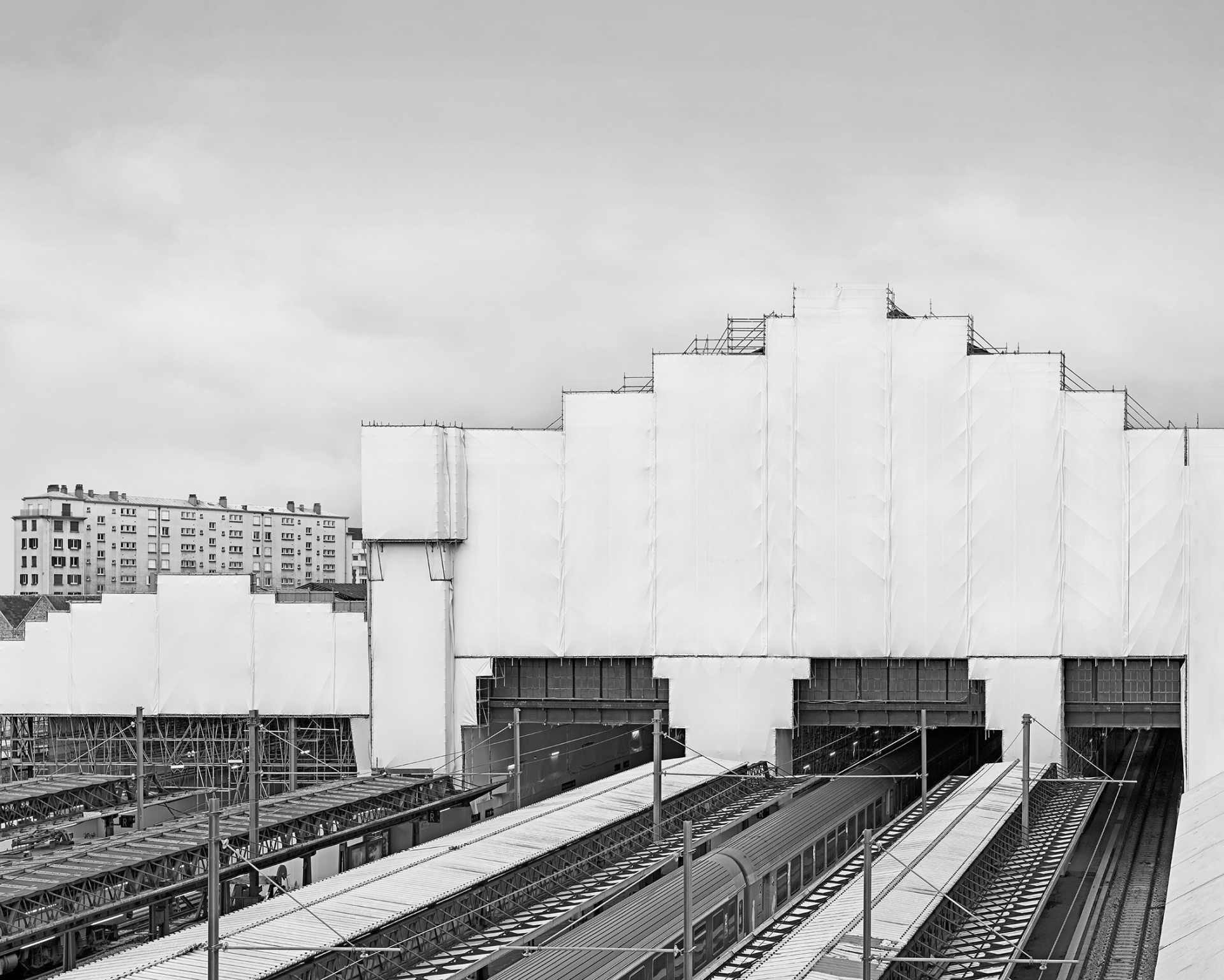
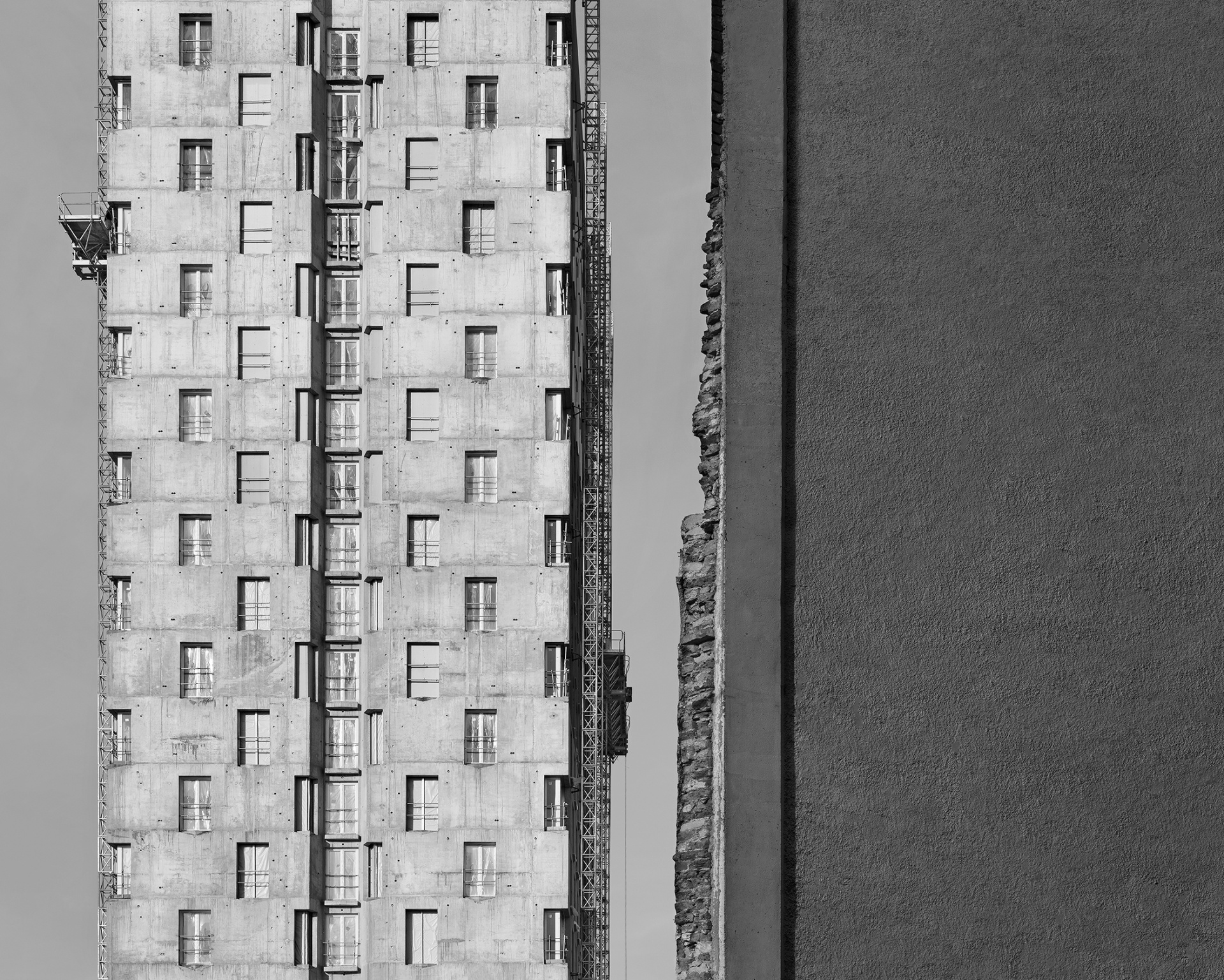
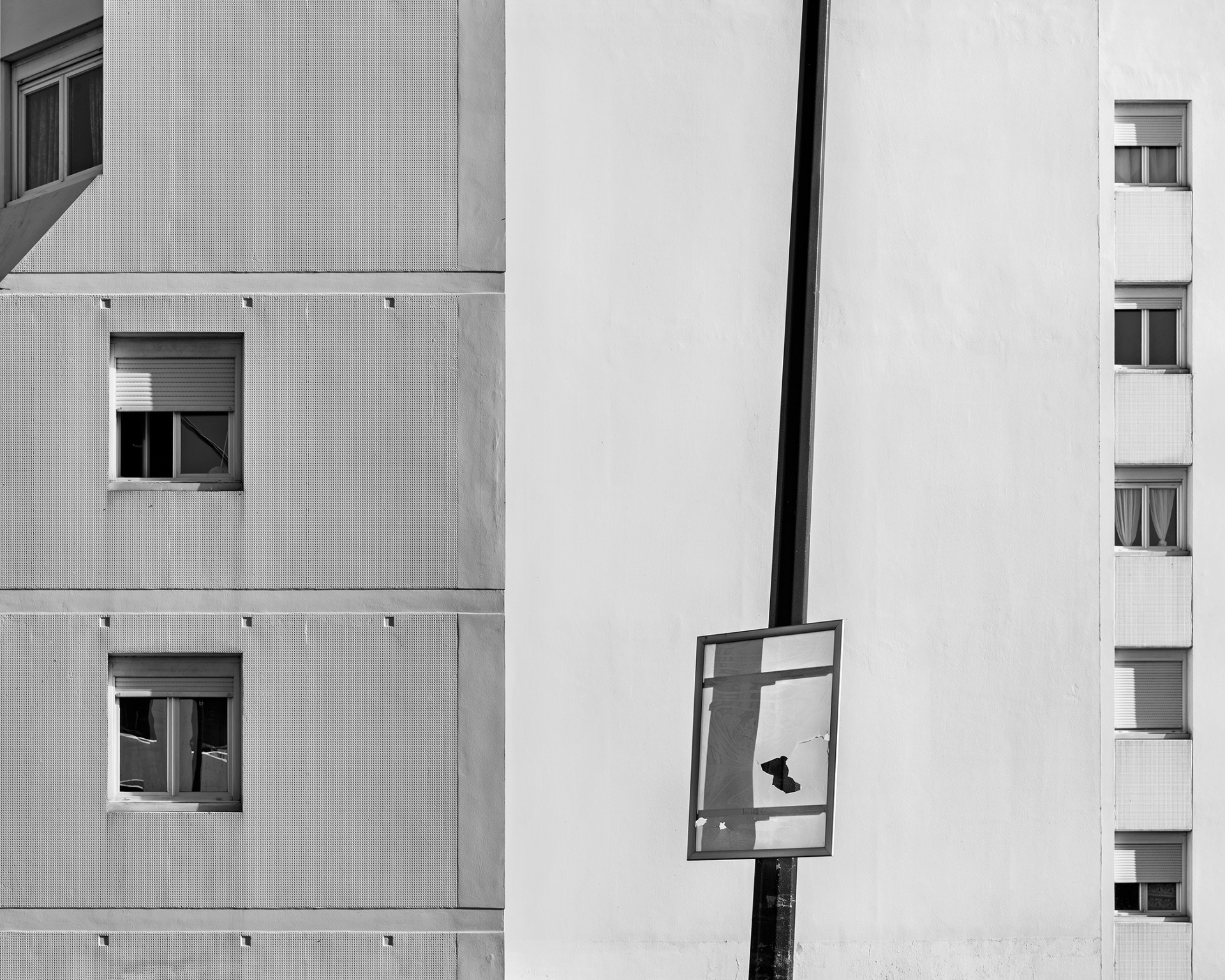
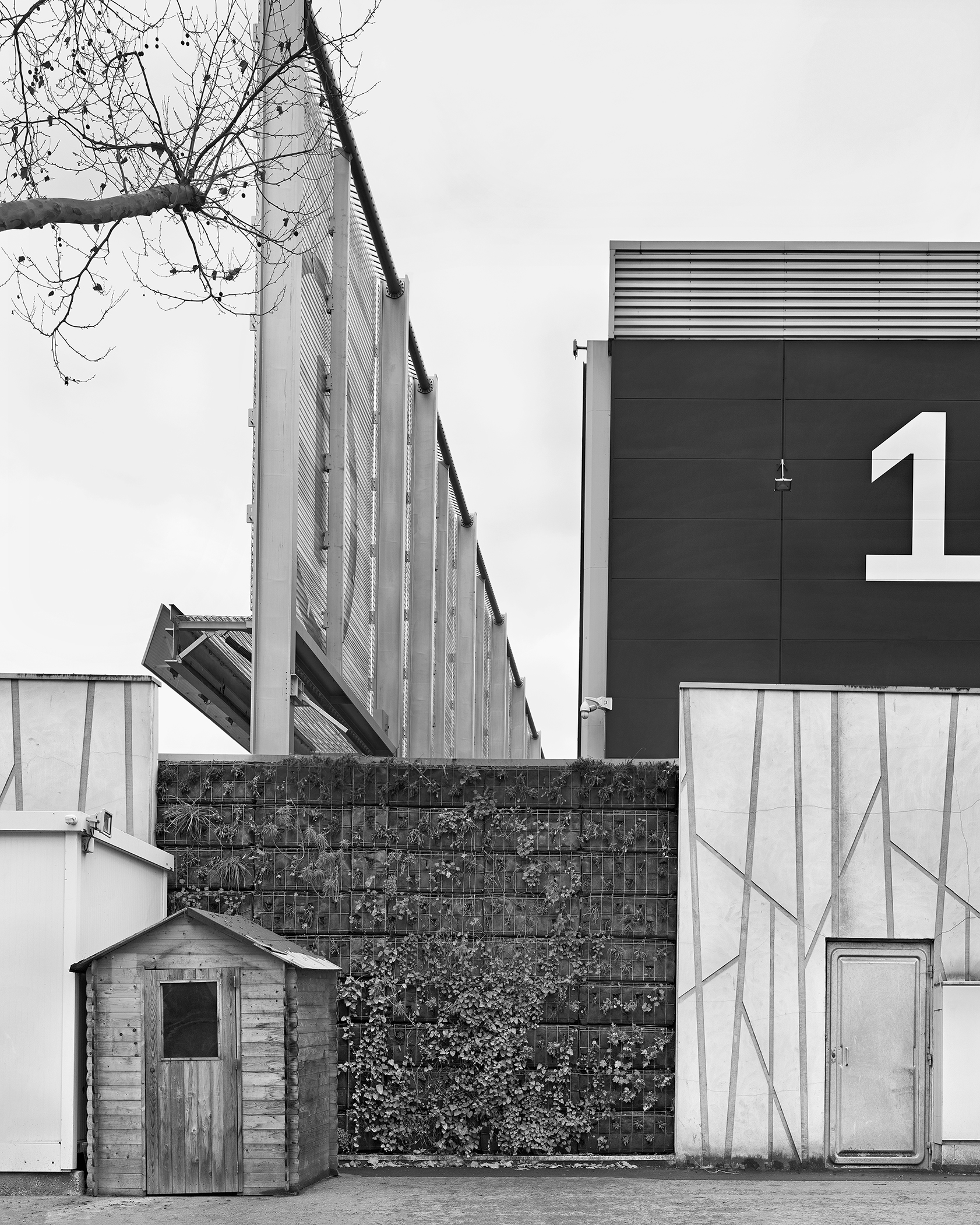
Positioning itself from its very title outside any facile identification with the immediacy of current events, Polyphōnia represents research that, following a well-established method, Musi has developed over time with great determination. It is a project with which, starting in 2018, he has aimed to give a dignity of vision to the newly marginalised, the urban expansion that widen the perimeters, ever more undefined, of the big cities. This work has already been partially collected in a square-format book, Border Soundscapes (2019), which Musi did mainly on the periphery of Paris, the city where he has lived and worked for years, as well as on the ragged edges of Antwerp and Berlin. In reality, it matters little or nothing where and when: it makes no sense, nor does it give any meaning, to identify which banlieue (as Jean-Luc Nancy reminds us, the place of the banished and the banal) is given a perspective and a horizon by the pictures. Every shot eludes the reassuring game of recognition. And this is not only because it is the sameness (the banality, as we were saying) of the buildings that too often characterises the recent development of the cities: more radically, Musi has chosen — and this is a working method of his that he has so many times stated and justified — to subtract his images from the temperatures and drawbacks of a specific context, using with surgical precision ‘the invisible digital hand’. This is certainly not an attempt at maquillage; the intent is not to soften the contradictions or mask the brutality of the contrasts—quite the opposite. In the air suffocated by the peremptory power of concrete, in the gaps that seemingly for no reason break up the compactness of the forms, in the alienating epiphanies of a colonnade, residues and inventions that speak of an unresolved absence, no indulgence is displayed, no allusion to any story of redemption. Rather, what Musi stubbornly puts in play is askesis, that abstraction or withdrawal which, Harold Bloom tells us, poets use to exorcise ‘the anxiety of influence’, and which for the photographer is above all (self)discipline, a practice of reduction and correction that never concerns the surface, but rather has to do with the search for a hidden truth.
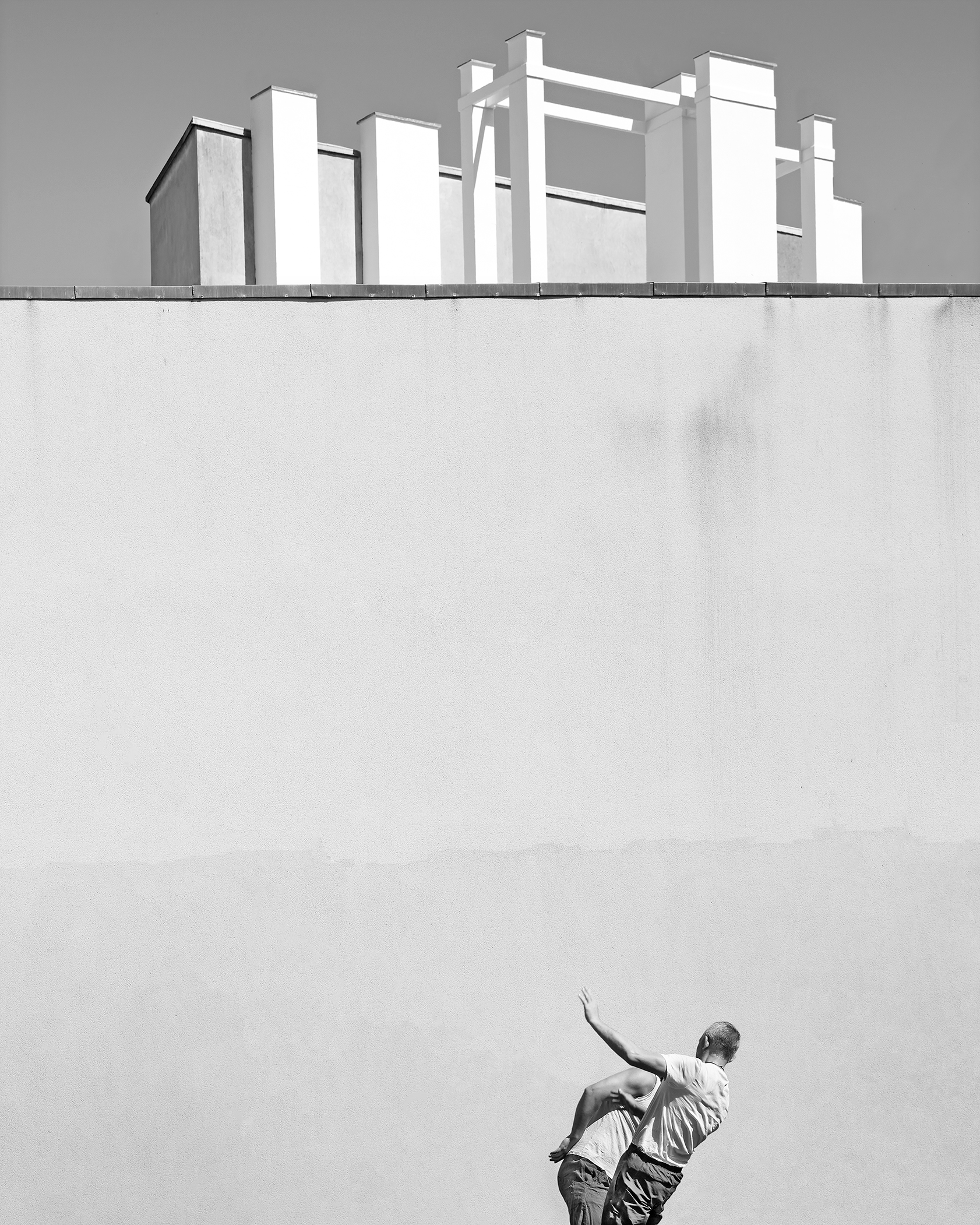
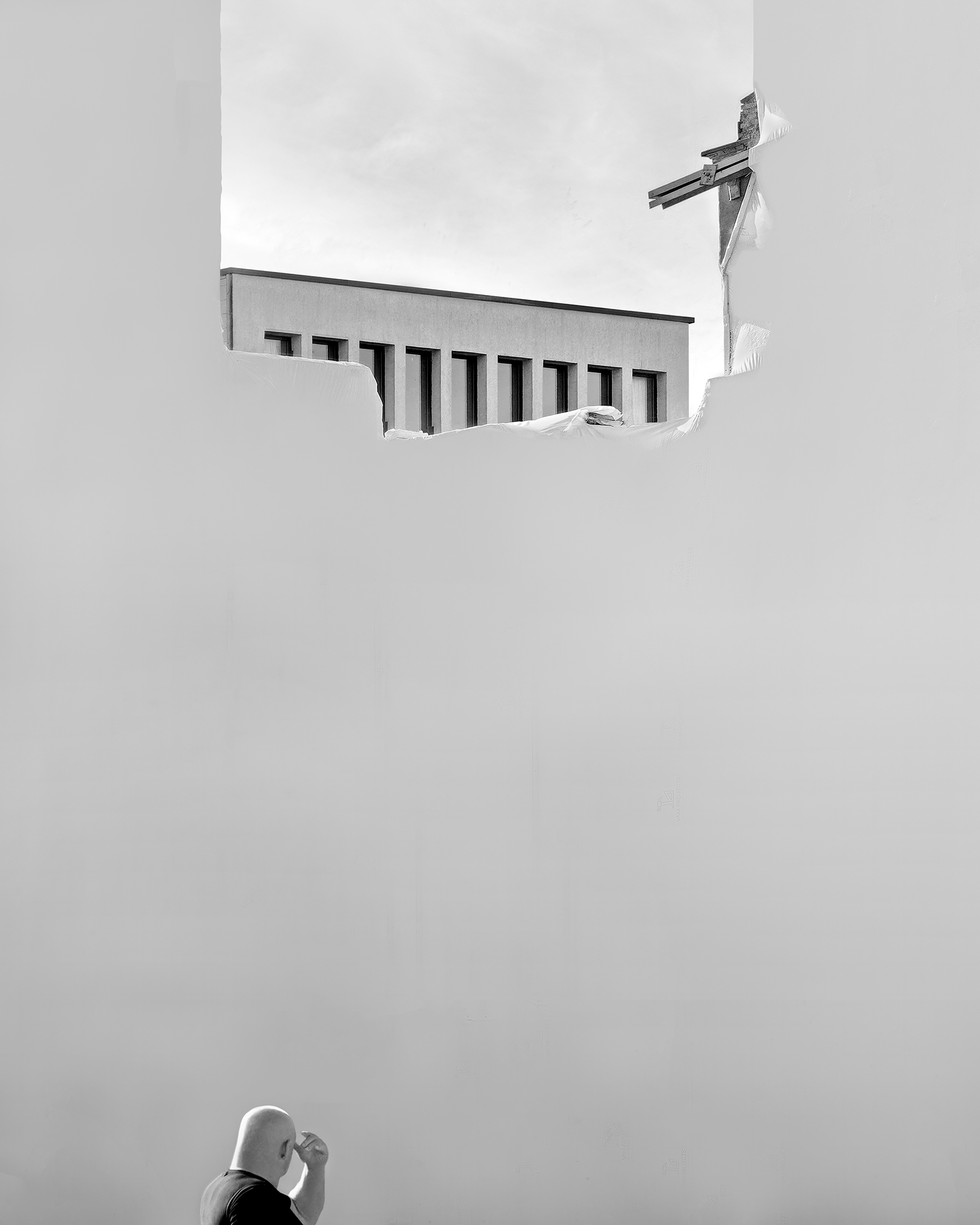
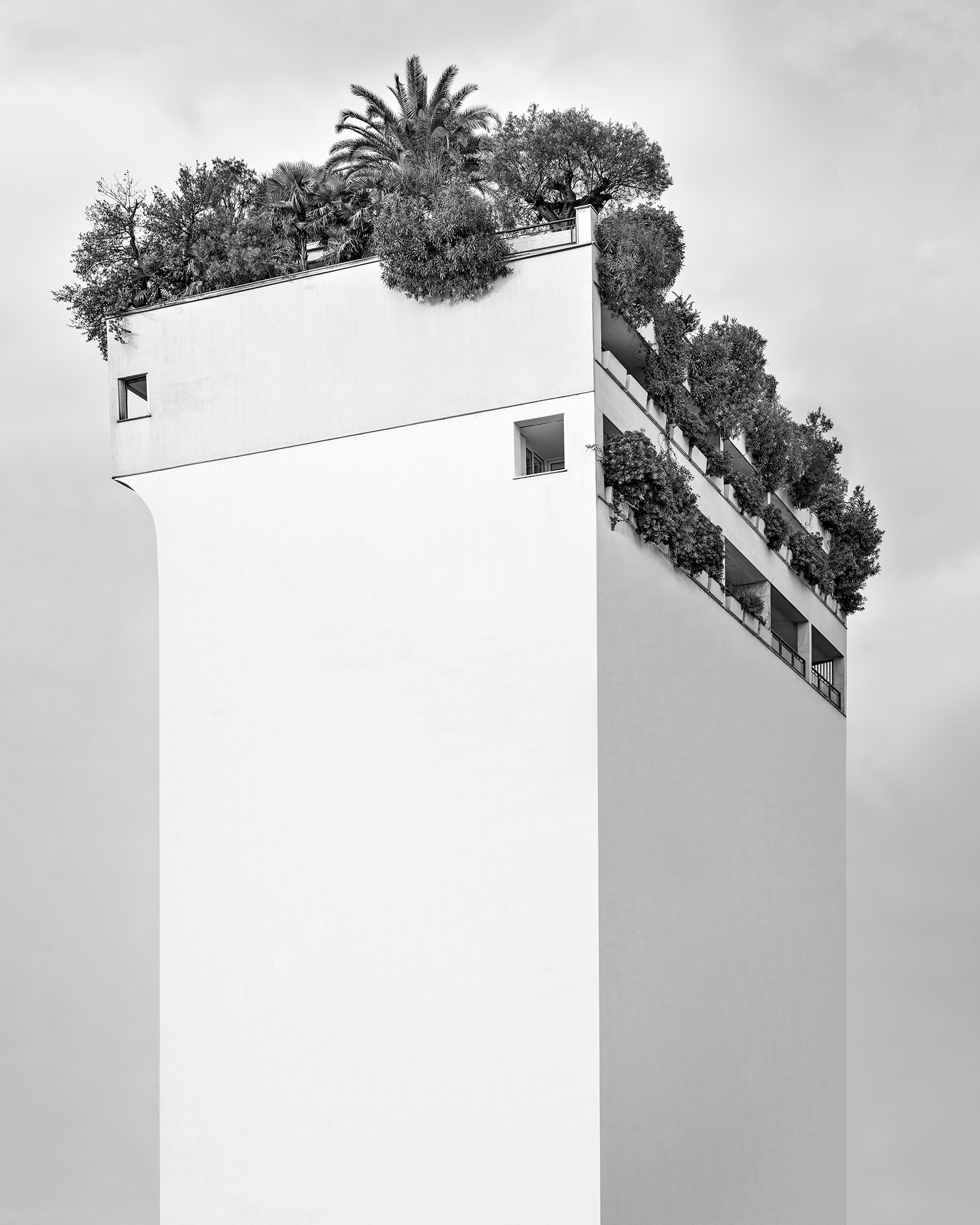
‘Take away everything that is superficial’, Plotinus advised, and Musi each time scrupulously carries out his rite of electronic purification, without, however, renouncing the restlessness of the curve, that oblique line which Mondrian had banished as an organic vector of chaos, of a movement which, meanwhile, quite rightly is embedded in the Polyphōnia pictures. And not only because every so often, in the intransitive silence of the built environment, there are glimpses of faceless spectators, who act as a filter (Victor Stoichita) able to ‘problemise the gaze’, made even keener by the occasional appearance, only apparently incongruous, of vegetable designs and shapes, passages of silent, inexorable living things.
Photographers, Denis Roche has noted, are first of all travellers, bearers of light in movement who form, as it were, a ‘swarm of aware fireflies. Fireflies busy with their intermittent illumination, flying low over the disturbances of the hearts and spirits of the contemporary age’. Musi, who in his photographs has encountered the sites of archaeology and the sacred and the temples of technology, who has traversed the countryside of the Agro Nocerino Sarnese and of the Côtes-d’Armor, who has explored the solitude of Asinara and Sulcis and the frenzy of the cities, new and ancient, of China, belongs to the species—by now rare—of travellers who do not look for confirmation, who do not seek to recognise but to get to know. ‘After all,’ Anne Carson has written, ‘the only rule of travel is: don’t come back the way you went. Come a new way’.
The images that make up the horizon of Polyphōnia are documents of this change; each of them declares a repositioning, a passage, an interpretation of the motive so complete as to be able to face the solitude of the page and so coherent as to form a note on the score of the wall. As was the case at the Biennale of Architecture in Venice in 2012, where the façades of major Milanese buildings were mounted in a long horizontal polyptych (Facecity Scroll), here too each image reinforces and intensifies the other. It accentuates it because, as Didi-Huberman suggested in Gestes d’air et de pierre, when a text or image, a work, is constructed, it is not a matter of always telling the truth, but ‘of heightening it. Illuminating it—fleetingly, partially — through instants of risk’. Once again, the task of the photographer is to shed light, to show. A task, Musi knows well, that entails the responsibility of choosing and of paring away.
There are things that will remain in shadow, images that will never see the light, and yet—this is the solution which Polyphōnia offers us —a trace of what is not shown remains in the chord, different every time, which the sound of each image finds with the sound of all the others. ‘When does something become something else?’, Antonella Anedda asked in the pages of Geografie, and this is a question that echoes in the intervals of a photographic vision in which each time we can experience our rhythm and our desire.
Look, listen. Polyphōnia.
Stefania Zuliani
related books:
Border Soundscapes
Polyphōnia